THE CLASSIC COLLECTION✦A dead man’s diaryCLASSIC FREE BOOKS
A dead man’s diary
Coulson Kernahan
THE CLASSIC COLLECTION · 1881
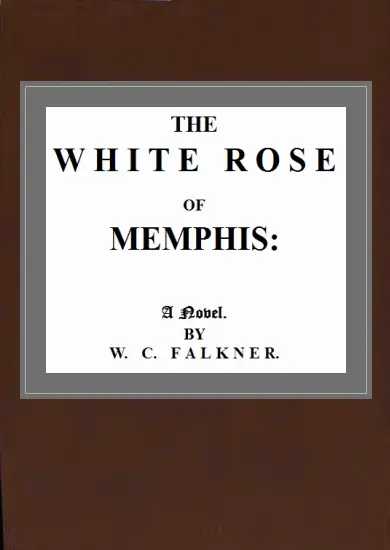
"The White Rose of Memphis" by William C. Falkner is a novel written in the late 19th century. The story centers around Captain Oliver Quitman and Samuel Brazzleman, two steamboat operators in Memphis, as they prepare for a grand inaugural trip of their newly chartered boat, the "White Rose of Memphis." The narrative elegantly unfolds the themes of adventure, romance, and the vibrant social scene of the time, promising an entertaining exploration of life on the Mississippi River." "The opening of the novel sets the stage for an exciting journey as Captain Quitman and Brazzleman discuss their plans for the steamboat's first voyage to New Orleans. They plan to make a splash with a masquerade ball aboard the boat to attract attention and fill the passenger list. As the festivities begin, the atmosphere is electric with anticipation, and various characters, all masked and adorned in splendid costumes, gather to celebrate. Amidst the excitement, a mysterious queen, who captures the interest of many attendees, piques the curiosity of the male maskers. The narrative hints at playful intrigue, romantic pursuits, and the social dynamics of the guests, leaving readers eager to discover how the festivities will unfold aboard the "White Rose."
Introduction adapted from the source catalogue; source summaries may be automatically generated.
Free to read · English · 207,018 words · No account needed
MAKE TIME FOR A GOOD BOOK
On by default. Untick to stop anonymous reading totals. Each page counts after 10 seconds in view. How this works.
Anonymous counting is on unless you have switched it off.
“Oh, yes! I was dead in love with a fellow once--he was such a darling! and to tell you the truth, I love him yet. He had such a black beard, such black hair, and was so handsome!”
“My hair is black, and so is my beard.”
“I dare say it is. What if it should turn out that it was you, after all! Were you ever in love?”
“Indeed, yes! I loved a pretty girl with dark-brown hair and large gray eyes; and would have married her but for a very trivial little circumstance--she wouldn’t have me.”
“I suppose she didn’t like black hair and a black beard.”
“Well, we didn’t marry, anyway.”
“Suppose, sir knight, you entertain me with a history of your love
scrape?”
“I will, on condition that you will follow suit with your little episode, when I am through with mine.”
“All right--I’ll do it.”
“Mine is a short story, but very affecting--and, if you have tears, prepare to shed them now.”
“Well, hold on then till I get out my handkerchief. Here it is now--go
on.”
“I was in the city of Jackson, Mississippi, once, attending the Legislature, of which I was a member.”
“Wait a moment till I catch this tear--I think I feel one in my left
eye.”
“What have I said that could have started a tear?”
“That you were a member of the Mississippi Legislature--that was the reason your girl refused to marry you.”
“Well, perhaps it was; though I have repented of that; and have promised to go and sin no more in that way; but I am digressing. While I was in Jackson, I was invited by some friends, to join them in a picnic dinner on the beautiful banks of Pearl river. Many lovely women were with the party--one in particular; it was a clear case of love at first sight on my side, and spontaneous indifference on hers. The dinner was magnificent. My girl unloaded a basket. It made my mouth water to watch her pretty little white hands lifting out the nice cake, the luscious jam, the roast turkey, the broiled chicken, the snow-white bread, the great yellow rolls of butter. I fell in love with her and the contents of her basket--and felt like devouring the whole concern then and there. It would have done you good to see the sweet smile she cast on me as she invited me to take a seat by her side and eat with her. I made up my mind to make her an offer of marriage at the first opportunity, and I was very much mortified to learn that three other fellows had determined to do likewise. All three of them had great advantages over me--they were not members of the Mississippi Legislature, and I was--I had to carry too much dead weight. After dinner was over the band began to play a lively tune, and some one proposed a dance; I made a dash toward my girl, with the view of asking her to be my partner in the dance. She smiled sweetly on me, but danced with another fellow. I then took the pouts and refused to dance at all. While the angry fit was on me I wandered off down the banks of the river alone--vowing to cripple somebody before night. When I had fully made up my mind to do it, the next question was, How could I accomplish it without getting crippled myself? I could not for the life of me think of any plan that would enable me to get rid of my rivals without endangering myself; therefore I was forced to abandon the enterprise altogether. But while I was rambling along the bank of the river meditating dire destruction, a young gray squirrel ran across my path, and I caught him and carried him in triumph to the picnic headquarters. My girl cast on me another one of her sweet smiles, as she begged me to give her the pretty, darling little squirrel. I of course forgot my angry fit, and gave it to her; it was but a moment after I had given it into her hand when she uttered a loud scream, and let the little squirrel drop on the ground. The entire party took after the squirrel except me and my girl. I saw the blood streaming from her hand, where the little animal had bitten her. I took off her glove and washed the blood from her hand, then tied it up with my handkerchief. I hid her glove in my bosom, where I have worn it ever since. Here it is now, with the stain of her dear blood on it! Why, Scottie, I declare, you are weeping sure enough! What on earth is the matter?--pray what is it.” (She was weeping--the tears running down her cheeks in a stream.) “Have I said anything to offend you? I did not intend it, if I did.” (It was some time before Scottie became composed--and Ivanhoe was very much astonished at her weeping so.) “I believe I have about finished my narrative. I really did love that girl dearly, but her father did not like me. Now, Scottie, tell me your love affair.”
Your reading position is saved on this browser. Take it to another device with a library code. Reading pages adapt to text, rather than matching a printed edition.
BEHIND THE BOOK
This eBook is for the use of anyone anywhere in the United States and most other parts of the world at no cost and with almost no restrictions whatsoever. You may copy it, give it away or re-use it under the terms of the Project Gutenberg License included with this eBook or online at www.gutenberg.org. If you are not located in the United States, you will have to check the laws of the country where you are located before using this eBook. Read the source licence.
The original source file, including credits and licence, is retained by this library. Request an original-format copy at no charge. Please include the book title and Project Gutenberg identifier #41134.
KEEP YOUR CURIOSITY GOING
Coulson Kernahan

Maurice Baring
Frances Wright
Cécile Tormay

Frederic Jesup Stimson

W. H. P. (William Henry Pope) Jarvis