THE CLASSIC COLLECTION✦A dead man’s diaryCLASSIC FREE BOOKS
A dead man’s diary
Coulson Kernahan
THE CLASSIC COLLECTION · 1881
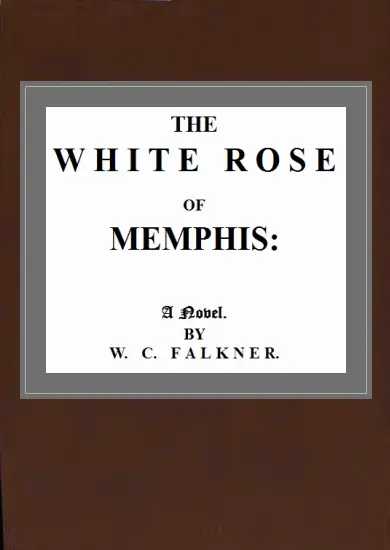
"The White Rose of Memphis" by William C. Falkner is a novel written in the late 19th century. The story centers around Captain Oliver Quitman and Samuel Brazzleman, two steamboat operators in Memphis, as they prepare for a grand inaugural trip of their newly chartered boat, the "White Rose of Memphis." The narrative elegantly unfolds the themes of adventure, romance, and the vibrant social scene of the time, promising an entertaining exploration of life on the Mississippi River." "The opening of the novel sets the stage for an exciting journey as Captain Quitman and Brazzleman discuss their plans for the steamboat's first voyage to New Orleans. They plan to make a splash with a masquerade ball aboard the boat to attract attention and fill the passenger list. As the festivities begin, the atmosphere is electric with anticipation, and various characters, all masked and adorned in splendid costumes, gather to celebrate. Amidst the excitement, a mysterious queen, who captures the interest of many attendees, piques the curiosity of the male maskers. The narrative hints at playful intrigue, romantic pursuits, and the social dynamics of the guests, leaving readers eager to discover how the festivities will unfold aboard the "White Rose."
Introduction adapted from the source catalogue; source summaries may be automatically generated.
Free to read · English · 207,018 words · No account needed
MAKE TIME FOR A GOOD BOOK
On by default. Untick to stop anonymous reading totals. Each page counts after 10 seconds in view. How this works.
Anonymous counting is on unless you have switched it off.
“‘Philadelphia is a beautiful city--so clean, so quiet, so charming; everything so systematic. I think I should like to live here, but for the severely cold winters. I visited Girard College the other day, and would you believe it, Lottie, a man at the gate asked me if I was a preacher. Now, don’t I look like a preacher? Have you ever imagined that I, in any manner, resembled one? Of course not, yet he did ask me the strange question. I, of course, answered promptly, No! and then he allowed me to go in. My curiosity was roused, and I didn’t stop till I learned the reasons why the question was put to me. Mr. Girard inserted a clause in his will that no minister of the gospel should ever be permitted to enter the inclosure.
“There are many things to amuse and instruct one in this sober old city, and I mean to give you a more elaborate history of them in my next letter. I don’t think I ever shall make a very great surgeon, because the dissecting room is a very unpleasant place to me. When engaged in it I can’t for the life of me keep my mind on the business before me, but, in spite of me, it will go straying off into the realms of philosophy. The first time I entered the dissecting room I felt unusually sad; the subject was a young man of powerful frame, well-shaped limbs, brawny chest and handsome face, whom I supposed to be about my own age. A feeling of horror thrilled through my whole frame as I saw the sharp, glittering steel inserted in his white flesh. I then and there became convinced that I never should master the science of surgery, if that was the only way it could be done. When the dead man’s brain and heart were taken out, I took the heart in my left hand and the brain in the other, seated myself as far away as I could without leaving the room, and began to philosophize in a most singular manner. What is this little dark red lump of flesh that I hold in my left hand? Answer--The human heart, the supposed seat of life, the little governor that regulates the quantity of blood that each tiny vein is entitled to as its share. This little lump of flesh puts all the small pumps in motion that move the red life through the human body. This little insignificant thing is the great throne where love holds his court; where all the passions assemble round to pay homage to the king of love. In what corner of this little ball does love hold his court? Where is the identical spot? How is it we can feel it, and not see it? How can so much delicious joy find room in this little bulk? How can it produce such heavenly joys, such ecstatic bliss, as I feel in my love for my Lottie? Then again, how can so small a bulk suffer such untold, indescribable torture as we endure when we love some beautiful object who returns scorn for true love? As I held the heart in my hand, I thought of Shakespeare’s wonderful creations of beauty, and asked myself the question, Was his great heart like this? How could a man possessing a little heart like this, compose such soul-inspiring poetry? Then I thought perhaps it was the brain where all those beautiful things originated, and I turned my attention to it. What was it? Nothing but a few ounces of soft, fatty substance. Is this the great spring from whence such brilliant ideas flow? Was the great Bard of Avon’s brain like this? How could such an insignificant mess of fat give life to such soul-stirring sentiment, such heaven-born inspiration? Was this little gob of fat all that Napoleon had to depend on to enable him to overturn kingdoms and to make kings out of peasants? Did Alexander and Cæsar have brains like this? Did Byron’s base of thought depend on such a slender foundation as this? The more questions I propounded to myself on the subject the more I became bewildered. Scientists assert that the brain is the dome of thought; but if it is so, I must say that the dome of thought is a very insignificant dome. No, it is the soul that dwells in the head, sitting back on its throne, that directs and moves everything. It is not dependent on this little lump of fat for its existence, nor is it in any manner indebted to it for the thoughts that man produces. The soul sits on a throne in a man’s hand, and issues orders, like a king from his earthly throne; all parts of the body are moved by orders from the soul; just as great armies are moved by orders of the king. When the body falls into decay the soul steps out uninjured, and reports to its Creator for duty. Who made this incomprehensible thing called a soul? God. Who made----? Stop right here and seek to know no more; trust everything to that mysterious Power who created this admirable machine called man.
Your reading position is saved on this browser. Take it to another device with a library code. Reading pages adapt to text, rather than matching a printed edition.
BEHIND THE BOOK
This eBook is for the use of anyone anywhere in the United States and most other parts of the world at no cost and with almost no restrictions whatsoever. You may copy it, give it away or re-use it under the terms of the Project Gutenberg License included with this eBook or online at www.gutenberg.org. If you are not located in the United States, you will have to check the laws of the country where you are located before using this eBook. Read the source licence.
The original source file, including credits and licence, is retained by this library. Request an original-format copy at no charge. Please include the book title and Project Gutenberg identifier #41134.
KEEP YOUR CURIOSITY GOING
Coulson Kernahan

Maurice Baring
Frances Wright
Cécile Tormay

Frederic Jesup Stimson

W. H. P. (William Henry Pope) Jarvis