
The Wonderful Year
William John Locke
THE CLASSIC COLLECTION · 1900
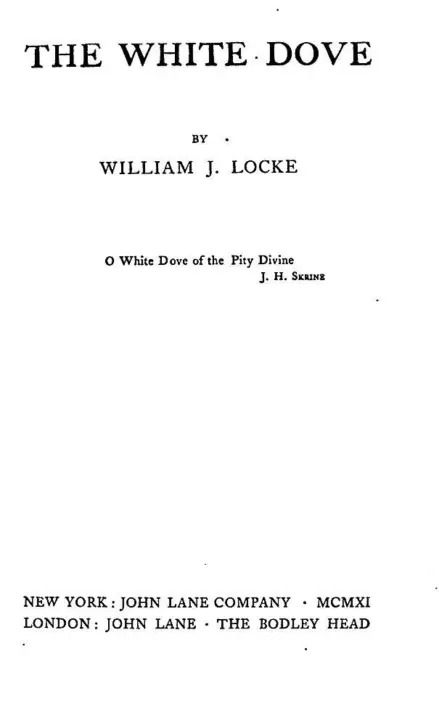
"The White Dove" by William John Locke is a novel written in the late 19th century. The story revolves around Sylvester Lanyon, a dedicated doctor who grapples with the memories of his deceased wife while navigating his relationships with those around him, particularly Ella Defries, a vibrant young woman who challenges his somber outlook on life. The novel explores themes of love, loss, and the complexities of human connection against the backdrop of a slow-paced, reflective life. The beginning of the novel introduces Sylvester in a thoughtful exchange with Ella, revealing their contrasting perspectives on life. While Ella advocates for embracing life's joys despite its struggles, Sylvester appears more guarded and introspective, weighed down by memories of loss. As their conversation unfolds, it becomes clear that Sylvester is on the cusp of significant change, having just sold his medical practice to pursue newfound ambitions in London. This pivotal moment sets the stage for the exploration of his character's internal conflict, laying the groundwork for the unfolding drama of relationships, societal expectations, and personal revelations throughout the story.
Introduction adapted from the source catalogue; source summaries may be automatically generated.
Free to read · English · 72,842 words · No account needed
MAKE TIME FOR A GOOD BOOK
On by default. Untick to stop anonymous reading totals. Each page counts after 10 seconds in view. How this works.
Anonymous counting is on unless you have switched it off.
“Well, perhaps he did,” assented Usher. “Perhaps he did.”
In spite of his contempt for the old man and his pitilessness towards Roderick, he gazed upon his interlocutor with some wonder. Not a shaft of dismay at the disgrace hanging over his son's head seemed to have penetrated the brass-armoured egotism of this placid, unvenerable man. Sylvester waited contemptuously for him to speak.
“You are preferring the charge against him this morning?” asked Usher.
“I have instructed my solicitor to do so.”
“There is still time to telegraph to your solicitor to withdraw it.”
“I have no such intentions.”
“I cannot let you proceed. I have the feelings of a father.”
Sylvester rose, and thrusting his hands in his pockets, stood on the hearth-rug facing Mr. Usher.
“It is no doubt a painful matter to you,” said he, with cold politeness, “but my intentions are unalterable. I will prosecute him right through. Nothing you can possibly say will have the slightest effect on my determination.”
Then the old man seemed to hug his stout body with his arms, and for the first time a gleam came into his pale eyes and he chuckled softly to himself. At the unexpected sound Sylvester started. Such symptoms pointed to senility. But suddenly the old man turned to him with a quick snarl, in startling contrast with his deliberate manner,--
“I suppose you are not aware, you young fool, that you will be sending your own brother to gaol.”
He bent forward, gripping the arms of the chair, fixing Sylvester with an inscrutable gaze, his lips beneath the scrubby white moustache parted and showing his yellow stumps of teeth.
“Your brother. Don't you understand?”
“What idiocy are you talking?” exclaimed Sylvester, in angry impatience.
“I am talking the truth, my young friend. I am a truthful man,” replied Usher, with mocking resumption of his usual habit of speech. “Roderick is your own dear brother.”
“You accuse my father of having an illegitimate son?”
“Oh, no. Roderick is quite legitimate. He is my son. At least, I quite believed your poor mother.”
“My mother--what the devil are you talking about?” cried Sylvester, fiercely. “What has my mother got to do with it?”
“Roderick is her son, my dear Sylvester. Hers and mine. She was my
wife.”
Sylvester glared at him for a moment, and then, the preposterous absurdity of the story dawning upon him, he broke into a contemptuous laugh and turned away. The man was mad.
“I think it time we parted,” said Sylvester. Ushers face expressed
pained surprise.
“You do not believe me?”
Your reading position is saved on this browser. Take it to another device with a library code. Reading pages adapt to text, rather than matching a printed edition.
William John Locke

William John Locke

William John Locke

William John Locke
BEHIND THE BOOK
This eBook is for the use of anyone anywhere in the United States and most other parts of the world at no cost and with almost no restrictions whatsoever. You may copy it, give it away or re-use it under the terms of the Project Gutenberg License included with this eBook or online at www.gutenberg.org. If you are not located in the United States, you will have to check the laws of the country where you are located before using this eBook. Read the source licence.
The original source file, including credits and licence, is retained by this library. Request an original-format copy at no charge. Please include the book title and Project Gutenberg identifier #56013.
KEEP YOUR CURIOSITY GOING
Coulson Kernahan

Maurice Baring
Frances Wright
Cécile Tormay

Frederic Jesup Stimson

W. H. P. (William Henry Pope) Jarvis