THE CLASSIC COLLECTION✦An outlaw’s diary: the CommuneCLASSIC FREE BOOKS
An outlaw’s diary: the Commune
Cécile Tormay
THE CLASSIC COLLECTION · 1903
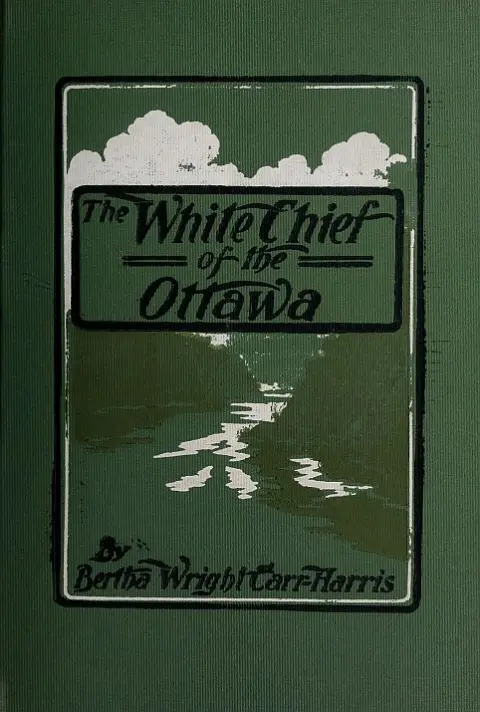
"The White Chief of the Ottawa" by Bertha Carr-Harris is a historical account written in the early 20th century. The narrative provides a detailed account of the life experiences of Philemon Wright, a pioneer and the first settler in the Ottawa region, along with his family, amidst the interactions with the Indigenous communities. The book explores the challenges and triumphs faced by the Wright family as they establish themselves in a wilderness, highlighting themes of courage, cultural exchange, and the spirit of adventure. At the start of the book, the reader is introduced to a pivotal moment in the early 1800s where settlers, led by Philemon Wright, engage in a complex interaction with a Native American chief named Machecawa. The opening chapter describes the settlers’ attempts to negotiate land use with the Indigenous people and the subsequent ceremonial recognition of Wright as "Wabisca Onodis," or "White Chief." This interesting dynamic sets the stage for the rich storytelling of pioneer life, family struggles, and cultural convergence that unfolds in the subsequent chapters, showcasing both the vibrancy of the Ottawa landscape and the diverse characters that inhabit it.
Introduction adapted from the source catalogue; source summaries may be automatically generated.
Free to read · English · 51,020 words · No account needed
MAKE TIME FOR A GOOD BOOK
On by default. Untick to stop anonymous reading totals. Each page counts after 10 seconds in view. How this works.
Anonymous counting is on unless you have switched it off.
A few days later Abbie was summoned to the reception room, and was much surprised to find her father and her brother Bearie in consultation with the Mother Superior. They had just arrived with a raft of timber--the first raft from the Ottawa--and had come to arrange with the nuns to have Abbie spend the evening with them. The Chief looked very grave as he tried to decipher the tattered letter which the Mother Superior translated to him. He said:
"Abbie is a giddy, foolish, light-hearted girl, whose spirits often carry her beyond bounds. I shall be returning to the Utawas in a few days and shall take her home with me. She will be safe at home," he said, as the Mother tried to dissuade him from his purpose.
"Now that your daughter is on restriction of leave she will be perfectly safe with us. We make an exception, of course, in the case of parents taking their daughters out."
No sooner had they emerged from the stone walls of the convent than Abbie related the whole affair to her father, who reproved her for her folly and gave her what is rarely appreciated, sound, fatherly advice.
On reaching the hotel Bearie introduced to his sister an awkward,
bashful youth named Thomas Brigham, who had come down with them on
the raft.
"What part of the backwoods do you come from?" she asked, coldly.
"From the township of Hull," he responded.
"Did you ever see a city before?"
"Well, no, I cannot say that I have, except Montreal and Three Rivers," he replied, as he scraped the mud off his long boots with his pocket knife.
"I thought not," she said.
Her father moved uneasily in his seat on observing the embarrassment of the young man, and said, gravely:
"Thomas is not as rough as he looks. He is one of the ablest young men in the settlement. He may lack the veneer of an officer, but you will find as the years go on that there is no discount on Thomas."
So saying, he arose from the table, and, taking his hat from the rack, said: "Come, let us walk out and see something of the city."
They were coming up St. Peter Street. Abbie was laughing and jesting with Bearie, when they came face to face with Lieutenant Randall.
"Let me introduce you to my brother, Lieutenant Randall," said Abbie. "And this is my father," she said, mischievously.
"Aw, I am awfully pleased to meet you, sir," he said, with a perplexed and bewildered expression on his face.
Your reading position is saved on this browser. Take it to another device with a library code. Reading pages adapt to text, rather than matching a printed edition.
BEHIND THE BOOK
This eBook is for the use of anyone anywhere in the United States and most other parts of the world at no cost and with almost no restrictions whatsoever. You may copy it, give it away or re-use it under the terms of the Project Gutenberg License included with this eBook or online at www.gutenberg.org. If you are not located in the United States, you will have to check the laws of the country where you are located before using this eBook. Read the source licence.
The original source file, including credits and licence, is retained by this library. Request an original-format copy at no charge. Please include the book title and Project Gutenberg identifier #60372.
KEEP YOUR CURIOSITY GOING
Cécile Tormay

Moritz Busch
Coulson Kernahan
John L. Ransom

Maurice Baring
Frances Wright