THE CLASSIC COLLECTION✦An outlaw’s diary: the CommuneCLASSIC FREE BOOKS
An outlaw’s diary: the Commune
Cécile Tormay
THE CLASSIC COLLECTION · 1903
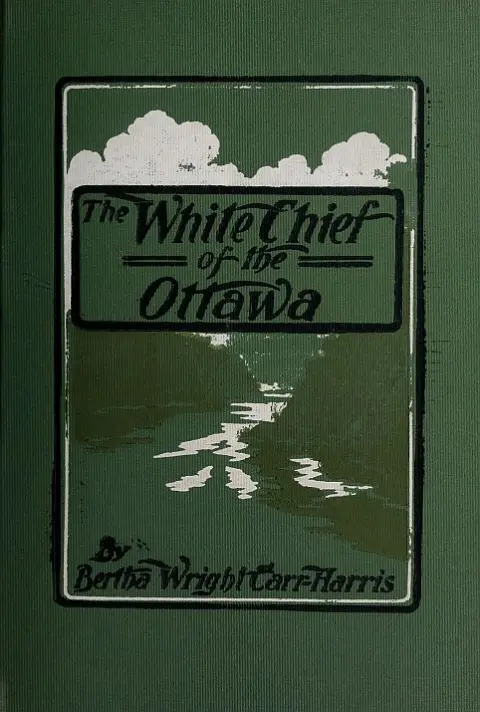
"The White Chief of the Ottawa" by Bertha Carr-Harris is a historical account written in the early 20th century. The narrative provides a detailed account of the life experiences of Philemon Wright, a pioneer and the first settler in the Ottawa region, along with his family, amidst the interactions with the Indigenous communities. The book explores the challenges and triumphs faced by the Wright family as they establish themselves in a wilderness, highlighting themes of courage, cultural exchange, and the spirit of adventure. At the start of the book, the reader is introduced to a pivotal moment in the early 1800s where settlers, led by Philemon Wright, engage in a complex interaction with a Native American chief named Machecawa. The opening chapter describes the settlers’ attempts to negotiate land use with the Indigenous people and the subsequent ceremonial recognition of Wright as "Wabisca Onodis," or "White Chief." This interesting dynamic sets the stage for the rich storytelling of pioneer life, family struggles, and cultural convergence that unfolds in the subsequent chapters, showcasing both the vibrancy of the Ottawa landscape and the diverse characters that inhabit it.
Introduction adapted from the source catalogue; source summaries may be automatically generated.
Free to read · English · 51,020 words · No account needed
MAKE TIME FOR A GOOD BOOK
On by default. Untick to stop anonymous reading totals. Each page counts after 10 seconds in view. How this works.
Anonymous counting is on unless you have switched it off.
"'Yonder, Birrboy, yonder's the Laird!' quoth I, pointing to an Indian Chief with the feathers of wild birds stuck round in his hat, and long silver earrings hanging down on his shoulders.
"'Bless me!' said Birrboy, with open mouth, 'and yon's the Laird?'
"'It's all that's for him,' I continued, 'and yonder's the gardener coming after him.' This was another Indian with a branch of a tree on his shoulder for the fire.
"'Bless me! He's a queer Laird that, and is that ane of his seats?'
"I explained that it was, and that he had many such like up and down
the 'lang planting.'
"'What wad the bodies about Minnyvive think if they saw sic lairds and gairdeners coming up the fair as thae, mon?' he exclaimed. 'I'll be hanged gin they wadna creep in aneath the beds wi' fear, like Nell Coskerie in a thunner-storm.'
"Landing on the shore at a place called Chute of 'Blendo,' we came upon pieces of junk pine split up in thin pieces.
"'An' what ca' ye thae now?' inquired the Scotchman.
"'Shingles,' I replied. 'The people of this country cover their
houses with them.'
"'Hech, mon, and are thae the Canada sclate?' he returned. 'Ye hae queer names for things here. There's a shoe like a swine trough ye ca' the saboo, then there's a shoe ye ca' the morgason, a kin o' thing like a big splenchan the bodies row their feet in. Deil hang me, if ever I heard o' sic names. I'll never bring my mooth into the wye o' pronooncing them.'
"Proceeding up the river we came near to the public works.
"'And is yon a timmer clauchan we see?' pointing to Bytown, quoth the
Laird.
"'Ay, yonder are the shanties,' I informed him, 'of a village the
people are busy building.'
"'Ay, there again, noo,' he replied, 'What a queer name ye hae for
timmer houses.'
"I explained that the first rough house that a settler built was called a shanty; the next, which was more genteel, was called a log-house; and the third and last was a clapboard house.
"He expressed some astonishment at this, and wondered 'if I could recommend him to a clout of land ony gate aboot that he could big a bit shanty on an' tak' a blaw o' the pipe in wi' comfort.'
"I informed him that land was by no means scarce, and that he might get a farm for an auld sang. 'Ay, mon,' I said, 'a farm larger than Birrboy for an auld sang.'
Your reading position is saved on this browser. Take it to another device with a library code. Reading pages adapt to text, rather than matching a printed edition.
BEHIND THE BOOK
This eBook is for the use of anyone anywhere in the United States and most other parts of the world at no cost and with almost no restrictions whatsoever. You may copy it, give it away or re-use it under the terms of the Project Gutenberg License included with this eBook or online at www.gutenberg.org. If you are not located in the United States, you will have to check the laws of the country where you are located before using this eBook. Read the source licence.
The original source file, including credits and licence, is retained by this library. Request an original-format copy at no charge. Please include the book title and Project Gutenberg identifier #60372.
KEEP YOUR CURIOSITY GOING
Cécile Tormay

Moritz Busch
Coulson Kernahan
John L. Ransom

Maurice Baring
Frances Wright