THE CLASSIC COLLECTION✦The story of the Philippines, for use in the schools of the Philippine IslandsCLASSIC FREE BOOKS
The story of the Philippines, for use in the schools of the Philippine Islands
Adeline Knapp
THE CLASSIC COLLECTION · 1908
"The Well in the Desert" by Adeline Knapp is a novel written in the early 20th century. The story introduces the inhabitants of Blue Gulch, a mining town, and follows the tumultuous life of Gabriel Gard, who has escaped prison and struggles for survival in the unforgiving desert landscape. Themes of desperation, survival, and the human psyche against the backdrop of harsh surroundings are likely to play a significant role throughout the narrative. At the start of the book, the atmosphere is set in Blue Gulch, characterized by the sounds of laughter and music emanating from the local dance hall. We meet a man, seeking refuge in the shadows, who approaches a lawyer named Westcott for assistance. This man, revealed to be Barker, is frail and desperately seeks a way to return to Iowa in hopes of dying in familiar surroundings. The opening chapters are rich with tension as Barker pleads for help, hinting at a dark past involving crime and betrayal that connects him deeply to Westcott. The dynamics between these two characters imply a brewing conflict, foreshadowing the themes of loyalty, deception, and the struggle for redemption in a desolate setting.
Introduction adapted from the source catalogue; source summaries may be automatically generated.
Free to read · English · 69,182 words · No account needed
MAKE TIME FOR A GOOD BOOK
On by default. Untick to stop anonymous reading totals. Each page counts after 10 seconds in view. How this works.
Anonymous counting is on unless you have switched it off.
Her hearty tone satisfied even his jealous ears. The girl had stooped to caress Patsy, who lay panting on the sand, his tongue fluttering like a little red signal-flag. Her eyes were bright and happy, her cheeks touched to a brilliant glow by her run with Dickens. Sandy nodded again.
“Yes,” he said, “I guess it ain’t hurt you none.”
“What?” Helen had forgotten what they had been talking about. She looked up absently, still rubbing Patsy’s sides.
“Education,” the foreman said, “I was afraid mebby it had.”
“Nonsense, Sandy, Education doesn’t hurt people.”
“N-o-,” Sandy’s acquiescence was deliberative. “Not people o’ intellectooals, that has savez naturally,” he said, “but the critter that gets it fed to him regular wants to be kind o’ wide between the ears allee samee.”
“Didn’t you enjoy going to school when you were a boy, Sandy?” Helen asked; she loved to draw the cow-puncher out.
“Me?” he questioned, unsuspectingly, “Sure: I’d a liked it first rate if I’d ever a’ went.
“I never did go none till I was growed,” he went on. “Then we started a night-school, back to Michigan, where I was raised. They was a bunch of us set out to see it through, all young fellers that worked the farms day-times. We was plum in love with the idee o’ that night-school.”
“It must have been interesting,” Helen suggested, “You would all have a strong purpose at that age.”
“Sure,” Sandy grew reminiscent. “We went the first night,” he said, “An’ we’d forgot to bring any candles. We went the next night an’ the teacher’d forgot to come.”
He gazed across the plain, lost in memory of those far, fond days. “Then we went the third night,” he resumed, dreamily, “an’ reviewed what we’d learned the two previous evenin’s, and’ I cal’late that finished my schoolin’.”
Helen laughed, tweaking Patsy’s ears, but the foreman regarded her with mild inquiry, unheeding her mirth.
“Now with you it’s different Miss Helen,” he continued, still considering his views on education. “Gettin’ learnin’ ’s all right for you. First place you’re smart.”
“Thank you,” Helen bowed over Patsy.
“You’re sure welcome,” gravely.
“Furthermore,” Sandy proceeded categorically, “You bein’ a girl, you don’t have to get your livin’. A man now, a practical man that’s gotter rustle his grub, don’t wanter pack no extry outfit.”
He turned toward Dickens, who all this time had been standing half asleep, his bridle reins on the ground.
“Dick, he’s gettin’ on, ain’t he,” the foreman said, critically, “but he stands up to it mighty well, yet.”
Your reading position is saved on this browser. Take it to another device with a library code. Reading pages adapt to text, rather than matching a printed edition.
Adeline Knapp
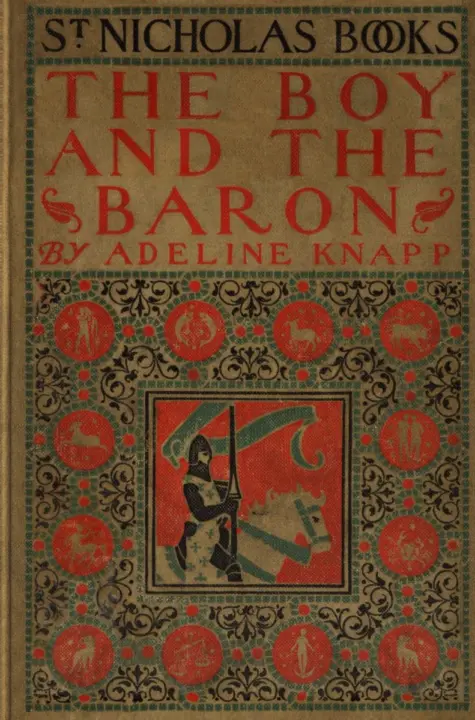
Adeline Knapp

Adeline Knapp

Adeline Knapp
BEHIND THE BOOK
This eBook is for the use of anyone anywhere in the United States and most other parts of the world at no cost and with almost no restrictions whatsoever. You may copy it, give it away or re-use it under the terms of the Project Gutenberg License included with this eBook or online at www.gutenberg.org. If you are not located in the United States, you will have to check the laws of the country where you are located before using this eBook. Read the source licence.
The original source file, including credits and licence, is retained by this library. Request an original-format copy at no charge. Please include the book title and Project Gutenberg identifier #68279.
KEEP YOUR CURIOSITY GOING
Coulson Kernahan

Maurice Baring
Frances Wright
Cécile Tormay

Frederic Jesup Stimson

W. H. P. (William Henry Pope) Jarvis