THE CLASSIC COLLECTION✦A dead man’s diaryCLASSIC FREE BOOKS
A dead man’s diary
Coulson Kernahan
THE CLASSIC COLLECTION · 1923
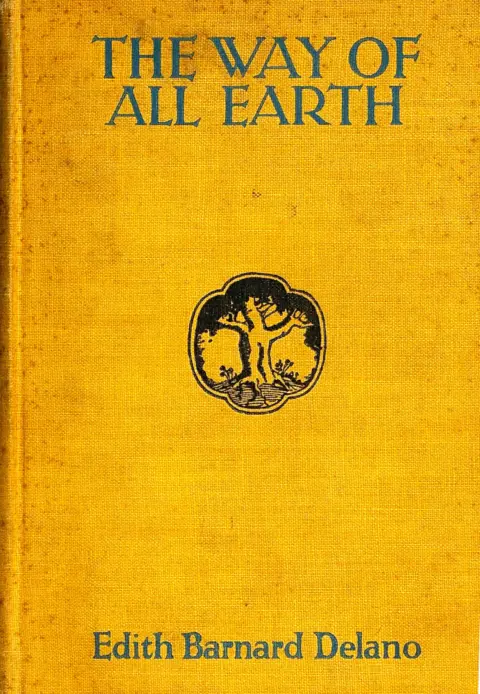
The way of all earth by Edith Barnard Delano is a novel written in the early 20th century. It follows Brice and Anne Denison, a suburban couple whose marriage is strained by social ambition, financial risk, and moral compromise amid a circle of wealthier friends and tempters. The story probes class aspiration, gambling—both at cards and in stocks—and the pull between steadiness and the glitter of fast success.
The opening of the novel tracks Brice’s weary commute home and his pride in their modest house, set against Anne’s growing hunger for status and her flirtatious rapport with the affluent Ranney Copeland. A quarrel flares when Brice refuses moneyed bridge games and social climbing, while Anne argues that “the right people” and bolder risks will advance his career; talk of a pending office promotion sharpens the divide. Pressed by Ranney, Anne secretly withdraws $4,000 from their joint account to speculate, and when Brice discovers it, their fight turns explosive as she hints she could choose Ranney. Fleeing to house-sit for her well-off friends, Anne returns to find Brice still absent; after anxious calls she visits his office and learns he abruptly resigned when asked to buy company stock for a promotion and confessed to having no savings, leaving her shocked and seeking help from her friend Veronica.
Introduction adapted from the source catalogue; source summaries may be automatically generated.
Free to read · English · 68,599 words · No account needed
MAKE TIME FOR A GOOD BOOK
On by default. Untick to stop anonymous reading totals. Each page counts after 10 seconds in view. How this works.
Anonymous counting is on unless you have switched it off.
Anne looked at his back. What had he gone to the desk for? She thought quickly. That check-book. She had not filled in the stub, but the check was gone. This was no time tonight, when he was in such a mood. She watched him covertly, thinking quickly, planning. It was not the first time they had quarreled, come to a place where going on seemed impossible, where both had tacitly agreed to stop, where both had adopted a new manner that dropped a curtain of silence behind them, shutting out the sordidness and the threatening disaster of such a scene as they had just been living through. She found her cue. A change of voice, of attitude, of manner.
She went to him, passed a hand lightly over his hair. It cost her something to do that, but the price was, after all, paid to herself in self-satisfaction at her magnanimity.
“You’re tired. Don’t work tonight. Let’s have a game of cribbage or something,” she said.
Brice laid his pipe on the top of the desk--it had gone out again--and reached up for her hand. He raised his head, and his eyes were moist. “You’re a good old girl, Nance!” he said, gruffly.
“What shall we play?” she asked. “Come along--you’re so tired!”
“In a minute. I took out new life-insurance policy today. Got to write the check for it. They made me pay high--I’m a bit below par, it seems. Nothing to worry about.”
New life-insurance. Then he, too, was counting on that coming increase in salary. But--that check-book.
“How much--is the premium?” she asked. Her lips felt dry.
“Two hundred.”
Two hundred, and she had drawn down to less than that. For his sake, all for his sake; and of course they would get it back, “turn it over,” but--
“Brice, don’t write the check tonight.”
“It won’t take a minute.”
“Brice, I--Brice--you can’t!”
Something in her voice made him turn again. If it had only been any other night than this, when he was overtired. “Brice, I drew some money today.”
His face fell. “How much?” he asked, quietly.
“Four thousand.”
That incredulity in his face, that bewilderment. “What do you mean?
What’s happened?”
“Nothing has happened, my dear, except that I am determined to make you do the right thing, the sort of thing other men do. You worked hard for that money, Brice, and you were just keeping it idle there in the bank. I have invested it for you, for us.”
He stood up. His face was very white. “Would you mind telling me just
what you have done?”
Your reading position is saved on this browser. Take it to another device with a library code. Reading pages adapt to text, rather than matching a printed edition.
BEHIND THE BOOK
This eBook is for the use of anyone anywhere in the United States and most other parts of the world at no cost and with almost no restrictions whatsoever. You may copy it, give it away or re-use it under the terms of the Project Gutenberg License included with this eBook or online at www.gutenberg.org. If you are not located in the United States, you will have to check the laws of the country where you are located before using this eBook. Read the source licence.
The original source file, including credits and licence, is retained by this library. Request an original-format copy at no charge. Please include the book title and Project Gutenberg identifier #77331.
KEEP YOUR CURIOSITY GOING
Coulson Kernahan

Maurice Baring
Frances Wright
Cécile Tormay

Frederic Jesup Stimson

W. H. P. (William Henry Pope) Jarvis