THE CLASSIC COLLECTION✦A dead man’s diaryCLASSIC FREE BOOKS
A dead man’s diary
Coulson Kernahan
THE CLASSIC COLLECTION · 1923
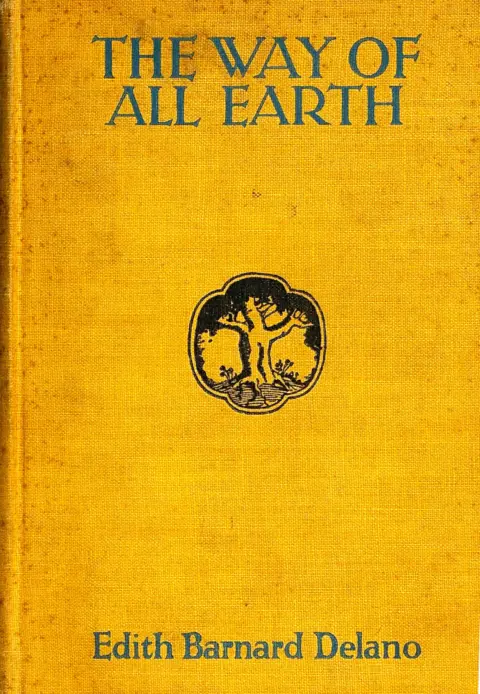
The way of all earth by Edith Barnard Delano is a novel written in the early 20th century. It follows Brice and Anne Denison, a suburban couple whose marriage is strained by social ambition, financial risk, and moral compromise amid a circle of wealthier friends and tempters. The story probes class aspiration, gambling—both at cards and in stocks—and the pull between steadiness and the glitter of fast success.
The opening of the novel tracks Brice’s weary commute home and his pride in their modest house, set against Anne’s growing hunger for status and her flirtatious rapport with the affluent Ranney Copeland. A quarrel flares when Brice refuses moneyed bridge games and social climbing, while Anne argues that “the right people” and bolder risks will advance his career; talk of a pending office promotion sharpens the divide. Pressed by Ranney, Anne secretly withdraws $4,000 from their joint account to speculate, and when Brice discovers it, their fight turns explosive as she hints she could choose Ranney. Fleeing to house-sit for her well-off friends, Anne returns to find Brice still absent; after anxious calls she visits his office and learns he abruptly resigned when asked to buy company stock for a promotion and confessed to having no savings, leaving her shocked and seeking help from her friend Veronica.
Introduction adapted from the source catalogue; source summaries may be automatically generated.
Free to read · English · 68,599 words · No account needed
MAKE TIME FOR A GOOD BOOK
On by default. Untick to stop anonymous reading totals. Each page counts after 10 seconds in view. How this works.
Anonymous counting is on unless you have switched it off.
Down the hill with the pail of steaming brew between them, cups handed out to the men who passed by, twos and threes, singly, stopping only to quaff down the drink, avoiding Anne’s eyes.
Darkness: people there in the house, in the room, whisperings, a door opened upon the night. The cool night, the sweet night, night sounds and stars, and somewhere out there Warren, alone, perhaps stumbling, perhaps fallen, perhaps going on and on, losing himself over and over, like those lanterns that came and went through the woods.
Towards midnight the house became quieter. People had slipped away.
Only Mrs. Cadigan remained.
“You ought to go back to the children,” Anne said.
“Sure, they can do without me the night.”
Before dawn the sound of men running. Anne rushed to the road. “Have
they----”
“Not yet. But don’t you go down, ma’am. They’re getting things ready to drag the mill-pond.”
Blindly into the house again. Morning. Women entering quietly, as though they were gathering for a.... Anne went into her bedroom, fell on her knees. Not prayer, nothing that words could be found for. Weakness. Her spirit clutching at something that was not there, held by human suffering to human Weakness, faltering but reaching out.
So far off, at first. Sounds, all part of the horror. Part of the encompassing agony. Then a voice at the door.
“Mis’ Denison! Quick----!”
Herself in the door, women crowding about her, supporting her, laughing and crying. Their words with no meaning. Those sounds coming nearer. Men shouting and calling, waving their hats, swinging their lanterns. Brice in the doorway. Over his shoulder, Warren.
“Here’s hot milk, Mis’ Denison.” That, from one of the women. Another was on her knees, chafing his feet. Another came presently with a pail of hot water to bathe them in. The dear weight on her lap, his head on her shoulder, and Brice standing by, watching them both.
“We’ll come back by and by and red up a bit,” one of the women said. Anne smiled at them. They looked so very far off. They were shadows. In her arms was the substance of life. The door closed behind them.
Warren’s arm went about her neck. He whimpered a little. “You were so mean, Mums, you and Dad. I ran away. I wanted to show you.”
Brice carried him to bed. He was asleep before they undressed him.
Later, facing each other, the night and the years there between them.
“Brice, did you hear what he said?”
Your reading position is saved on this browser. Take it to another device with a library code. Reading pages adapt to text, rather than matching a printed edition.
BEHIND THE BOOK
This eBook is for the use of anyone anywhere in the United States and most other parts of the world at no cost and with almost no restrictions whatsoever. You may copy it, give it away or re-use it under the terms of the Project Gutenberg License included with this eBook or online at www.gutenberg.org. If you are not located in the United States, you will have to check the laws of the country where you are located before using this eBook. Read the source licence.
The original source file, including credits and licence, is retained by this library. Request an original-format copy at no charge. Please include the book title and Project Gutenberg identifier #77331.
KEEP YOUR CURIOSITY GOING
Coulson Kernahan

Maurice Baring
Frances Wright
Cécile Tormay

Frederic Jesup Stimson

W. H. P. (William Henry Pope) Jarvis