THE CLASSIC COLLECTION✦A dead man’s diaryCLASSIC FREE BOOKS
A dead man’s diary
Coulson Kernahan
THE CLASSIC COLLECTION · 1923
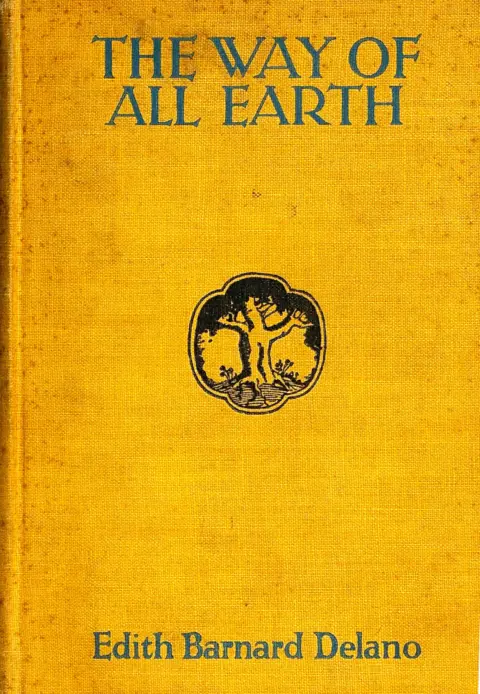
The way of all earth by Edith Barnard Delano is a novel written in the early 20th century. It follows Brice and Anne Denison, a suburban couple whose marriage is strained by social ambition, financial risk, and moral compromise amid a circle of wealthier friends and tempters. The story probes class aspiration, gambling—both at cards and in stocks—and the pull between steadiness and the glitter of fast success.
The opening of the novel tracks Brice’s weary commute home and his pride in their modest house, set against Anne’s growing hunger for status and her flirtatious rapport with the affluent Ranney Copeland. A quarrel flares when Brice refuses moneyed bridge games and social climbing, while Anne argues that “the right people” and bolder risks will advance his career; talk of a pending office promotion sharpens the divide. Pressed by Ranney, Anne secretly withdraws $4,000 from their joint account to speculate, and when Brice discovers it, their fight turns explosive as she hints she could choose Ranney. Fleeing to house-sit for her well-off friends, Anne returns to find Brice still absent; after anxious calls she visits his office and learns he abruptly resigned when asked to buy company stock for a promotion and confessed to having no savings, leaving her shocked and seeking help from her friend Veronica.
Introduction adapted from the source catalogue; source summaries may be automatically generated.
Free to read · English · 68,599 words · No account needed
MAKE TIME FOR A GOOD BOOK
On by default. Untick to stop anonymous reading totals. Each page counts after 10 seconds in view. How this works.
Anonymous counting is on unless you have switched it off.
He smoked for a moment in silence. “Just what do you mean?” he asked.
“I’m not clever. Perhaps I can’t make it clear. But marriage is something more than a contract. It ought to be, anyway. Life is.”
“Life is that, too.”
“Yes. But it’s only when we work inside of the terms of the contract, of life, marriage, anything, that we make anything of it. It’s only when we don’t strain at things that we’re free.”
“We strained at things. And they broke.”
“Broke. We didn’t see.”
“See what?”
“Oh. All life is a part of life, Brice. It’s when we don’t go along with it, don’t see there’s something that carries us along....”
“What do you mean?” he asked again.
She hesitated. He could scarcely hear the words. “There have been times when I have seen God.”
After a moment he said, “You weren’t religious.”
“I’m not speaking in terms of religion. Not thinking that way.”
“How, then?”
“Terms of nature, perhaps. The earth goes on--autumn and spring, sunlight, storms, but on and on, carried along. There are scars. Things crowd into growth to cover them up. I’ve lived among farmers, bad seasons, good seasons. People, too--we enjoy, grow, suffer. Something carries us on. There is something sustaining. Something at work through everything, urging us, binding us, banding us. So we go on.”
“Is that what you mean by having seen God?”
“The force is there. And at work. Why be afraid of terms, of names?”
“But force. I think of force as something to use.”
“I, too,” she murmured.
He filled his pipe again. “Use--God?”
“God, force. We do use it. Whatever’s at work sees that we do, whether
we know it or not.”
“Unconsciously. Haphazard.”
“Not haphazard. We don’t see the whole scheme. That does not make us less a part of it. Nor less important. And it can be used consciously.”
“No.”
“Yes. I have used it consciously.”
“How?”
“By faith.” He stirred impatiently, and she looked at him. “That word offends you. I mean it only as a reaching out with one’s soul, a willingness to let the force that is God carry us along.”
He sat for minutes without speaking. When at last he spoke it was in a different tone. “I don’t know you, Anne.”
“Well, there is Warren! He is our going on.” Presently she added, without looking up, “You had better look in on him before you go.”
Your reading position is saved on this browser. Take it to another device with a library code. Reading pages adapt to text, rather than matching a printed edition.
BEHIND THE BOOK
This eBook is for the use of anyone anywhere in the United States and most other parts of the world at no cost and with almost no restrictions whatsoever. You may copy it, give it away or re-use it under the terms of the Project Gutenberg License included with this eBook or online at www.gutenberg.org. If you are not located in the United States, you will have to check the laws of the country where you are located before using this eBook. Read the source licence.
The original source file, including credits and licence, is retained by this library. Request an original-format copy at no charge. Please include the book title and Project Gutenberg identifier #77331.
KEEP YOUR CURIOSITY GOING
Coulson Kernahan

Maurice Baring
Frances Wright
Cécile Tormay

Frederic Jesup Stimson

W. H. P. (William Henry Pope) Jarvis