THE CLASSIC COLLECTION✦An outlaw’s diary: the CommuneCLASSIC FREE BOOKS
An outlaw’s diary: the Commune
Cécile Tormay
THE CLASSIC COLLECTION · 1848
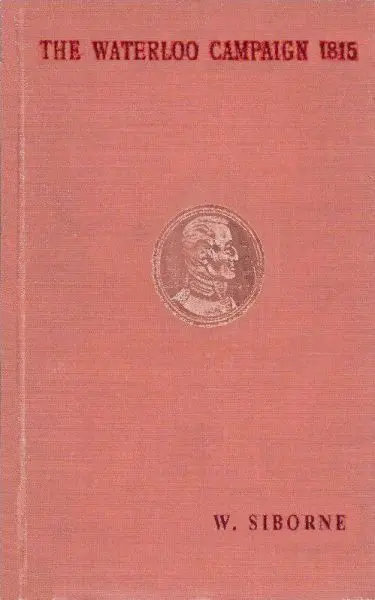
"The Waterloo Campaign, 1815" by William Siborne is a historical account written in the mid-19th century. The book provides an in-depth and detailed examination of the events surrounding the Waterloo Campaign, including the key battles fought between Napoleon's forces and the Allied armies led by the Duke of Wellington and Field Marshal Blücher. Siborne's work is noted for its rigorous accuracy and completeness, making it a critical resource for understanding this significant conflict in European history. At the start of the book, the author sets the stage by detailing Napoleon's escape from Elba and his subsequent return to France, which reignited tensions in Europe. Siborne discusses the political atmosphere among the Allied powers as they mobilize to counter Napoleon's ambition and the strategic significance of the Belgian frontier. The opening serves to outline the build-up to the conflict, highlighting the military and diplomatic maneuvers of the various nations involved, ultimately foreshadowing the dramatic engagements that would culminate in the pivotal Battle of Waterloo.
Introduction adapted from the source catalogue; source summaries may be automatically generated.
Free to read · English · 240,588 words · No account needed
MAKE TIME FOR A GOOD BOOK
On by default. Untick to stop anonymous reading totals. Each page counts after 10 seconds in view. How this works.
Anonymous counting is on unless you have switched it off.
The First and Second French Corps d'Armée had reached the suburbs of Paris on the Gonesse road, during the night; and held possession of Le Bourget until the morning of the 29th. The Imperial Guard and the Sixth Corps, as also the reinforcements that had arrived from the interior, were, during the forenoon of the 29th, on the high road by Claie and Pantin, under the command of GROUCHY; and were directed to occupy several defensive points on that side. The Third and Fourth Corps d'Armée, under VANDAMME, reached Paris at noon on the 29th, by the Lagny road: they passed through the capital, and occupied the Heights of Montrouge on the south side.
The Anglo-Allied Army arrived, on the 29th, at different points on the road between Gournay and Pont St Maxence.
The Advanced Guard, consisting of VIVIAN's Light Cavalry Brigade, supported by that of ARENTSSCHILDT, crossed the Oise at Pont St Maxence, and reached Senlis.
The British Cavalry moved from La Taulle to Pont St Maxence.
The Second Corps, under Lord HILL, moved from Petit Crevecoeur to
Clermont.
The First Corps, under Sir JOHN BYNG, moved from its camp near Couchy, by Estrée St Denis, along the high road to St Martin Longeau.
The Reserve, under Sir JAMES KEMPT, moved from its camp near Roye, to Gournay, on the road to Pont St Maxence.
The following were the positions of the respective Armies on the
evening of the 29th:--
The First Prussian Corps d'Armée had its Advanced Guard and Reserve Cavalry at Aulnay and Savegny; with Detachments of the latter at Serran, Livry, Bondy, and Baubigny. The Fusilier Battalion of the 7th Regiment stood at Nonneville. The 6th Uhlans and the 1st Silesian Hussars, with two Horse Batteries, were posted along the Ourcq Canal. The Corps itself rested its Right on Blanc Mesnil, and its Left on Aulnay.
The Third Corps d'Armée was at Dammartin and in its vicinity. Its Reserve Cavalry stood at Tremblay, in support of ZIETEN.
The Fourth Corps had its Advanced Guard between Le Bourget and St Denis, which it invested. Lieutenant Colonel VON SCHILL, with the 1st Silesian Landwehr Cavalry and two Battalions of Infantry, was posted at Stains. The Corps itself was at Le Bourget.
Prince BLÜCHER's Head Quarters were at Gonesse.
The Advanced Guard of the Anglo-Allied Army was at Senlis.
The British Cavalry was at Pont St Maxence.
The Second and Fourth Divisions, the Nassau troops, and ESTORFF's Light Cavalry, were at Clermont.
The First and Third Divisions, and the Dutch-Belgian troops, were at
St Martin Longeau.
The Fifth and Sixth Divisions, the Brunswick troops, and the Reserve Artillery, were at Gournay.
Your reading position is saved on this browser. Take it to another device with a library code. Reading pages adapt to text, rather than matching a printed edition.
BEHIND THE BOOK
This eBook is for the use of anyone anywhere in the United States and most other parts of the world at no cost and with almost no restrictions whatsoever. You may copy it, give it away or re-use it under the terms of the Project Gutenberg License included with this eBook or online at www.gutenberg.org. If you are not located in the United States, you will have to check the laws of the country where you are located before using this eBook. Read the source licence.
The original source file, including credits and licence, is retained by this library. Request an original-format copy at no charge. Please include the book title and Project Gutenberg identifier #58268.
KEEP YOUR CURIOSITY GOING
Cécile Tormay

Moritz Busch
John L. Ransom
Frances Wright
Cécile Tormay

Mabel Potter Daggett