THE CLASSIC COLLECTION✦An outlaw’s diary: the CommuneCLASSIC FREE BOOKS
An outlaw’s diary: the Commune
Cécile Tormay
THE CLASSIC COLLECTION · 1848
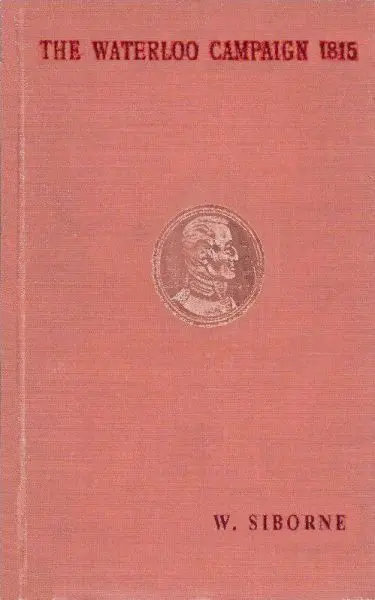
"The Waterloo Campaign, 1815" by William Siborne is a historical account written in the mid-19th century. The book provides an in-depth and detailed examination of the events surrounding the Waterloo Campaign, including the key battles fought between Napoleon's forces and the Allied armies led by the Duke of Wellington and Field Marshal Blücher. Siborne's work is noted for its rigorous accuracy and completeness, making it a critical resource for understanding this significant conflict in European history. At the start of the book, the author sets the stage by detailing Napoleon's escape from Elba and his subsequent return to France, which reignited tensions in Europe. Siborne discusses the political atmosphere among the Allied powers as they mobilize to counter Napoleon's ambition and the strategic significance of the Belgian frontier. The opening serves to outline the build-up to the conflict, highlighting the military and diplomatic maneuvers of the various nations involved, ultimately foreshadowing the dramatic engagements that would culminate in the pivotal Battle of Waterloo.
Introduction adapted from the source catalogue; source summaries may be automatically generated.
Free to read · English · 240,588 words · No account needed
MAKE TIME FOR A GOOD BOOK
On by default. Untick to stop anonymous reading totals. Each page counts after 10 seconds in view. How this works.
Anonymous counting is on unless you have switched it off.
Whilst the Prussians were thus, on the 26th, hastening towards Compiegne; the French General, Count D'ERLON, was, on this very day, also marching upon that point from Soissons, with the remains of his Corps d'Armée--about four thousand men--having succeeded, through his urgent representations of the expediency of such a movement, in obtaining GROUCHY's assent to its execution.
The troops of the Third and Fourth French Corps d'Armée moved this day from Rheims towards Soissons, a distance which they could not, however, accomplish in one day's march.
The positions of the respective Armies on the evening of the 26th were
as follows:--
Of the Anglo-Allied Army, the Advanced Guard (VIVIAN's Hussar
Brigade) was at Mattignies, near the Somme, having its Picquets on
that river.
The Second Division, the Nassau troops, and the British Cavalry, were encamped near Beauvois and Lanchy.
The First and Third Divisions, the Dutch-Belgian Infantry attached to the First Corps, and the Dutch-Belgian Cavalry, were encamped near Caulaincourt and Martin de Des Près.
The Fourth Division was encamped at Gouay.
The First British Brigade of Guards was at Peronne.
The Reserve, consisting of the Fifth and Sixth Divisions, the Brunswick troops, and the Reserve Artillery was encamped near Nourois, Magny, and Belle Englise.
The Pontoon Train was at Estrées.
The Duke of WELLINGTON's Head Quarters were at Vermand.
The Second and Fourth Brigades of the First Prussian Corps d'Armée were at Chauny, not far from which was also the First Brigade. The Third Brigade, forming the Advanced Guard, was on the march to Compiegne.
The Third Corps was at Guiscard.
The Fourth Corps was at Ressons.
Prince BLÜCHER's Head Quarters were at Genvry, near Noyon.
The French troops under D'ERLON were not far from Compiegne, on the road from Soissons. Those of the Third and Fourth Corps, under VANDAMME, were at some point between Rheims and Soissons.
GROUCHY's Head Quarters were at Soissons.
It was half past four o'clock in the morning of the 27th, when the Advanced Guard of the Prussian Corps d'Armée (the Third Brigade), after a forced march of about twenty five miles, reached Compiegne. General JAGOW immediately posted his troops, in the most advantageous manner, in and about the town, so as to be prepared to meet any attack that the Enemy might make; and detached three Squadrons of the 1st Silesian Hussars upon the Soissons road, and the remaining Squadron upon the Paris road, in observation.
Your reading position is saved on this browser. Take it to another device with a library code. Reading pages adapt to text, rather than matching a printed edition.
BEHIND THE BOOK
This eBook is for the use of anyone anywhere in the United States and most other parts of the world at no cost and with almost no restrictions whatsoever. You may copy it, give it away or re-use it under the terms of the Project Gutenberg License included with this eBook or online at www.gutenberg.org. If you are not located in the United States, you will have to check the laws of the country where you are located before using this eBook. Read the source licence.
The original source file, including credits and licence, is retained by this library. Request an original-format copy at no charge. Please include the book title and Project Gutenberg identifier #58268.
KEEP YOUR CURIOSITY GOING
Cécile Tormay

Moritz Busch
John L. Ransom
Frances Wright
Cécile Tormay

Mabel Potter Daggett