The Redskins; or, Indian and Injin, Volume 1. Being the Conclusion of the Littlepage Manuscripts
James Fenimore Cooper

THE CLASSIC COLLECTION · 1830
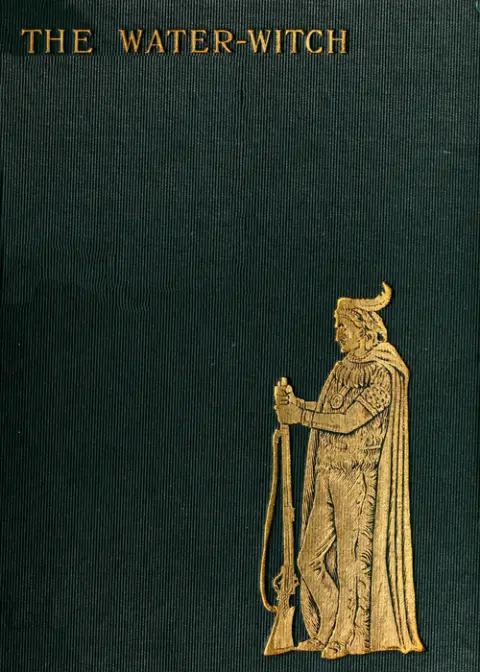
"The Water-Witch; Or, the Skimmer of the Seas: A Tale" by James Fenimore Cooper is a historical novel written in the mid-19th century. The narrative is set against the backdrop of early colonial Americana and explores themes of piracy, moral ambiguity, and the attributes of civilization. The story introduces a range of characters, including the astute Alderman Van Beverout, his niece Alida, and a mysterious mariner whose arrival disrupts their acquaintance with the world of seafaring and adventure. The opening of the novel establishes a vivid setting around the thriving New York harbor and its surroundings in the early 18th century. Through detailed exposition, Cooper provides context for the interplay of European influence and native tradition, alongside the socio-political dynamics of the time. The narrative commences with the Alderman departing his home, accompanied by his slaves, and engages in witty conversation that reveals his character and anxieties over the burgeoning city. The interactions set the stage for the conflicts and connections that will unfold as the Alderman, Alida, and others encounter the enigmatic "Skimmer of the Seas," which foreshadows the adventure and moral complexity that lies ahead.
Introduction adapted from the source catalogue; source summaries may be automatically generated.
Free to read · English · 158,356 words · No account needed
MAKE TIME FOR A GOOD BOOK
On by default. Untick to stop anonymous reading totals. Each page counts after 10 seconds in view. How this works.
Anonymous counting is on unless you have switched it off.
“Thou hast the unconsciousness and reliance of a ship-boy! But those who are older, know that the life of a sailor is one of constant and imminent hazard.—Thou hast been among the islands in the hurricane, and hast seen the power of the elements!”
“I was in the hurricane, and so was the brigantine; and there you see how taut and neat she is aloft, as if nothing had happened!”
“And you saw us yesterday floating on the open sea, while a few ill-fastened spars kept us from going into its depths!”
“The spars floated, and you were not drowned; else, I should have wept
bitterly, Eudora.”
“But thou wilt go deeper into the country, and see more of its beauties—its rivers, and its mountains—its caverns, and its woods. Here all is change, while the water is ever the same.”
“Surely, Eudora, you forget strangely!—Here it is all America. This mountain is America; yonder land across the bay is America, and the anchorage of yesterday was America. When we shall run off the coast, the next land-fall will be England, or Holland, or Africa; and with a good wind, we may run down the shores of two or three countries in a day.”
“And on them, too, thoughtless boy! If you lose this occasion, thy life will be wedded to hazard!”
“Farewell, Eudora!” said the urchin, raising his mouth to give and
receive the parting kiss.
“Eudora, adieu!” added a deep and melancholy voice, at her elbow. “I can delay no longer, for my people show symptoms of impatience. Should this be the last of my voyages to the coast, thou wilt not forget those with whom thou hast so long shared good and evil!”
“Not yet—not yet—you will not quit us yet! Leave me the boy—leave me some other memorial of the past, besides this pain!”
“My hour has come. The wind is freshening, and I trifle with its favor. ’Twill be better for thy happiness that none know the history of the brigantine; and a few hours will draw a hundred curious eyes, from the town, upon us.”
“What care I for their opinions?—thou wilt not—cannot—leave me, yet!”
“Gladly would I stay, Eudora, but a seaman’s home is his ship. Too much precious time is already wasted. Once more, adieu!”
The dark eye of the girl glanced wildly about her. It seemed, as if in that one quick and hurried look, it drank in all that belonged to the land and its enjoyments.
“Whither go you?” she asked, scarce suffering her voice to rise above a whisper. “Whither do you sail, and when do you return?”
Your reading position is saved on this browser. Take it to another device with a library code. Reading pages adapt to text, rather than matching a printed edition.
James Fenimore Cooper

James Fenimore Cooper

James Fenimore Cooper
BEHIND THE BOOK
This eBook is for the use of anyone anywhere in the United States and most other parts of the world at no cost and with almost no restrictions whatsoever. You may copy it, give it away or re-use it under the terms of the Project Gutenberg License included with this eBook or online at www.gutenberg.org. If you are not located in the United States, you will have to check the laws of the country where you are located before using this eBook. Read the source licence.
The original source file, including credits and licence, is retained by this library. Request an original-format copy at no charge. Please include the book title and Project Gutenberg identifier #12445.
KEEP YOUR CURIOSITY GOING
Cécile Tormay

Moritz Busch
Coulson Kernahan
John L. Ransom

Maurice Baring
Frances Wright



