The Redskins; or, Indian and Injin, Volume 1. Being the Conclusion of the Littlepage Manuscripts
James Fenimore Cooper

THE CLASSIC COLLECTION · 1830
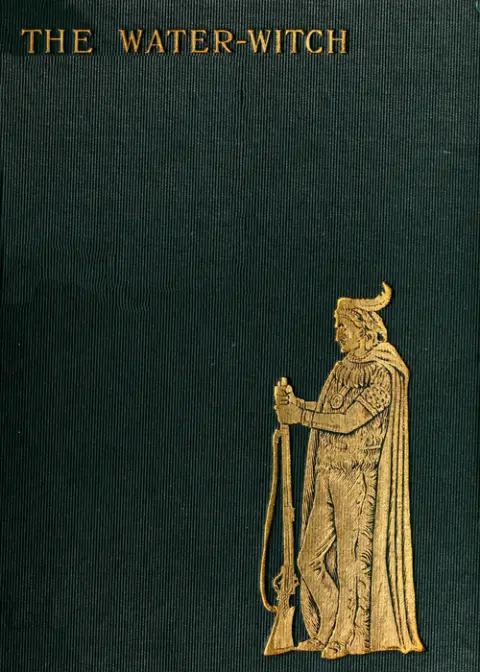
"The Water-Witch; Or, the Skimmer of the Seas: A Tale" by James Fenimore Cooper is a historical novel written in the mid-19th century. The narrative is set against the backdrop of early colonial Americana and explores themes of piracy, moral ambiguity, and the attributes of civilization. The story introduces a range of characters, including the astute Alderman Van Beverout, his niece Alida, and a mysterious mariner whose arrival disrupts their acquaintance with the world of seafaring and adventure. The opening of the novel establishes a vivid setting around the thriving New York harbor and its surroundings in the early 18th century. Through detailed exposition, Cooper provides context for the interplay of European influence and native tradition, alongside the socio-political dynamics of the time. The narrative commences with the Alderman departing his home, accompanied by his slaves, and engages in witty conversation that reveals his character and anxieties over the burgeoning city. The interactions set the stage for the conflicts and connections that will unfold as the Alderman, Alida, and others encounter the enigmatic "Skimmer of the Seas," which foreshadows the adventure and moral complexity that lies ahead.
Introduction adapted from the source catalogue; source summaries may be automatically generated.
Free to read · English · 158,356 words · No account needed
MAKE TIME FOR A GOOD BOOK
On by default. Untick to stop anonymous reading totals. Each page counts after 10 seconds in view. How this works.
Anonymous counting is on unless you have switched it off.
“Well!” ejaculated Myndert, regarding each in turn. “What news from the Canadas?—Is the Queen dead, or has she restored the colony to the United Provinces?”
“Mam’selle Alide!” exclaimed, or rather groaned, François.
“The poor dumb beast!—” muttered Euclid.
The knives and the forks fell from the hands of Myndert and his guest, as it were by a simultaneous paralysis. The latter involuntarily arose; while the former planted his solid person still more firmly in its seat, like one who was preparing to meet some severe and expected shock, with all the physical resolution he could muster.
“—What of my niece!—What of my geldings?—You have called upon Dinah?”
“Sans doute, Monsieur!”
“—And you kept the keys of the stable?”
“I nebber let him go, at all!”
“—And you bade her call her mistress?”
“She no make answair, de tout.”
“—The animals were fed and watered, as I ordered?”
“’Em nebber take he food, better!”
“—You entered the chamber of my niece, yourself, to awake her?”
“Monsieur a raison.”
“What the devil has befallen the innocent?”
“He lose he stomach quite, and I t’ink it great time ’fore it ebber
come back.”
“—Mister Francis, I desire to know the answer of Monsieur Barbérie’s
daughter.”
“Mam’selle no répond, Monsieur; pas un syllabe!”
“—Drenchers and fleams! The beauty should have been drenched and
blooded—”
“He’m too late for dat, Masser, on honor.”
“—The obstinate hussy! This comes of her Huguenot breed, a race that would quit house and lands rather than change its place of worship!”
“La famille de Barbérie est honorable, Monsieur mais le Grand Monarque fut un peu trop exigeant. Vraiment, la dragonade était mal avisée, pour faire des chrétiens!”
“Apoplexies and hurry! you should have sent for the farrier to administer to the sufferer, thou black hound!”
“’Em go for a butcher, Masser, to save he skin; for he war’ too soon
dead.”
The word dead produced a sudden pause. The preceding dialogue had been so rapid, and question and answer, no less than the ideas of the principal speaker, had got so confused, that, for a moment, he was actually at a loss to understand, whether the last great debt of nature had been paid by la belle Barbérie, or one of the Flemish geldings. Until now, consternation, as well as the confusion of the interview, had constrained the Patroon to be silent, but he profited by the breathing-time to interpose.
Your reading position is saved on this browser. Take it to another device with a library code. Reading pages adapt to text, rather than matching a printed edition.
James Fenimore Cooper

James Fenimore Cooper

James Fenimore Cooper
BEHIND THE BOOK
This eBook is for the use of anyone anywhere in the United States and most other parts of the world at no cost and with almost no restrictions whatsoever. You may copy it, give it away or re-use it under the terms of the Project Gutenberg License included with this eBook or online at www.gutenberg.org. If you are not located in the United States, you will have to check the laws of the country where you are located before using this eBook. Read the source licence.
The original source file, including credits and licence, is retained by this library. Request an original-format copy at no charge. Please include the book title and Project Gutenberg identifier #12445.
KEEP YOUR CURIOSITY GOING
Cécile Tormay

Moritz Busch
Coulson Kernahan
John L. Ransom

Maurice Baring
Frances Wright



