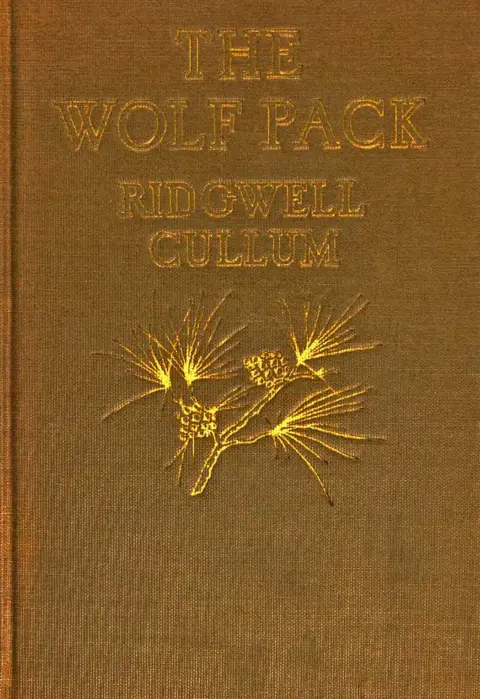
The wolf pack
Ridgwell Cullum
THE CLASSIC COLLECTION · 1909
"The Watchers of the Plains: A Tale of the Western Prairies" by Ridgwell Cullum is a novel written in the early 20th century. The story is set against the backdrop of the Western American plains and features characters connected to the struggles between settlers and Native Americans, particularly focusing on the interactions within the Rosebud Reservation. Central to the narrative are characters Nevil Steyne, a morally ambiguous white man living near the Reservation, and the conflicted relationships that develop between him and the indigenous characters, including those tied to the chief, Big Wolf. At the start of the novel, the reader is introduced to Nevil Steyne, who receives a letter from his estranged brother, Landor, revealing a past filled with family conflict and potentially igniting tensions for their reunion. As Steyne contemplates this letter, he experiences a mixture of anger and resentment, foreshadowing his deeper involvement with the Native American community, particularly with Big Wolf and his daughter, Wanaha. The opening portion establishes a vivid sense of place, highlighting the isolation of Steyne's dwelling and his complex motivations, hinting at the volatile socio-political landscape that is about to unfold with the presence of both white settlers and Native American tribes.
Introduction adapted from the source catalogue; source summaries may be automatically generated.
Free to read · English · 88,902 words · No account needed
MAKE TIME FOR A GOOD BOOK
On by default. Untick to stop anonymous reading totals. Each page counts after 10 seconds in view. How this works.
Anonymous counting is on unless you have switched it off.
"Pretty poor sort of place--this," he said. "It's not good enough for you,
my Wana."
The woman had seated herself on a low stool near the table. It was one of her few remaining savage instincts she would not give up. It was not fitting that she should eat with him.
"How would you like a house, a big house, like--White River Farm?" he went on, as though he were thinking aloud. "And hundreds, thousands, of steers and cows? And buggies to ride in? And farm machinery? And--and plenty of fine clothes to wear, like--like Rosebud?"
The woman shook her head and indicated her humble belongings.
"This--very good. Very much good. See, you are here. I want you."
The man flushed and laughed a little awkwardly. But he was well pleased.
"Oh, we're happy enough. You and I, my Wana. But--we'll see."
Wanaha made no comment; and when his meat was finished she set a dish of buckwheat cakes and syrup before him.
He devoured them hungrily, and the woman's eyes grew soft with delight at
his evident pleasure.
At last his thoughtfulness passed, and he put an abrupt question.
"Where's your brother, now?"
"Little Black Fox is by his tepee. He goes hunting with another sun.
Yes?"
"I must go and see him this afternoon."
Steyne pushed his plate away, and proceeded to fill his pipe.
"Yes?"
The expressive eyes of the woman had changed again. His announcement seemed to give her little pleasure.
"Yes, I have things to pow-wow with him."
"Ah. Rosebud? Always Rosebud?"
The man laughed.
"My Wana does not like Little Black Fox to think of Rosebud, eh?"
Wanaha was silent for a while. Then she spoke in a low tone.
"Little Black Fox is not wise. He is very fierce. No, I love my brother, but Rosebud must not be his squaw. I love Rosebud, too."
The blue eyes of the man suddenly became very hard.
"Big Wolf captured Rosebud, and would have kept her for your brother. Therefore she is his by right of war. Indian war. This Seth kills your father. He says so. He takes Rosebud. Is it for him to marry her? Your brother does not think so."
Wanaha's face was troubled. "It was in war. You said yourself. My brother could not hold her from the white man. Then his right is gone. Besides----"
"Besides----?"
"A chief may not marry a white girl."
"You married a white man."
"It is different."
There was silence for some time while Wanaha cleared away the plates. Presently, as she was bending over the cook-stove, she spoke again. And she kept her face turned from her husband while she spoke.
Your reading position is saved on this browser. Take it to another device with a library code. Reading pages adapt to text, rather than matching a printed edition.
Ridgwell Cullum
Ridgwell Cullum
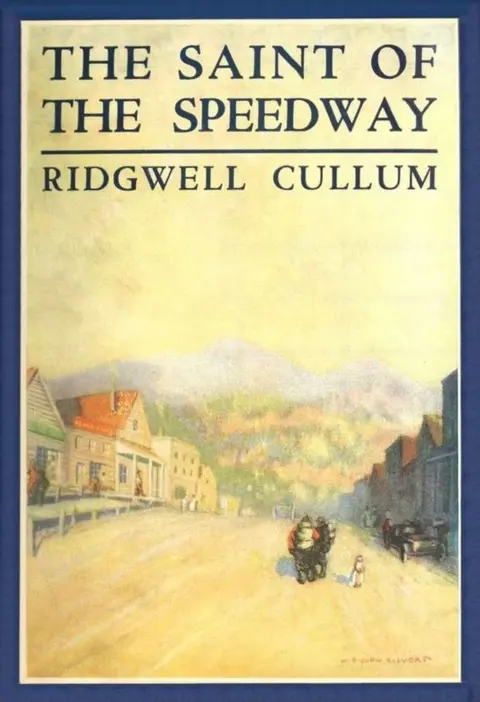
Ridgwell Cullum
Ridgwell Cullum
BEHIND THE BOOK
This eBook is for the use of anyone anywhere in the United States and most other parts of the world at no cost and with almost no restrictions whatsoever. You may copy it, give it away or re-use it under the terms of the Project Gutenberg License included with this eBook or online at www.gutenberg.org. If you are not located in the United States, you will have to check the laws of the country where you are located before using this eBook. Read the source licence.
The original source file, including credits and licence, is retained by this library. Request an original-format copy at no charge. Please include the book title and Project Gutenberg identifier #27521.
KEEP YOUR CURIOSITY GOING
Cécile Tormay

Moritz Busch
Coulson Kernahan
John L. Ransom

Maurice Baring
Frances Wright