THE CLASSIC COLLECTION✦In furthest IndCLASSIC FREE BOOKS
In furthest Ind
Sydney C. Grier
THE CLASSIC COLLECTION · 1912
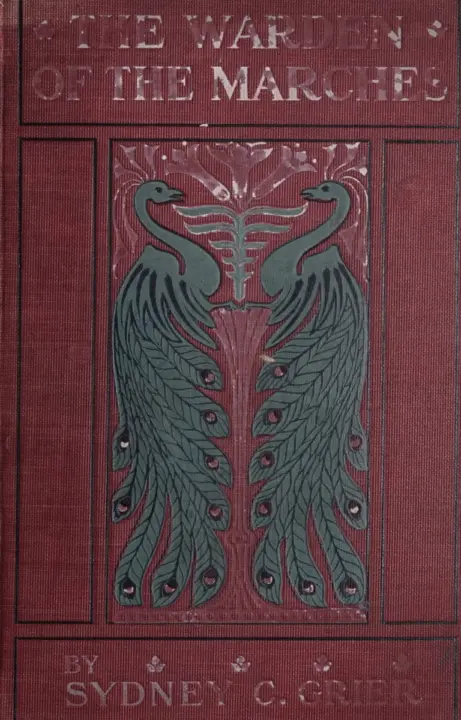
"The Warden of the Marches" by Sydney C. Grier is a novel written in the early 20th century. The story appears to focus on the dynamics of life in the British-controlled region of Khemistan, following the characters Major Dick North, his wife Georgia, and his sister Mabel North as they navigate personal and political complexities in a frontier town. The novel explores themes of political tension and social interaction within a colonial context, emphasizing the interactions between British officials and local figures. The opening of the book introduces Major North, who is settling into life after receiving letters at his home with his wife, Georgia. Their carefree moment is interrupted by the surprise arrival of Mabel, who has traveled far to see them. The characters quickly engage in conversation about personal endeavors and the political environment, hinting at her secret aspirations and the rumored political tensions brought about by the reinstatement of local leaders. As the plot unfolds, the backdrop of unrest on the border looms, with references made to historical figures and a sense of impending conflict setting the stage for the narrative. The chapter establishes a rich tapestry of character interactions, setting a tone of intrigue and anticipation for readers.
Introduction adapted from the source catalogue; source summaries may be automatically generated.
Free to read · English · 126,048 words · No account needed
MAKE TIME FOR A GOOD BOOK
On by default. Untick to stop anonymous reading totals. Each page counts after 10 seconds in view. How this works.
Anonymous counting is on unless you have switched it off.
“In the course of a few centuries, I suppose. There seems to be the usual transport difficulty, to judge by the way the tribesmen are chortling over the loss of time. Of course Anstruther and Sultan Jān made good use of their ears, and learned all they could without asking suspicious questions. In the morning they started off with their fellow-lodgers in this direction, and I must say I don’t envy their feelings. If they had happened to meet one of Sultan Jān’s tribe, it would have been all up. However, the rotten discipline of Bahram Khan’s lot stood them in good stead. It seems that the permanent investing force here consists only of his personal hangers-on and a detachment from the Nalapur army, which the Amir has made as small as he dares, and would like to recall altogether. All the rest--the tribesmen and robber bands--start off whenever they like to raid along the frontier, just leaving representatives in the town to see how things go, so as to make sure of not missing their share in the loot when this place falls. There’s one good thing--they’ll have established such a sweet reputation among the country-people that we shan’t have much trouble in hunting them down when the rising is over.”
“Aren’t you counting your chickens a little too soon?” asked Mabel, with a rather strained smile. “And we are forgetting----”
“Our two fellows? So we are. I’m an awful chap for wandering away from the point. Well, they found Bahram Khan established in the court-house, which was in a horrible state of squalor, overlaid with a little cheap magnificence. He received them with every appearance of friendliness, though they were certain he suspected them. They had nothing to go upon, for he treated them royally, and promised them both posts in his bodyguard, but they felt sure there was something wrong. They expected to be denounced every minute, but he was too wily for that. Before letting them go to their quarters at night, he informed them confidentially that he had just finished constructing a mine reaching from General Keeling’s house to our east curtain, and that it was to be exploded the next day. They should form part of the storming-party, and have the honour of leading. Of course they pretended to accept with tremendous delight, but he had got them in an awful fix. There was just the one hope that the mine did not really exist at all, but when they asked the rest about it, they were shown the entrance, though they were not allowed to go down into it, because of the explosives put ready there, the fellows said. I think myself, and so does Runcorn, that the soil is much too light for them to be able to dig such a length of tunnel without its falling in, and that we must have heard them at work if they had got as near as they make out, but of course Anstruther dared not trust to the chance. He didn’t venture to speak to Sultan Jān, but they managed to give each other a look which meant that they must get away and warn us. Of course that was just what Bahram Khan had been counting upon, and they found that their quarters for the night were in the stables belonging to the court-house, where all their new comrades slept. There were sentries in the yard in front, which looked as if something was expected to happen. Anstruther and Sultan Jān had one of the stalls to themselves, and as soon as ever the rest seemed to be asleep, they set to work to dig through the wall with their daggers, one working, and the other lying so as to screen him from the sentry, or any one else who might look in. Just before they broke through, it struck them to ask one another what was on the other side. They knew there was a lane at the back of the stables, but would they come out into the full moonlight or the shadow, and was there another sentry there? After listening carefully, they settled that there, wasn’t a sentry, but they couldn’t decide upon the moonlight, so they had to chance it. While Sultan Jān dug away the mud bricks, Anstruther was heaping up the straw they had been lying upon to hide the hole, and arranging their poshteens [sheepskin-lined coats] to look as if they were still there. Happily, when they got through, they were on the dark side of the lane. They crept out, and built up the hole again as well as they could from the outside. It was awfully nervous work, for a patrol might come along at any minute, but at last they were able to be off. They wriggled along in the shadow, and Sultan Jān led the way towards the east side of the town. Of course it was a fearful round, but they couldn’t risk passing the enemy’s headquarters again. The moon bothered them horribly, for they knew that until it set there was no hope of passing the outpost at the old godowns on the bank, even if they got to the canal safely. They reached the desert all right through the by-lanes, and made tracks for the point at which they had landed two nights before, but to get to it they had to pass the house of one of the Hindu canal-officials, who seems to have been left in possession in return for doing some sort of dirty work for Bahram Khan. There was a dog which made a row, and the Hindu came out and caught them. Sultan Jān wanted to kill him, but Anstruther wouldn’t hear of it, so they asked for a night’s lodging in one of the outbuildings, intending, of course, to slip away as soon as he was gone to bed again. But he insisted on bringing out food, and sat up talking to them, while they were agonising to get rid of him. And all the time he must have sent some one to the town to give the alarm, for suddenly he changed countenance and got confused as he talked, and they looked at the door, and there were Bahram Khan’s men. In a moment they were in the thick of a tremendous rough-and-tumble fight. There was no room inside the hut to use rifles, but both sides had daggers, and the enemy tulwars. Anstruther says he fought mostly with his fists, and the enemy seemed to think that wasn’t fair, for pretty soon they began to give him a wide berth. Just as he got out of the scrimmage, Sultan Jān went down, and in falling knocked over the lamp and put it out. The enemy devoted their attention to one another for some little time before they saw what had happened, and then they started to find Anstruther. He was standing up, perfectly quiet, against the side of the hut, and he says it nearly turned his brain to hear the fellows feeling for him in the dark, while he knew that his only hope was not to move. They didn’t find him--actually! but they found the Hindu instead. He had been hiding in a corner in an awful fright, and they killed him, and having accounted for two, thought they had done their business. They didn’t stop to mutilate the bodies, apparently because there was a false alarm in the town just then. You know one of our men let off his rifle by mistake last night, and we noticed that the enemy seemed a good deal disturbed. Well, there was Anstruther left in the hut, with what he believed to be Sultan Jān’s dead body. And this is what the old man can’t get over--he wouldn’t leave him to be cut up by those swine, but dragged him down to the canal, and when he had fetched over one of the skins and blown it out, tied him on to it, and started to swim up here. But as soon as the cold water touched Sultan Jān’s wounds, he revived, and was able to put one arm round Anstruther’s neck, and so make it a little easier for him. But it was tremendous--simply tremendous, and if ever any man deserved the V.C., Anstruther does, though of course he won’t get it, being merely a poor wretch of a civilian.”
Your reading position is saved on this browser. Take it to another device with a library code. Reading pages adapt to text, rather than matching a printed edition.
Sydney C. Grier

Sydney C. Grier

Sydney C. Grier
Sydney C. Grier
BEHIND THE BOOK
This eBook is for the use of anyone anywhere in the United States and most other parts of the world at no cost and with almost no restrictions whatsoever. You may copy it, give it away or re-use it under the terms of the Project Gutenberg License included with this eBook or online at www.gutenberg.org. If you are not located in the United States, you will have to check the laws of the country where you are located before using this eBook. Read the source licence.
The original source file, including credits and licence, is retained by this library. Request an original-format copy at no charge. Please include the book title and Project Gutenberg identifier #66229.
KEEP YOUR CURIOSITY GOING
Cécile Tormay

Moritz Busch
Coulson Kernahan
John L. Ransom

Maurice Baring
Frances Wright