THE CLASSIC COLLECTION✦In furthest IndCLASSIC FREE BOOKS
In furthest Ind
Sydney C. Grier
THE CLASSIC COLLECTION · 1912
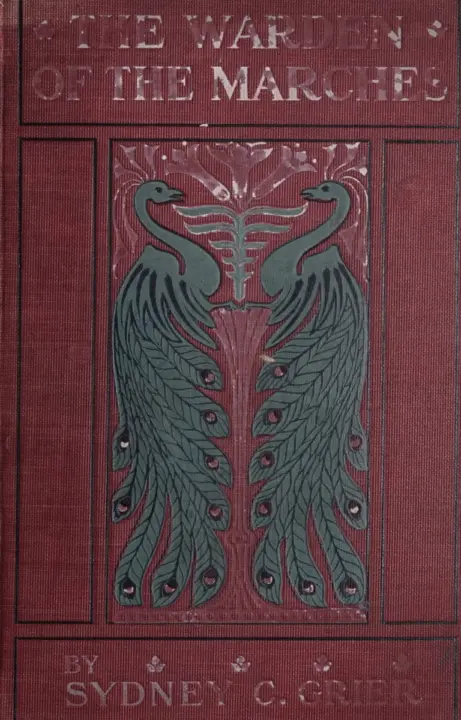
"The Warden of the Marches" by Sydney C. Grier is a novel written in the early 20th century. The story appears to focus on the dynamics of life in the British-controlled region of Khemistan, following the characters Major Dick North, his wife Georgia, and his sister Mabel North as they navigate personal and political complexities in a frontier town. The novel explores themes of political tension and social interaction within a colonial context, emphasizing the interactions between British officials and local figures. The opening of the book introduces Major North, who is settling into life after receiving letters at his home with his wife, Georgia. Their carefree moment is interrupted by the surprise arrival of Mabel, who has traveled far to see them. The characters quickly engage in conversation about personal endeavors and the political environment, hinting at her secret aspirations and the rumored political tensions brought about by the reinstatement of local leaders. As the plot unfolds, the backdrop of unrest on the border looms, with references made to historical figures and a sense of impending conflict setting the stage for the narrative. The chapter establishes a rich tapestry of character interactions, setting a tone of intrigue and anticipation for readers.
Introduction adapted from the source catalogue; source summaries may be automatically generated.
Free to read · English · 126,048 words · No account needed
MAKE TIME FOR A GOOD BOOK
On by default. Untick to stop anonymous reading totals. Each page counts after 10 seconds in view. How this works.
Anonymous counting is on unless you have switched it off.
Was it fancy, or did Mabel see the sparks struck from the stone on which the unseen horse stumbled as the sound came nearer? She could have screamed for sheer terror; but Rahah, who was her companion on the back seat of the dog-cart, laughed aloud as she wrapped the end of her chadar round the great white Persian cat she held in her arms.
“What is there to fear, Miss Sahib? No man has ever stood against Sinjāj Kīlin, and he is close at hand. The rule of the Sarkar will continue.”
“Now do tell me what has happened,” Mabel heard Georgia saying to Fitz, as he drove out of the gate. “I’m sure I am a model soldier’s wife, for Dick suddenly sends me a bare message ordering me to abandon all my household goods and take refuge in the fort, and I do it without asking why! But I must confess I should like to know the reason. Did the durbar break up in disorder, or were you attacked on the way back?”
“There was no durbar at all. The attack came off on the way there. But I say, Mrs North,” said Fitz desperately, anticipating Georgia’s question, “I can’t tell you what happened then, for I wasn’t there. Won’t it do if I recount my own experiences, and you ask the other fellows about the rest of it when we get to the fort?” He left her no time to answer, but went on hurriedly:--
“Yesterday we got as far as the entrance to the Akrab Pass, some way beyond Dera Gul, and camped there for the night. The Major chose the site of the camp himself, in an awfully good position commanding the mouth of the pass, and arranged everything just as if it was war-time. I knew, of course, that he was looking out for treachery of some sort, and I was awfully sick when he told me this morning that I was to stay and do camp-guard with Winlock, and not go with him to the durbar. I yearned horribly to disobey orders, but, you see, he left me certain things to do if--if anything went wrong.” Fitz cleared his throat, muttered that he thought he must have got a cold, and hastened on. “Beltring had come down from Nalapur to meet the Commissioner, as he thought, and the Sardar Abd-ul-Nabi was waiting just inside the pass with an escort of the Amir’s troops. We in camp had nothing to do but kick our heels all day, for the Major left strict orders against going out of sight of the pass. He meant to get through his work by daylight, so as to sleep at the camp to-night, and come back here in the morning, you see. There were no caravans passing, and the place seemed deserted, which we thought a bad sign. But about eleven this morning one of our scouts brought in a small boy, who had come tearing down the pass and asked for the English camp. We had the little chap up before us, and I recognised him as a slave-boy I saw at Dera Gul the day Miss North and I were there. He knew me at once, and began to pour out what he had to say so fast that we could scarcely follow him. It seems that the Hasrat Ali Begum had managed in some way to get an inkling of Bahram Khan’s plot, and she despatched one of her confidential old ladies to warn you and the Major. Unfortunately, the old lady got caught, and Bahram Khan was so enraged with his mother that he promptly packed his whole zenana off to Nalapur, to be out of mischief, I suppose. On the way through the pass this boy, by the Begum’s orders, managed to hide among the rocks when they broke camp, and so escaped with her message. He hoped to catch the Major before he started, but, most unhappily, he durst not ask the only man he met whether he had passed, and he was behind him instead of in front. So he came down the pass, missing him entirely, of course, and warned us instead. The Major’s force was to be attacked in the worst part of the defile, he told us, and as soon as a messenger could reach Dera Gul to say that the attack had taken place, Bahram Khan would set out to raid Alibad. It was an awful dilemma for Winlock and me. It was no use sending after the Major to warn him, for whatever was to happen must have happened by that time, and if we tried to warn the town, Bahram Khan was safe to intercept the messenger and start on his raid at once, and of course we couldn’t evacuate the camp without orders. We decided to strike the tents and get everything ready for a start at any moment, and we posted our best shots on either side of the entrance to the pass, in case the Major’s party should be pursued. Then we waited, and at last the--the force turned up. Thanks to the Major’s suspicions and precautions, the surprise was a good deal of a fizzle. But as I said, I can’t tell you about that. Well, we had to get back here. The enemy were supposed not to be far behind, so we left Beltring and twenty-five men to hold the mouth of the pass at all hazards, and see that no messenger got through until we were safely past Dera Gul. After that it was left to them to seize the moment for retreating on Shah Nawaz, which Haycraft was to evacuate, so that both detachments might return here by the line of the canal. We put our wounded and baggage in the middle, and started--”
Your reading position is saved on this browser. Take it to another device with a library code. Reading pages adapt to text, rather than matching a printed edition.
Sydney C. Grier

Sydney C. Grier

Sydney C. Grier
Sydney C. Grier
BEHIND THE BOOK
This eBook is for the use of anyone anywhere in the United States and most other parts of the world at no cost and with almost no restrictions whatsoever. You may copy it, give it away or re-use it under the terms of the Project Gutenberg License included with this eBook or online at www.gutenberg.org. If you are not located in the United States, you will have to check the laws of the country where you are located before using this eBook. Read the source licence.
The original source file, including credits and licence, is retained by this library. Request an original-format copy at no charge. Please include the book title and Project Gutenberg identifier #66229.
KEEP YOUR CURIOSITY GOING
Cécile Tormay

Moritz Busch
Coulson Kernahan
John L. Ransom

Maurice Baring
Frances Wright