
Tomorrow about this time
Grace Livingston Hill
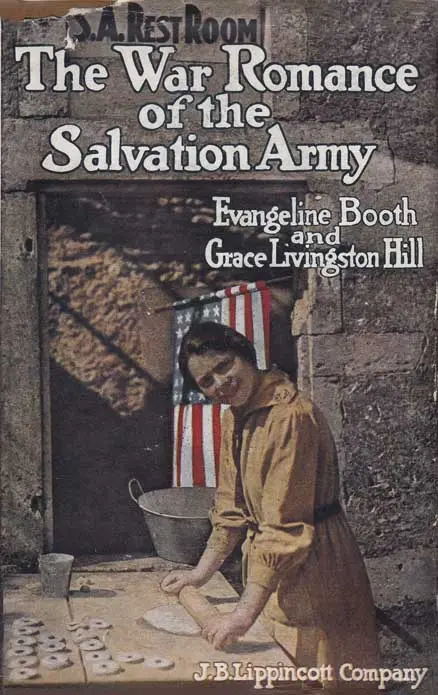
THE CLASSIC COLLECTION · 1919
"The War Romance of the Salvation Army" by Evangeline Booth and Grace Livingston Hill is a historical account written in the early 20th century. The work recounts the inspiring and dedicated efforts of the Salvation Army during World War I, focusing on their humanitarian services to soldiers in France. Through the lens of personal anecdotes and testimonials, it portrays the soldiers' experiences and the vital role the Salvation Army played in alleviating their hardships and spiritual needs during the war. At the start of the narrative, readers are introduced to Commander Evangeline Booth, who reflects on the overwhelming call to action for the Salvation Army when the United States entered the war. The opening sets the stage for the organization's mission, highlighting their readiness, compassion, and the challenges they faced as they sent workers to the front lines. The text describes vivid scenes, such as the Commander’s determined leadership, the preparation of troops, and the struggles of the soldiers with homesickness and the dire conditions of war. It captures the spirit of resilience and commitment to service that characterized the Salvation Army's work, aiming to provide not only material aid but also spiritual comfort to the troops in the trenches.
Introduction adapted from the source catalogue; source summaries may be automatically generated.
Free to read · English · 105,556 words · No account needed
MAKE TIME FOR A GOOD BOOK
On by default. Untick to stop anonymous reading totals. Each page counts after 10 seconds in view. How this works.
Anonymous counting is on unless you have switched it off.
The growing confidence of the great of the earth was manifested by the honors that were conferred upon General Booth from time to time. In 1898 he opened the American Senate with prayer. In 1904 King Edward received him at Buckingham Palace, the freedom of the City of London and the City of Kirkcaldy were conferred upon him, as well as the degree of D. C. L. by Oxford, during 1905. The Kings of Denmark, Norway, the Queen of Sweden, and the Emperor of Japan were among those who received him in private audience.
On August 20, 1912, General William Booth laid down his sword.
He lay in state in Congress Hall, London, where the number of visitors who looked upon his remains ran into the hundreds of thousands.
His son, William Bramwell Booth, the Chief of the Staff, by the appointment of the late General, succeeded to the office and came to the position with a wealth of affection and confidence on the part of the people of the nations such as few men know.
Salvation Army War Activities.
77 Motor ambulances manned by Salvationists.
87 Hotels for use of Soldiers and Sailors.
107 Buildings in United States placed at disposal of Government for war
relief purposes.
199 Huts at Soldiers’ Camps used for religious and social gatherings and for dispensing comfort to Soldiers and Sailors.
300 Rest-rooms equipped with papers, magazines, books, etc., in charge of Salvation Army Officers.
1507 Salvation Army officers devote their entire time to religious and social work among Soldiers and Sailors.
15,000 Beds in hotels close to railway stations and landing points at seaport cities for protection of Soldiers and Sailors going to and from the Front.
80,000 Salvation Army officers fighting with Allied Armies.
100,000 Parcels of food and clothing distributed among Soldiers and
Sailors.
100,000 Wounded Soldiers taken from battlefields in Salvation Army
ambulances.
300,000 Soldiers and Sailors daily attend Salvation Army buildings.
$2,000,000 Already spent in war activities.
45 Chaplains serving under Government appointment.
40 Camps, Forts and Navy Yards at which Salvation Army services are conducted or which are visited by Salvation Army officers.
2184 War Widows assisted (legal and other aid, and visited).
2404 Soldiers’ wives cared for (including medical help).
442 War children under our care.
3378 Soldiers’ remittances forwarded (without charge).
$196,081.05 Amount remitted.
600 Parcels supplied Prisoners of War.
1300 Cables sent for Soldiers.
275 Officers detailed to assist Soldiers’ wives and relatives; number
assisted, 275.
40 Military hospitals visited.
360 Persons visiting hospitals.
147 Boats met.
324,052 Men on board,
35,845 Telegrams sent.
24 Salvationists detailed for this work.
20 Salvationists detailed for this work outside of New York City.
Salvation Army Work in United States of America.
1218 Buildings in use at present.
2953 Missing friends found.
6125 Tons of ice distributed.
12,000 Officers and non-commissioned officers actively employed.
11,650 Accommodations in institutions.
68,000 Children cared for in Rescue Homes and Slum Settlements.
Your reading position is saved on this browser. Take it to another device with a library code. Reading pages adapt to text, rather than matching a printed edition.
Grace Livingston Hill
Grace Livingston Hill
Grace Livingston Hill
Grace Livingston Hill
BEHIND THE BOOK
This eBook is for the use of anyone anywhere in the United States and most other parts of the world at no cost and with almost no restrictions whatsoever. You may copy it, give it away or re-use it under the terms of the Project Gutenberg License included with this eBook or online at www.gutenberg.org. If you are not located in the United States, you will have to check the laws of the country where you are located before using this eBook. Read the source licence.
The original source file, including credits and licence, is retained by this library. Request an original-format copy at no charge. Please include the book title and Project Gutenberg identifier #7811.
KEEP YOUR CURIOSITY GOING
Cécile Tormay

Moritz Busch
John L. Ransom
Frances Wright
Cécile Tormay

Mabel Potter Daggett