THE CLASSIC COLLECTION✦Heu-Heu, or The monsterCLASSIC FREE BOOKS
Heu-Heu, or The monster
H. Rider (Henry Rider) Haggard
THE CLASSIC COLLECTION · 1914
"The Wanderer's Necklace" by H. Rider Haggard is a historical novel set in the early 20th century that intertwines adventure with themes of love and fate. The narrative begins with a dedication and a note by the editor, introducing a story structured around the life of a character named Olaf, who reflects on pivotal moments from his past, specifically focusing on his relationships and the conflicts that arise in his world. As Olaf recounts his childhood and the complexities of his betrothal to Iduna, he becomes embroiled in a web of emotions and societal expectations that highlight the essence of love as well as the anguish of betrayal. The opening of the narrative vividly describes Olaf's formative experiences, including childhood memories of a house near water and his first encounter with his betrothed, Iduna, who captures his heart. As the tale unfolds, the tension between familial duty, personal desire, and the intrigue surrounding their budding love story is palpable. There are references to Olaf's relationships with his brother Ragnar and his foster-brother Steinar, along with foreboding hints from characters like Freydisa, which foreshadow future trials. The chapter concludes with Olaf embarking on a daring adventure that reveals both his courage and the fate that awaits him, setting the stage for the intertwining of past dreams and present realities that will define the course of his life.
Introduction adapted from the source catalogue; source summaries may be automatically generated.
Free to read · English · 95,744 words · No account needed
MAKE TIME FOR A GOOD BOOK
On by default. Untick to stop anonymous reading totals. Each page counts after 10 seconds in view. How this works.
Anonymous counting is on unless you have switched it off.
“Happy, Olaf? Why, I am wretched, so wretched that often I think the hell of which the priests preach is here on earth, and that I dwell in its hottest fires. Unless love hides it, what happiness is there in this life of ours, which must end in blackest death?”
“Love has its miseries also, Augusta. That I know, for once I loved.”
“Aye, but then the love was not true, for this is the greatest curse of all--to love and not to be beloved. For the sake of a perfect love, if it could be won--why, I’d sacrifice even my ambition.”
“Then you must keep your ambition, Augusta, since in this world you’ll find nothing perfect.”
“Olaf, I’m not so sure. Thoughts have come to me. Olaf, I told you that I have no friend in all this glittering Court. Will you be my friend?”
“I am your honest servant, Augusta, and I think that such a one is the
best of friends.”
“That’s so; and yet no man can be true friend to a woman unless he is--more than friend. Nature has writ it so.”
“I do not understand,” I answered.
“You mean that you will not understand, and perhaps you are wise. Why do you stare at that pavement? There’s a story written on it. The old goddess of my people, Aphrodite, loved a certain Adonis--so runs the fable--but he loved not her, and thought only of his sports. Look, she woos him there, and he rejects her, and in her rage she stabs him.”
“Not so,” I answered. “Of the end of the story I know nothing, but, if she had meant to kill him, the dagger would be in her right hand, not in her left.”
“That’s true, Olaf; and in the end it was Fate which killed him, not the goddess whom he had scorned. And yet, Olaf, it is not wise to scorn goddesses. Oh! of what do I talk? You’ll befriend me, will you not?”
“Aye, Augusta, to the last drop of my blood, as is my duty. Do I not
take your pay?”
“Then thus I seal our friendship and here’s an earnest of the pay,” Irene said slowly, and, bending forward, she kissed me on the lips.
At this moment the doors of the chamber were thrown open. Through them, preceded by heralds, that at once drew back again, entered the great minister Stauracius, a fat, oily-faced man with a cunning eye, who announced in a high, thin voice,
“The ambassadors of the Persians wait upon you, Augusta, as you
appointed at this hour.”
Your reading position is saved on this browser. Take it to another device with a library code. Reading pages adapt to text, rather than matching a printed edition.
H. Rider (Henry Rider) Haggard
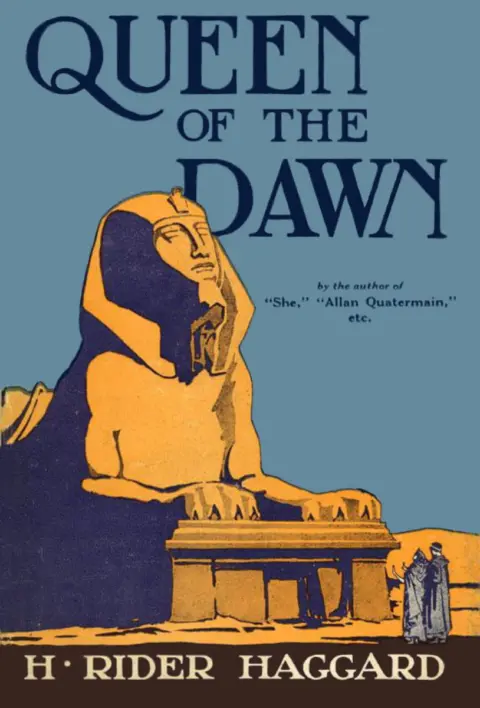
H. Rider (Henry Rider) Haggard
H. Rider (Henry Rider) Haggard
H. Rider (Henry Rider) Haggard
BEHIND THE BOOK
This eBook is for the use of anyone anywhere in the United States and most other parts of the world at no cost and with almost no restrictions whatsoever. You may copy it, give it away or re-use it under the terms of the Project Gutenberg License included with this eBook or online at www.gutenberg.org. If you are not located in the United States, you will have to check the laws of the country where you are located before using this eBook. Read the source licence.
The original source file, including credits and licence, is retained by this library. Request an original-format copy at no charge. Please include the book title and Project Gutenberg identifier #3097.
KEEP YOUR CURIOSITY GOING
Cécile Tormay

Moritz Busch
Coulson Kernahan
John L. Ransom

Maurice Baring
Frances Wright