THE CLASSIC COLLECTION✦Heu-Heu, or The monsterCLASSIC FREE BOOKS
Heu-Heu, or The monster
H. Rider (Henry Rider) Haggard
THE CLASSIC COLLECTION · 1914
"The Wanderer's Necklace" by H. Rider Haggard is a historical novel set in the early 20th century that intertwines adventure with themes of love and fate. The narrative begins with a dedication and a note by the editor, introducing a story structured around the life of a character named Olaf, who reflects on pivotal moments from his past, specifically focusing on his relationships and the conflicts that arise in his world. As Olaf recounts his childhood and the complexities of his betrothal to Iduna, he becomes embroiled in a web of emotions and societal expectations that highlight the essence of love as well as the anguish of betrayal. The opening of the narrative vividly describes Olaf's formative experiences, including childhood memories of a house near water and his first encounter with his betrothed, Iduna, who captures his heart. As the tale unfolds, the tension between familial duty, personal desire, and the intrigue surrounding their budding love story is palpable. There are references to Olaf's relationships with his brother Ragnar and his foster-brother Steinar, along with foreboding hints from characters like Freydisa, which foreshadow future trials. The chapter concludes with Olaf embarking on a daring adventure that reveals both his courage and the fate that awaits him, setting the stage for the intertwining of past dreams and present realities that will define the course of his life.
Introduction adapted from the source catalogue; source summaries may be automatically generated.
Free to read · English · 95,744 words · No account needed
MAKE TIME FOR A GOOD BOOK
On by default. Untick to stop anonymous reading totals. Each page counts after 10 seconds in view. How this works.
Anonymous counting is on unless you have switched it off.
“Tell me, Madam, how can I do otherwise? It seems to me that my life and that of my wife and children hang upon this deed. Moreover, why should I do otherwise now that by God’s justice the wheel has come round at last?” I added, pointing to the hollows beneath my brows where the eyes once had been.
“Oh! Olaf,” she said, “if I harmed you, you know well it was because I
loved you.”
“Then God send that no woman ever loves me in such a fashion,” broke in
Jodd.
“Olaf,” she continued, taking no note of him, “once you went very near to loving me also, on that night when you would have eaten the poisoned figs to save my son, the Emperor. At least, you kissed me. If you forget, I cannot. Olaf, can you blind a woman whom you have kissed?”
“Kissing takes two, and I know that you blinded him,” muttered Jodd, “for I crucified the brutes you commanded to do the deed to which they confessed.”
“Olaf, I admit that I treated you ill; I admit that I would have killed you; but, believe me, it was jealousy and naught but jealousy which drove me on. Almost as soon would I have killed myself; indeed, I thought of it.”
“And there the matter ended,” said Jodd. “It was Olaf who walked the Hall of the Pit, not you. We found him on the brink of the hole.”
“Olaf, after I regained my power----”
“By blinding your own son,” said Jodd, “for which you will have an account to settle one day.”
“----I dealt well with you. Knowing that you had married my rival, for I kept myself informed of all you did, still I lifted no hand against you----”
“What good was a maimed man to you when you were courting the Emperor Charlemagne?” asked Jodd.
Now at last she turned on him, saying,
“Well is it for you, Barbarian, that if only for a while Fate has reft power from my hands. Oh! this is the bitterest drop in all my cup, that I who for a score of years ruled the world must live to suffer the insults of such as you.”
“Then why not die and have done?” asked the imperturbable Jodd. “Or, if you lack the courage, why not submit to the decree of the Emperor, as so many have submitted to your decree, instead of troubling the general here with prayers for mercy? It would serve as well.”
“Jodd,” I said, “I command you to be silent. This lady is in trouble; attack those in power, if you will, not those who have fallen.”
Your reading position is saved on this browser. Take it to another device with a library code. Reading pages adapt to text, rather than matching a printed edition.
H. Rider (Henry Rider) Haggard
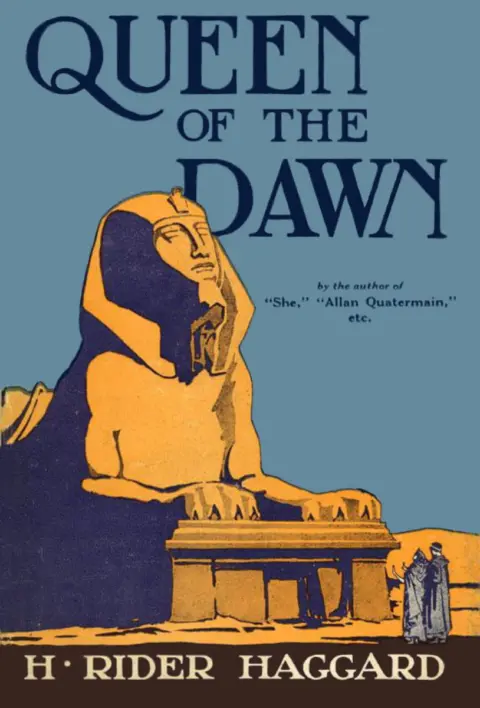
H. Rider (Henry Rider) Haggard
H. Rider (Henry Rider) Haggard
H. Rider (Henry Rider) Haggard
BEHIND THE BOOK
This eBook is for the use of anyone anywhere in the United States and most other parts of the world at no cost and with almost no restrictions whatsoever. You may copy it, give it away or re-use it under the terms of the Project Gutenberg License included with this eBook or online at www.gutenberg.org. If you are not located in the United States, you will have to check the laws of the country where you are located before using this eBook. Read the source licence.
The original source file, including credits and licence, is retained by this library. Request an original-format copy at no charge. Please include the book title and Project Gutenberg identifier #3097.
KEEP YOUR CURIOSITY GOING
Cécile Tormay

Moritz Busch
Coulson Kernahan
John L. Ransom

Maurice Baring
Frances Wright