
Love Letters of a Violinist, and Other Poems
Eric Mackay
THE CLASSIC COLLECTION · 1703
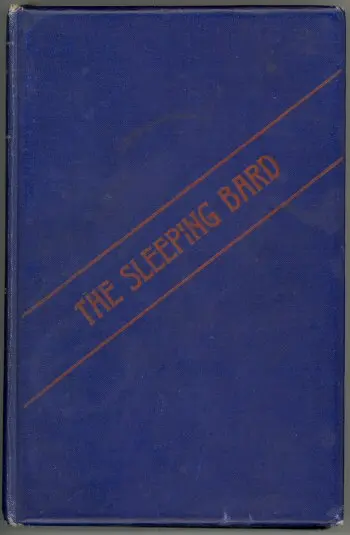
"The Visions of the Sleeping Bard" by Ellis Wynne is a poetic allegory written during the early 18th century. The work presents a meditation on moral and spiritual themes, exploring human frailty through vivid dream-like sequences that personify vice and virtue. The narratives follow the Bard, a character experiencing various visions of the world, death, and hell, as he embarks on a quest for understanding and salvation. At the start of the text, the Bard ascends a mountain and falls into a deep sleep, initiating fantastical visions that illuminate his perception of worldly affairs and moral decay. Through his dreams, he encounters fairies and angels, witnessing the "City of Destruction" governed by the malevolent Prince Belial and his enchanting daughters, who symbolize pride, pleasure, and wealth. The protagonist's journey reveals the vices of humanity, such as hypocrisy and greed, while contrasting them against the ideal of a higher calling represented by the City of Emmanuel. The opening sets the stage for a rich tapestry of social critique intertwined with spiritual reflection, inviting readers to ponder the nature of their choices and existence.
Introduction adapted from the source catalogue; source summaries may be automatically generated.
Free to read · English · 42,618 words · No account needed
MAKE TIME FOR A GOOD BOOK
On by default. Untick to stop anonymous reading totals. Each page counts after 10 seconds in view. How this works.
Anonymous counting is on unless you have switched it off.
Then Beelzebub, the devil of thoughtlessness stood up, and in a harsh voice said: “I am the great prince of heedlessness whose duty it is to prevent a man taking reflective heed of his state; I am chief of the incessant hell-flies who utterly amaze men, ever dinning in their ears concerning their possessions or their pleasures, and never willingly allowing them a moment’s leisure to think of their ways or of their end. No one of you must dare enter the lists against me in feats serviceable to the realm of darkness. For what is tobacco, but one of my meanest weapons to stupefy the brain? What is Mammon’s kingdom but a part of my great dominion? Yea, were I to loosen the bonds I have upon the subjects of Mammon and Pride, and even of Asmodai, Belphegor and Hypocrisy, no man would for an instant abide their domination. Wherefore I will do the work and let no one of you ever utter a word.”
Then great Lucifer himself arose from his burning seat, and having turned his hideous face to both sides, thus began: “Ye chief spirits of the Eternal Night, princes of hopeless guile, although the vasty gloom and the wilds of Destruction are more bounden to none for their inhabitants than to mine own supreme majesty—for it was I who erewhile wishing to usurp the Almighty’s throne, drew myriads of you, my swarthy angels, at my tail into these deadly horrors, and afterwards drew unto you myriads of men to share this region—yet there is no gainsay that ye all have done your share in maintaining and extending this great infernal empire.” Then he began to answer them one by one: “Considering thy recent origin, Cerberus, I will not deny but that thou hast gained for us much prey in the island of our foes through tobacco. For they that carry, mix, and weigh it, practise all manner of fraud; and by its indulgence some are led on to habitual drinking, some to curse and swear, and some to seek it through blandishment, and to lie in denying their use of it—not to speak of the injury it inflicts upon many, and its immoderate use upon all, body as well as soul. And better than that, myriads of the poor, whom else we never should touch, sink hither through laying the burden of their affection upon tobacco, and allowing it to be their master, to steal the bread from their children’s mouth. Then, brother Mammon, your power is so universal and so well-known on earth that it is a proverb, ‘Everything may be had for money.’ And without doubt,” said he, turning to Apolyon, “my beloved daughter Pride is most serviceable to us, for what can there be more pernicious to a man’s estate, to his body and soul, than that proud, obdurate opinion which will make him squander a hundred pounds rather than yield a crown to secure peace. She keeps them all so stiff-necked and so intent on things on high that it is amusing to see them, while gazing upwards, and ‘extolling their heads to the stars’ fall straightway into the depths of hell. You too, Asmodai, we all remember your great services in the past; there is none more resolute than you to keep safe his prisoners under lock and key, nor any so unimpeachable. Nowadays a wanton freak provokes only a little laughter, but you came near perishing there from famine during the recent years of dearth. And you, my son Belphegor, verminous prince of sloth, no one has afforded us more pleasure than you; your influence is exceeding great among noblemen and also among the common people, even to the beggar. And were it not for the skill of my daughter Hypocrisy in coloring and adorning, who ever would swallow a single one of our hooks? But after all, if it were not for the unwearying courage of my brother Beelzebub in keeping men in heedless dazedness, ye all would not be worth a straw. Let us once more recapitulate. What good wouldst thou be, Cerberus, with thy foreign whiff, if Mammon did not succour thee? What merchant would ever run such risks to obtain thy paltry leaves from India, except for Mammon’s sake? And only for him what king would receive them, especially into Britain, and who but for his sake would carry them to every part of the kingdom? Yet how worthless thou too wouldst be, Mammon, if Pride did not lavish thee upon fair mansions, fine clothes, needless lawsuits, gardens and horses, extravagant relatives, numerous dishes, floods of beer and ale, beyond the power and station of their owner; for if money were spent within the limit of necessity and of becoming moderation, what would Mammon avail us? Thus thou art nought without Pride; and little would Pride profit without Wantonness, for bastards are the most numerous and the most fierce of all the subjects of my daughter Pride. And thou, Asmodai, what wouldst thou profit us were it not for Sloth and Idleness? Where wouldst thou obtain a night’s lodging? Thou wouldst not dare expect it from a laborer or diligent student. And who, for the dishonor and the shame, would ever give thee, Belphegor the Slothful, a moment’s welcome, if Hypocrisy did not disguise thy foulness under the name of an internal disease, or as a good intent or a seeming despisal of wealth or the like. She too—my dear daughter Hypocrisy—what good is or ever would she be, notwithstanding her skill as a seamstress, and her boldness, without thy aid, my eldest brother, Beelzebub, great chief of Distraction: if he gave people peace and leisure to reflect seriously upon the nature of things and their differences, how long would it take them to find holes in the folds of Hypocrisy’s golden garments, and to see the hooks through the bait? What man in his senses would gather together toys and fleeting pleasures, surfeiting, vain and disgraceful, and choose them in preference to a calm conscience and the bliss of a glorious eternity? Who would refuse to suffer the pangs of martyrdom for his faith for an hour or a day, or affliction for forty or sixty years, if he considered that his neighbours suffer here in an hour more than he could suffer on earth for ever. Tobacco is nothing without Money, or Money without Pride, and Pride is but a weakling without Wantonness, nor is Wantonness aught without Sloth, nor Sloth without Hypocrisy, nor Hypocrisy without Thoughtlessness. Wherefore, now,” said Lucifer, lifting his infernal hoofs on their claw-ends, “to give my own opinion: however excellent all these may be, I have a friend better suited than all to our foe of Britain.” Then could I see all the archfiends open wide their horrid mouths upon Lucifer in eager expectation as to what this could possibly be, while I too was as anxious as they. “A friend,” continued Lucifer, “whose true worth I have too long neglected, just as thou, Satan, tempting Job of yore, didst foolishly turn upon him with severity. This, my kinswoman, I now appoint regent in all matters appertaining to my kingdom on earth, next to myself. Her name is Prosperity: she has damned more than all of you together, and little would ye avail without her presence. For who in war or peril, in famine or in plague, would lay any value by tobacco, or by money or by the sprightliness of pride, or who would deign welcome licentiousness or sloth? And men in such straits are too wide-awake to be distraught by Hypocrisy, or even by Thoughtlessness; none of the infernal vermin of Distraction dare show himself in one such storm. Whereas Prosperity, with its ease and comfort, is the nurse of all of you; beneath her peaceful shadow and upon her tranquil bosom ye all are nourished, and every other hellish worm that has its place in the conscience and will be for ever here gnawing its possessor. As long as one is at ease, there is no talk but of merriment, of feasts, bargains, genealogies, tales, news and the like; the name of God is never mentioned except in profane oaths and curses, whereas the poor and the afflicted have His name upon their lips and in their hearts always. Go ye, the seven of you, and follow her and be mindful to keep all a-slumbering and in peace, in good fortune, in ease and in perfect carelessness; then shall ye see the honest poor become an untractable, arrogant knave, once he has quaffed of the alluring cup of Prosperity; ye shall behold the diligent laborer become a careless babbler and everything else that pleases you. For all seek and love happy Prosperity; she neither hearkens to advice nor fears censure; the good she knows not, the bad she nurtures. But this is the greatest mishap: the man that escapes her sweet charms must be given up in despair, we must bid farewell to his company for ever. Prosperity then is my earthly vicegerent; follow her to Britain, and obey her as ye would our own royal majesty.”
Your reading position is saved on this browser. Take it to another device with a library code. Reading pages adapt to text, rather than matching a printed edition.
BEHIND THE BOOK
This eBook is for the use of anyone anywhere in the United States and most other parts of the world at no cost and with almost no restrictions whatsoever. You may copy it, give it away or re-use it under the terms of the Project Gutenberg License included with this eBook or online at www.gutenberg.org. If you are not located in the United States, you will have to check the laws of the country where you are located before using this eBook. Read the source licence.
The original source file, including credits and licence, is retained by this library. Request an original-format copy at no charge. Please include the book title and Project Gutenberg identifier #5671.
KEEP YOUR CURIOSITY GOING
Eric Mackay
Edmund Gosse
Sophia Margaretta Hensley
Gilbert Parker
George MacDonald

Elizabeth Bibesco