
Love Letters of a Violinist, and Other Poems
Eric Mackay
THE CLASSIC COLLECTION · 1703
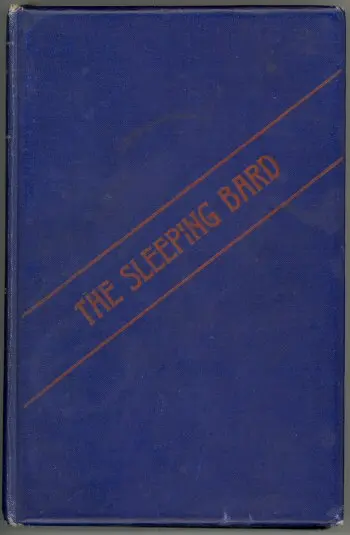
"The Visions of the Sleeping Bard" by Ellis Wynne is a poetic allegory written during the early 18th century. The work presents a meditation on moral and spiritual themes, exploring human frailty through vivid dream-like sequences that personify vice and virtue. The narratives follow the Bard, a character experiencing various visions of the world, death, and hell, as he embarks on a quest for understanding and salvation. At the start of the text, the Bard ascends a mountain and falls into a deep sleep, initiating fantastical visions that illuminate his perception of worldly affairs and moral decay. Through his dreams, he encounters fairies and angels, witnessing the "City of Destruction" governed by the malevolent Prince Belial and his enchanting daughters, who symbolize pride, pleasure, and wealth. The protagonist's journey reveals the vices of humanity, such as hypocrisy and greed, while contrasting them against the ideal of a higher calling represented by the City of Emmanuel. The opening sets the stage for a rich tapestry of social critique intertwined with spiritual reflection, inviting readers to ponder the nature of their choices and existence.
Introduction adapted from the source catalogue; source summaries may be automatically generated.
Free to read · English · 42,618 words · No account needed
MAKE TIME FOR A GOOD BOOK
On by default. Untick to stop anonymous reading totals. Each page counts after 10 seconds in view. How this works.
Anonymous counting is on unless you have switched it off.
From thence we went past an enormous lair, the vilest I had yet seen, and the fullest of vermin, of soot, and of stench. “This,” said he, “is the place of those who hoped for heaven because they were harmless, in other words, because they were neither good nor bad.” Next to this foul pit I saw a great multitude sitting down, whose groans were more fierce than anything I had heard hitherto in hell. “Save us all!” cried I, “what makes these complain more than all others, seeing there be no pain, nor demon near them?” “Ah,” answered the Angel, “if the pain without is less, that which is within is more,—here are stubborn heretics, the godless and unchristian, many of the worldy-wise, of apostates, of the persecutors of the church, and millions such as they, who have utterly been given over to the more bitterly painful punishment of the conscience, which now without let or ceasing has its full sway over them. “I will not this time,” quoth conscience, “be drowned in beer, or blinded by rewards, or deafened by song and good company, or hushed or stupified by a thoughtless torpor; now I will be heard, and never shall the truth, the stinging truth, cease dinning in your ears.” The will creates a desire for the lost paradise, the memory reproaches them with the ease wherewith it might have been gained, and the reason shews the greatness of the loss, and the certainty that nought awaits them but this unspeakable gnawing for ever and ever; so by these three means, conscience rends them more terribly than would all the devils in hell.
Coming out of that wondrous defile, I heard much talking, and for every word such wild horse-laughter as if some five hundred devils would shed their horns with laughing. But after I had drawn near to behold the very rare sight of a smile in hell, what was it but two gentlemen, lately arrived, appealing for the respect due to their rank, and the merriment was intended only to give affront to them. A pot-bellied squire stood there with an enormous roll of parchment, his genealogical chart, declaring from how many of the Fifteen Tribes of Gwynedd he had sprung, how many justices of the peace, and how many sheriffs there had been of his house. “Ha ha,” cried one of the devils, “we know the merit of most of your forebears, were you like your father, or great-great-grandsire, we would not have deigned to touch you. But thou, thou art but the heir of utter darkness, vile whelp, thou art hardly worth a night’s lodging; and yet thou shalt have some nook to await the dawn.” And at the word the impetuous monster pierces him with his pitchfork, and after whirling him thirty times through the fiery welkin, hurled him into a hole out of sight. “That is right enough for a half-blood squire,” said the other, “but I hope ye will be better mannered towards a knight who has served the king in person; twelve earls and fifty knights can I recount from mine own ancient line.” “If thine ancestors, and thy long pedigree are all thy plea, thou canst go the same gate,” quoth a devil, “for we remember scarce one old estate of large extent which some oppressor, some murderer or robber has not founded, leaving it to others as arrant as they, to idle blockheads or to drunken swine. To maintain lavish pomp, they had to grind their vassals and tenants, and if there be a beautiful pony or a fine cow which my lady covets, she will have them, and well it happens if the daughters, yea, even the wives, escape the lust of their lord. And the small free-holders around them must either vainly follow or give bail for them, resulting in their own ruin, the loss of their possessions, and the sale of their patrimony, or expect to be hated and despised, and forced to every idle pursuit. Oh how nobly they swear to gain the confidence of their minions or of their tradesmen, and when decked out in their finery, how contemptuously they look upon many an officer of importance in church and state, as if such were mere worms compared with them. Woe’s me, is not all blood of one color? Was it not the same way that ye all entered the world?” “For all that, craving your pardon,” said the knight, “there are some births purer than others.” “For the great doom all your carcases are the same,” said the imp, “everyone of you is defiled by the sin that took its origin in Adam.” “But, sir,” continued he, “if your blood is aught better than another, the less scum will there be when shortly it will be bubbling through your body, and if there be more, we must examine you, part by part, through fire and through water.” Thereupon, a devil in the shape of a fiery chariot receives him, and the other mockingly lifts him thereinto, and away he goes with the speed of lightning. Ere long the angel bade me look, and I saw the poor knight most horribly sodden in an enormous boiling furnace with Cain, Nimrod, Esau, Tarquin, Nero, Caligula, and others who first established lineage, and emblazoned family arms.
Your reading position is saved on this browser. Take it to another device with a library code. Reading pages adapt to text, rather than matching a printed edition.
BEHIND THE BOOK
This eBook is for the use of anyone anywhere in the United States and most other parts of the world at no cost and with almost no restrictions whatsoever. You may copy it, give it away or re-use it under the terms of the Project Gutenberg License included with this eBook or online at www.gutenberg.org. If you are not located in the United States, you will have to check the laws of the country where you are located before using this eBook. Read the source licence.
The original source file, including credits and licence, is retained by this library. Request an original-format copy at no charge. Please include the book title and Project Gutenberg identifier #5671.
KEEP YOUR CURIOSITY GOING
Eric Mackay
Edmund Gosse
Sophia Margaretta Hensley
Gilbert Parker
George MacDonald

Elizabeth Bibesco