
Love Letters of a Violinist, and Other Poems
Eric Mackay
THE CLASSIC COLLECTION · 1703
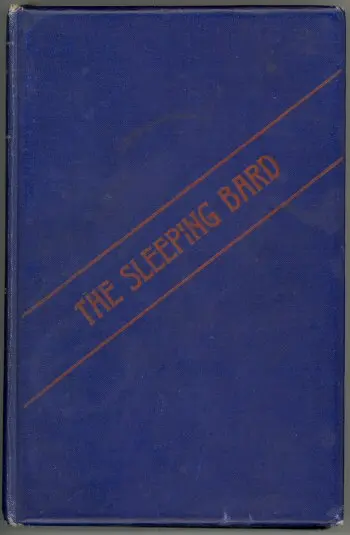
"The Visions of the Sleeping Bard" by Ellis Wynne is a poetic allegory written during the early 18th century. The work presents a meditation on moral and spiritual themes, exploring human frailty through vivid dream-like sequences that personify vice and virtue. The narratives follow the Bard, a character experiencing various visions of the world, death, and hell, as he embarks on a quest for understanding and salvation. At the start of the text, the Bard ascends a mountain and falls into a deep sleep, initiating fantastical visions that illuminate his perception of worldly affairs and moral decay. Through his dreams, he encounters fairies and angels, witnessing the "City of Destruction" governed by the malevolent Prince Belial and his enchanting daughters, who symbolize pride, pleasure, and wealth. The protagonist's journey reveals the vices of humanity, such as hypocrisy and greed, while contrasting them against the ideal of a higher calling represented by the City of Emmanuel. The opening sets the stage for a rich tapestry of social critique intertwined with spiritual reflection, inviting readers to ponder the nature of their choices and existence.
Introduction adapted from the source catalogue; source summaries may be automatically generated.
Free to read · English · 42,618 words · No account needed
MAKE TIME FOR A GOOD BOOK
On by default. Untick to stop anonymous reading totals. Each page counts after 10 seconds in view. How this works.
Anonymous counting is on unless you have switched it off.
One April morning, bright and mild, when earth was with verdure laden, and Britain, like a paradise, had donned its brilliant livery, foretelling summer’s sunshine, I sauntered along the banks of the Severn, while around me, chaunting their sweet carols, the forest’s little songsters in rivalry poured forth songs of praise to their Maker; and I, who was far more bounden than they to give praise, at one while lifted up my voice with the gentle winged choristers, and at another read “The Practice of Piety.” {67} For all that, my previous visions would not from my mind, but time after time broke in upon every other thought. They continued to trouble me until after careful reasoning I concluded that every vision is a heaven-sent warning against sin, and that therefore it was my duty to write them down as a warning to others also. And whilst occupied with this work, and sadly endeavouring to recall some of those awful memories, there fell upon me at my task such drowsiness that soon opened the way for Master Sleep to glide in perforce. No sooner had sleep taken possession of my senses than there drew nigh unto me a glorious apparition upon the form of a young man, tall and exceeding fair; his raiments were whiter sevenfold than snow, the brightness of his face darkened the sun, his wavy, golden locks rested on his brow in two shining coronal wreaths. “Come with me, thou mortal being,” he exclaimed, when he had drawn near. “Who art thou, Lord?” said I. “I am the Angel of the realms of the North,” answered he, “guardian of Britain and its queen. I am one of the princes who stand below the throne of the Lamb, receiving his commands to protect the Gospel against all its enemies in Hell, in Rome and in France, in Constantinople, in Africa and in India, and wherever else they may be, devising plans for its destruction. I am the Angel who saved thee beneath the Castle of Belial, and who showed thee the vanity and madness of all the earth, the City of Destruction and the splendor of Emmanuel’s City; and again have I come at his bidding to show thee greater things, because thou art seeking to make good use of what thou hast seen erstwhile.” “How can it be, Lord,” asked I, “that your glorious highness, guardian of kings and kingdoms, does condescend to associate with carrion such as I?” “Ah,” said he, “in our sight a beggar’s virtue is more than a king’s majesty. What if I am greater than all the kings of earth, and supreme to many of the countless lords of heaven? Yet, since our eternal Sovereign vouchsafed to take upon Himself such unutterable humiliation—put on one of your bodies, lived in your midst, and died to save you, how dare I deem it otherwise than too sublime for my office to serve thee and the meanest of men, who are so high in my Master’s favor? Hence, spirit, cast off thine earthy mould!” he cried, gazing upwards: and at the word, I beheld him fall free of all bodily form, and snatch me up to the vault of heaven, through the region of thunder and lightning, and all the glowing armouries of the empyrean; higher, immeasureably higher than I had previously been with him, and where the earth appeared scarcely wider than a stack-yard. Having allowed me to rest awhile, he hurried me upwards a myriad miles, until the sun appeared far beneath us; through the milky way, past Pleiades, and many other stars of appalling magnitude, catching a distant glimpse of other worlds. And after journeying for a long time, we come at last to the confines of the great eternity, in sight of the two courts of the vauntful King of Death—one to the right, the other to the left, but very far apart from one another as there lay an immense void between them. I asked whether I might go and see the court on my right hand, for I observed that this was not at all like the other I had previously seen. “Thou shalt perchance,” said he, “see, somewhile, more of the difference there is between them. But now we must proceed in another direction.” At that we turned away from the little world, and across the intervening space we let ourselves descend into the Eternal Realm between the two courts, into the formless void, a boundless tract, most deep and dark, chaotic and uninhabited, at one time cold, at another hot, {69} now silent, now resounding with the roaring of cataracts falling and quenching the fires, and anon of the fire bursting out and burning up the water. Thus, there was neither order nor completeness, nor life nor form: nought but this dazing dissonance, this mysterious stupor which would have made me for ever blind, had not my friend laid bare once more his vesture of heavenly sheen. By the light he gave I saw before me to the left the Land of Oblivion, and the borders of the Wilds of Destruction; and to my right, methought, the base of the ramparts of Glory. “This is the great abysm between Abraham and Dives,” said he, “which is called Chaos: this is the land of the matter which God did first create, and here is the seed of every living thing; of these the Almighty Word created your world and all it doth contain—water, fire, air, earth, beasts, fishes, insects, birds and the human body; but your souls are of a higher and nobler origin and stock.”
Your reading position is saved on this browser. Take it to another device with a library code. Reading pages adapt to text, rather than matching a printed edition.
BEHIND THE BOOK
This eBook is for the use of anyone anywhere in the United States and most other parts of the world at no cost and with almost no restrictions whatsoever. You may copy it, give it away or re-use it under the terms of the Project Gutenberg License included with this eBook or online at www.gutenberg.org. If you are not located in the United States, you will have to check the laws of the country where you are located before using this eBook. Read the source licence.
The original source file, including credits and licence, is retained by this library. Request an original-format copy at no charge. Please include the book title and Project Gutenberg identifier #5671.
KEEP YOUR CURIOSITY GOING
Eric Mackay
Edmund Gosse
Sophia Margaretta Hensley
Gilbert Parker
George MacDonald

Elizabeth Bibesco