
Love Letters of a Violinist, and Other Poems
Eric Mackay
THE CLASSIC COLLECTION · 1703
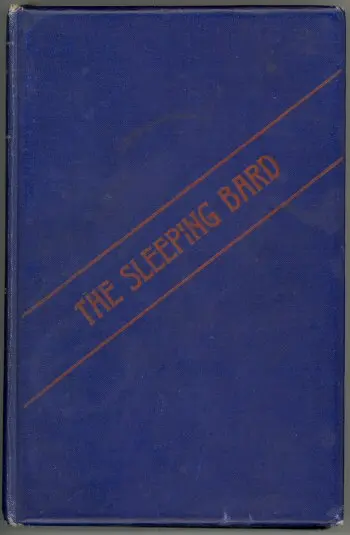
"The Visions of the Sleeping Bard" by Ellis Wynne is a poetic allegory written during the early 18th century. The work presents a meditation on moral and spiritual themes, exploring human frailty through vivid dream-like sequences that personify vice and virtue. The narratives follow the Bard, a character experiencing various visions of the world, death, and hell, as he embarks on a quest for understanding and salvation. At the start of the text, the Bard ascends a mountain and falls into a deep sleep, initiating fantastical visions that illuminate his perception of worldly affairs and moral decay. Through his dreams, he encounters fairies and angels, witnessing the "City of Destruction" governed by the malevolent Prince Belial and his enchanting daughters, who symbolize pride, pleasure, and wealth. The protagonist's journey reveals the vices of humanity, such as hypocrisy and greed, while contrasting them against the ideal of a higher calling represented by the City of Emmanuel. The opening sets the stage for a rich tapestry of social critique intertwined with spiritual reflection, inviting readers to ponder the nature of their choices and existence.
Introduction adapted from the source catalogue; source summaries may be automatically generated.
Free to read · English · 42,618 words · No account needed
MAKE TIME FOR A GOOD BOOK
On by default. Untick to stop anonymous reading totals. Each page counts after 10 seconds in view. How this works.
Anonymous counting is on unless you have switched it off.
“DEATH, King of Terrors, Conqueror of Conquerors, To our most revered kinsman and neighbour, Lucifer, Monarch of the Endless Night, and Emperor of the Sheer Vortex, Salutation:
“After giving earnest thought to this your royal wish, it seemeth to us more advantageous, not only to our state, but also to your vast realm, that these prisoners be sent to the furthest point possible from the portals of the impervious wall, left their putrid odour should so terrify the entire City of Destruction that no one would ever enter Eternity from that side of the gulf, and I, in consequence, would be unable to cool my sting, and you should have no commerce betwixt earth and hell. But I leave you to judge them, and to cast them into the cells you deem most secure and befitting.
“From our Lower Court in the Great Tollgate of Destruction: from the year of the restoration of my Kingdom, 1670.”
After hearing all this, I was itching to know what manner of folk these seven might be, seeing that the devils themselves feared them so much. But ere long, the Clerk to the Crown calls them by name, as follows: “Mister Busybody, alias Finger-in-every-pie.” This fellow was so fussily and busily directing the others, that he had no leisure to answer to his name until Death threatened to sunder him with his dart. Then, “Mr. Slanderer, alias Foe-of-Good-Fame,” was called, but no response came. “He is rather bashful to hear his titles,” said the third, “he can’t abide the nicknames.” “Have you no titles, I wonder?” asked the Slanderer, “call Mr. Honey-tongued Swaggerer, alias Smoothgulp, alias Venomsmile.” “Here,” cried a woman, who was standing near, pointing to the Swaggerer. “Ha, Madam Huntress!” cried he, “your humble servant; I am glad to see you well, I never saw a more beautiful woman in breeches, but woe’s me to think how pitiable is the country, having lost in you such an unrivalled ruler; and yet, your pleasant company will make hell itself somewhat better.” “Oh, thou scion of evil,” cried she, “no one need a worse hell than to be with thee—thou art enough.” Then the crier called, “Huntress, alias Mistress o’ the Breeches.” “Here,” answered someone else, she herself not saying a word because they did not “madam” her. Next was called the Schemer, alias Jack-of-all-Trades. But he, too, failed to answer, for he was assiduously plotting to escape the Land of Despair. “Here, here,” cried someone behind him, “here he is spying for a place to break out of your great court, and unless you be on your guard, he has a considerable plot against you.” “Then,” said the Schemer, “Let him also be called, to wit, The Accuser-of-his-Brethren, alias Faultfinder, alias Complaint-monger.” “Here, here he is,” cried the Litigious Wrangler—for each one knew the other’s name, but none would acknowledge his own. “You are also called,” said the Accuser, “Mr. Litigious Wrangler, alias Cumber-of-Courts.” “Witness, witness, all of you, what names the knave has given me,” cried the Wrangler. “Ha, ha, ’tis not according to the font, but according to the fault, that everybody is named in this land,” said Death, “and with your permission, Mr. Wrangler, these names must stick to you for evermore.” “Indeed,” quoth the Wrangler, “by the devil, I’ll make it hot for you; although you may put me to death, you have no right to nickname me. I shall enter a plaint for this and for false imprisonment, against you and your kinsman Lucifer, in the Court of Justice.”
Your reading position is saved on this browser. Take it to another device with a library code. Reading pages adapt to text, rather than matching a printed edition.
BEHIND THE BOOK
This eBook is for the use of anyone anywhere in the United States and most other parts of the world at no cost and with almost no restrictions whatsoever. You may copy it, give it away or re-use it under the terms of the Project Gutenberg License included with this eBook or online at www.gutenberg.org. If you are not located in the United States, you will have to check the laws of the country where you are located before using this eBook. Read the source licence.
The original source file, including credits and licence, is retained by this library. Request an original-format copy at no charge. Please include the book title and Project Gutenberg identifier #5671.
KEEP YOUR CURIOSITY GOING
Eric Mackay
Edmund Gosse
Sophia Margaretta Hensley
Gilbert Parker
George MacDonald

Elizabeth Bibesco