
Love Letters of a Violinist, and Other Poems
Eric Mackay
THE CLASSIC COLLECTION · 1703
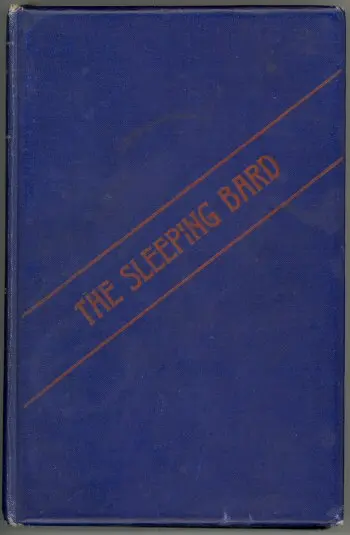
"The Visions of the Sleeping Bard" by Ellis Wynne is a poetic allegory written during the early 18th century. The work presents a meditation on moral and spiritual themes, exploring human frailty through vivid dream-like sequences that personify vice and virtue. The narratives follow the Bard, a character experiencing various visions of the world, death, and hell, as he embarks on a quest for understanding and salvation. At the start of the text, the Bard ascends a mountain and falls into a deep sleep, initiating fantastical visions that illuminate his perception of worldly affairs and moral decay. Through his dreams, he encounters fairies and angels, witnessing the "City of Destruction" governed by the malevolent Prince Belial and his enchanting daughters, who symbolize pride, pleasure, and wealth. The protagonist's journey reveals the vices of humanity, such as hypocrisy and greed, while contrasting them against the ideal of a higher calling represented by the City of Emmanuel. The opening sets the stage for a rich tapestry of social critique intertwined with spiritual reflection, inviting readers to ponder the nature of their choices and existence.
Introduction adapted from the source catalogue; source summaries may be automatically generated.
Free to read · English · 42,618 words · No account needed
MAKE TIME FOR A GOOD BOOK
On by default. Untick to stop anonymous reading totals. Each page counts after 10 seconds in view. How this works.
Anonymous counting is on unless you have switched it off.
At the word he transported me up to where the churches of the City of Destruction were; for everyone therein, even the unbelieving, has a semblance of religion. And it was to the temple of the unbelievers that we first came, and there I saw some worshipping a human form, others the sun, the moon and a countless other like gods down to onions and garlic; and a great goddess called Deceit was universally worshipped. However, there were some traces of the influence of Christianity to be found in most of these religions. Thence we came to a congregation of mutes, {24} where there was nothing but sighing and quaking and beating the breast. “Here,” said the Angel, “is the appearance of great repentance and humility, but which in reality is perversity, stubbornness, pride and utter darkness; although they talk much about the light within, they have not even the spectacles of nature which the heathen thou erstwhile saw, possess.”
From these dumb dogs we chanced to turn into an immense, roofless church, with thousands of shoes lying at the porch, whereby I learnt it was a Turkish mosque. These had but very dark and misty spectacles called the Koran; yet through these they gazed intently from the summit of their church for their prophet, who falsely promised to return and visit them long ago, but has left his promise unfulfilled.
From thence we entered the Jewish synagogue—these too were unable to flee from the City of Destruction, although they had grey-tinted spectacles, for when they look a film comes over their eyes from want of anointing them with that precious ointment—faith.
Next we came to the Papists. “Here is the church that beguiles the nations,” exclaimed the Angel, “it was Hypocrisy that built this church at her own cost. For the Papists encourage, yea, command men to break an oath with a heretic even though sworn on the sacraments.” From the chancel we went through the keyholes, up to the top of a certain cell which was full of candles, though it was broad daylight, and where we could see a tonsured priest walking about as if expecting someone to come to him; and ere long there comes a buxom matron, with a fair maid in her wake, bending their knees before him to confess their sins. “My spiritual father,” said the good wife, “I have a burthen too heavy to bear unless I obtain your mercy to lighten it: I married a member of the Church of England!” “What!” cried the shorn-pate, “married a heretic! wedded to an enemy? forgiveness can never be obtained!” At these words she fainted, while he kept calling down imprecations upon her head. “Woe’s me, and what is worse,” cried she when come to herself, “I killed him!” “Oh ho! thou hast killed him? Well, that’s something towards gaining the reconciliation of the Church; I tell thee now, hadst thou not slain him, thou wouldst never have obtained absolution nor purgatory, but a straight gate and a leaden weight to the devil. But where’s your offering, you jade?” he demanded with a snarl. “Here,” said she, handing him a considerable bag of money. “Well,” said he, “now I’ll make your reconciliation: your penance is to remain always a widow lest you should make another bad bargain.” When she was gone, the maiden also came forward to make her confession. “Your pardon, father confessor,” cried she, “I conceived a child and slew it.” “A fair deed, i’faith,” said the confessor, “and who might the father be?” “Indeed ’twas one of your monks.” “Hush, hush,” he cried, “speak no ill of churchmen. {25} What satisfaction have you for the Church?” “Here it is,” said she and handed him a gold trinket. “You must repent, and your penance will be to watch at my bedside to-night,” he said with a leer. Hereupon four other shavelings entered, dragging before the confessor a poor wretch, who came about as willingly as he would to the gallows. “Here’s for you a rogue,” cried one of the four, “who must do penance for disclosing the secrets of the Catholic Church.” “What!” exclaimed the confessor, looking towards a dark cell near at hand: “but come, villain, confess what thou hast said?” “Indeed,” began the poor fellow, “a neighbour asked me whether I had seen the souls that were groaning underneath the altar on All-souls’ day; and I said I had heard the voice, but had seen nothing.” “So, sirrah, come now, tell everything.” “I said moreover,” he continued, “that I had heard that you were playing tricks on us unlettered hinds, that, instead of souls, there was nothing but crabs making a row under the carpet.” “Oh, thou hell-hound! cursed knave!” cried the confessor, “but, proceed, mastiff.” “And that it was a wire that turned the image of St. Peter, and that it was along a wire the Holy Ghost descended from the roodloft upon the priest.” “Thou heir of hell!” cried the shriver, “Ho there, torturers, take him and cast him into that smoky chimney for tale-bearing.” “Well, this is the church Hypocrisy insists upon calling the Catholic Church, and she avers that these only are saved,” said the Angel; “they once had the proper spectacles, but they cut the glass into a thousand forms; they once had true faith, but they mixed that salve with substances of their own, so that they see no better than the unbelieving.”
Your reading position is saved on this browser. Take it to another device with a library code. Reading pages adapt to text, rather than matching a printed edition.
BEHIND THE BOOK
This eBook is for the use of anyone anywhere in the United States and most other parts of the world at no cost and with almost no restrictions whatsoever. You may copy it, give it away or re-use it under the terms of the Project Gutenberg License included with this eBook or online at www.gutenberg.org. If you are not located in the United States, you will have to check the laws of the country where you are located before using this eBook. Read the source licence.
The original source file, including credits and licence, is retained by this library. Request an original-format copy at no charge. Please include the book title and Project Gutenberg identifier #5671.
KEEP YOUR CURIOSITY GOING
Eric Mackay
Edmund Gosse
Sophia Margaretta Hensley
Gilbert Parker
George MacDonald

Elizabeth Bibesco