
Scenes and Portraits
Frederic Manning
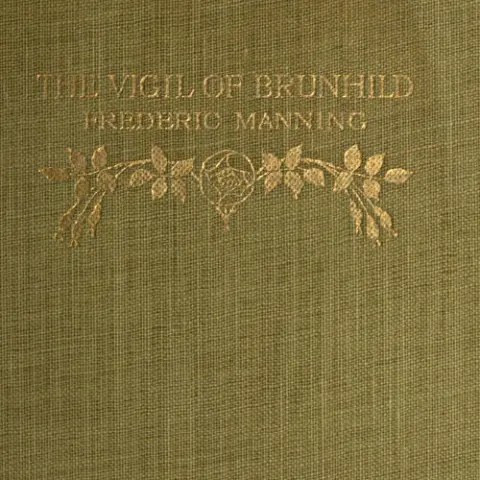
THE CLASSIC COLLECTION · 1907
"The Vigil of Brunhild: A Narrative Poem" by Frederic Manning is a narrative poem published in the early 20th century. The poem explores the tragic life of Brunhild, a queen who experiences betrayal and extreme hardship, encapsulating themes of love, power, and the harsh realities of fate. It likely reflects on the significant role women played in historical events, particularly within the context of medieval Europe, which forms the backdrop of Brunhild's story. The narrative unfolds as Brunhild awaits her brutal execution, reminiscing about her past glories and failures. As she interacts with a priest, she recounts her rise to power, her tumultuous marriage to King Sigebert, and her subsequent struggles against the manipulative and treacherous Fredegonde. Through haunting visions and poignant reflections, Brunhild confronts her sins, her desires, and the inexorable nature of fate, ultimately leading to her acceptance of death with a dignified resolve. The poem paints a powerful portrait of a woman whose ambitions and personal battles are set against the immense forces of history and her own mortality.
Introduction adapted from the source catalogue; source summaries may be automatically generated.
Free to read · English · 11,160 words · No account needed
MAKE TIME FOR A GOOD BOOK
On by default. Untick to stop anonymous reading totals. Each page counts after 10 seconds in view. How this works.
Anonymous counting is on unless you have switched it off.
No motion made the priest as Brunhild paused;
His eyes avoided hers. She was as one
Towering over the departed years,
The sea of years her memory like a shell
Held echoes of, and reminiscent sounds.
And above all her insults and disgrace,
The burden of her age, the bitter wrongs,
She rose into a calm, majestic realm,
That eagles might inhabit, with her mind
Intent upon the spectacle of life,
Yet heedless of her fate; no shame could touch
The soul that breathed in so serene an air,
Superior to mortal accidents.
But the priest felt that effluence from her
Shed a strange glory round the humid cell
And fill him with a fearful sense of fate:
The blind, remorseless progress of the world.
Sombre and threatening, her figure cut
Prow-like, and loomed through huge, tempestuous night,
Toward a doom obscure and imminent.
She spoke again in slow and weary words:
“Merow remained with Gregory; but time
Brought no release for his imprisoned feet
Or the wild soul pent in that cloistral peace
Among the gilt and painted images
Of the dead saints, the effigies of stone,
The prisoned light, the windless, silent air
That came not fresh from out the heart of dawn,
But hung upon him heavily as death,
Damp with its charnels; and the solemn chants
Filled him with longing for the loud-voiced larks,
And he was eager for my lips again.
“Ah, God! what ruin lurked within his love.
He fled by night from that safe harbourage,
On foot, into the woods, and careless roamed
Through unknown ways, and couched with herds of deer
In brakes and bowery hollows, that the sound
Of their swift flight when wolves drew close at night,
Warned and awakened him; or he would creep
At evening to some lone sequestered farm,
Hid in a fold of hills, and win his food,
His place beside the fire, with merry songs
Tuned to a rustic harp, deluding hosts
With tales of how he lived by minstrelsy:
Yet never rested longer than the night,
But with the dawn departed, ere the birds
Woke to their song, and man from healing sleep
To his laborious struggle with the earth;
Silent he slipped from them, that none might know
The path he travelled, and next night would lie
On some lone upland underneath the stars.
While, as he wandered, drawing close to me,
I dreamed him still at Tours, and had no hope
To see him, for my lords were turbulent,
Grown headstrong in mine absence, and my son
Had not yet learned the art of governance:
To play on rival jealousies, and split
Alliances in factions; to dissolve
Confederacies, as an acid eats
Through base alloy of idols composite,
Till the whole crumble; to lead many weak
Against one strong, and win the name of Right,
Come in full arms to succour the distressed,
And break the bonds of tyranny; to pay
The world with phrases; lead the ductile mob,
Swayed by a momentary need, to ends
Imperial, that crown our finished work.
So wrought I with my proud rebellious lords,
Rousing the populace against their strength,
Sowing among them mutual distrust,
And fear, and drove them out with ruthless hands,
To herd with their own fellows, the lean wolves
Of winter, famishing, who bay in pack,
When the full moon hangs low, and golden grows,
Over the rim of the Atlantic waste.
“So swept I out my house and garnished it,
In preparation for the perfect guest,
Who comes on dove’s wings silently, nor thought
That one on sable wings, more silently,
Would enter in and take the seat of Love.
Rumour, that travels on each wanton wind,
Swifter than birds may fly, from tongue to tongue
Came laden with the news of violence wrought
In Rouen, by command of Fredegonde
On Praetextatus, the poor kindly priest,
Who took the ring from Merow for my hand,
And blessed the union that had been so brief.
Then there awoke in me that sense which feels
Strange intuitions of approaching doom,
And Fear crept through my dreams on stealthy feet,
Or crouched beside me, and the darkness seemed
Alive with evil; but I steeled my heart
To wait on time and all that time might bring
Of good or evil. Then from Gregory
Came messengers, who told of Merow’s flight,
And that the hounds of Fredegonde pursued
The fugitive through all frequented ways,
And forests, and waste places, and the lone
Bare mountains, sterile underneath the stars,
Yea, every valley, every hidden place,
Lest they should lose him, and the harlot queen
Avenge on them her seat grown insecure,
Through lack of vigilance. God, how the days
Lengthened their minutes into weary hours,
And weary hours to days! as if the time
Were frozen with the fear that gripped my heart,
And moved not onward to the destined end,
Ordained ere time. I could but send some men
Toward the frontier of her land and mine;
Yet some I trusted knew that to my love
There were no frontiers but that boundary
Between the quick and dead. They went in quest;
I waited. And one night was borne to me,
Upon a litter, bloody and befouled,
The corpse of Merow carried shoulder-high
By mourning bearers; and I sat like stone,
Dumb, tearless, stricken by excess of tears
That would not weep, but lay congealed within
Mine overburdened heart. All night I sat
In silence, weeping not, until the stars
Were lost in dawn, until the silver dawn
Blossomed with splendour to a golden day;
Yet knew I not that day had come, for clouds
Covered the light of morning from mine eyes,
Hid me in wells of darkness and thick night,
A Niobe of stone, but lacking tears
Which else had melted stone; till, fearfully,
My son came to me and put out his hand
And touched me gently; and, as in deep pools
One sees obscurely through the broken lights
And rippling shadows, so upon my sight,
Though faint and blurred, a vision of my son
Came to me, and I saw a shadowy crowd
Of crouching beings far behind my son,
As vague as ghosts, who filled the silent room;
And then I heard my voice as from afar,
Muffled in gloom, a voice that seemed not mine,
Bidding them leave me; and like ghosts they went:
All but my son, who knelt beside my chair
Sobbing out bitterly some broken words,
That held less comfort than his trembling hands.
“Slowly there came to me the governance
Of limbs again, and from my chair I rose,
And went toward the litter where he lay,
The spoil of death, in ruined loveliness;
Breathless, whose breath had once made amorous
The night with music. And I touched his eyes,
Which kindliness had closed with piteous hands
Before they brought him me, and knelt beside
The bier, and spoke to him. He heard me not:
For he had gone the irremeable way,
Into which darkness may not penetrate
The voice of love, nor yearning nor desire
Pass its grim boundaries, but brooding wings
Of silence cover its eternal sleep.
Lost utterly! Yet still I spoke to him,
As if, perchance, some whisper of my voice
Might stir the pools of silence where he lay,
And tremble lightly on the veils of sleep,
Waking some consciousness of me. Alas!
He was not there with me, but on the wind,
In every tree, his soul went wandering,
Through all the world dispersed. Yet still I spoke
Gently to him, and kissed him; till my son
Wept piteously by me, until tears
Gathered in mine own eyes and I too wept
In silence, by the body of my love.”
Your reading position is saved on this browser. Take it to another device with a library code. Reading pages adapt to text, rather than matching a printed edition.
Frederic Manning

Frederic Manning
Frederic Manning
BEHIND THE BOOK
This eBook is for the use of anyone anywhere in the United States and most other parts of the world at no cost and with almost no restrictions whatsoever. You may copy it, give it away or re-use it under the terms of the Project Gutenberg License included with this eBook or online at www.gutenberg.org. If you are not located in the United States, you will have to check the laws of the country where you are located before using this eBook. Read the source licence.
The original source file, including credits and licence, is retained by this library. Request an original-format copy at no charge. Please include the book title and Project Gutenberg identifier #58692.
KEEP YOUR CURIOSITY GOING
Cécile Tormay

Moritz Busch
John L. Ransom

Maurice Baring
Frances Wright
Cécile Tormay