THE CLASSIC COLLECTION✦The Life and Letters of Walter H. Page, Volume IICLASSIC FREE BOOKS
The Life and Letters of Walter H. Page, Volume II
Burton Jesse Hendrick
THE CLASSIC COLLECTION · 1920
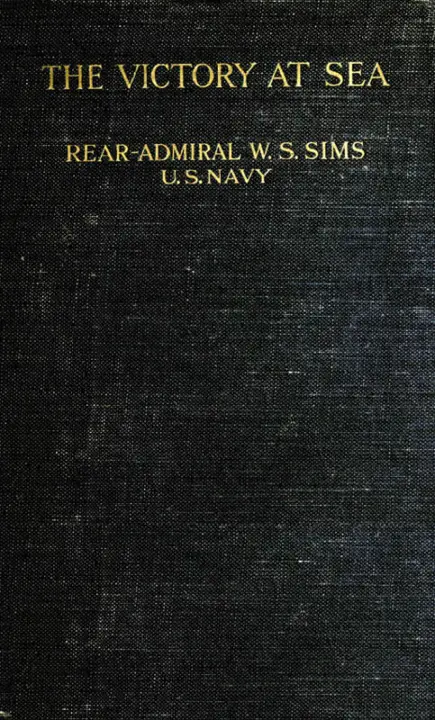
"The Victory At Sea" by William Sowden Sims and Burton Jesse Hendrick is a historical account written in the early 20th century. The book centers around the American naval operations in European waters during World War I and focuses particularly on the submarine warfare that posed a significant threat to the Allies. It captures the strategic and tactical maneuvers employed by the American Navy to counter the German U-boat attacks while providing insights into the international naval collaboration between the United States and its allies. The opening of the book reveals the gravity of the situation in early 1917 as Rear-Admiral Sims receives orders to travel to England amid rising tensions due to impending war with Germany. Upon arrival, he learns the dire state of British naval operations, illustrating that German submarines were inflicting severe losses on Allied shipping, putting the safety of the British Empire at risk. The admiration and concern for British naval leadership’s challenges in combating the U-boat threat set the stage for the urgency of American involvement, which is underscored by the strategies discussed for countering submarine warfare, including the importance of secrecy, immediate action, and international cooperation.
Introduction adapted from the source catalogue; source summaries may be automatically generated.
Free to read · English · 134,252 words · No account needed
MAKE TIME FOR A GOOD BOOK
On by default. Untick to stop anonymous reading totals. Each page counts after 10 seconds in view. How this works.
Anonymous counting is on unless you have switched it off.
For the greater part of 1917 the German people believed that their submarines could bar the progress of the American armies. By March, 1918, they had awakened from this delusion. Not only was an American army millions strong in process of formation, but the alarming truth now dawned upon the Germans that it could be transported to Europe. The great industries of America could provide munitions and food to supply any number of soldiers indefinitely, and these, too, could be brought to the Western Front. Outwardly, the German chiefs might still affect to despise this new foe, but in their hearts they knew that it spelt their doom. They were not now dealing with a corrupt Czardom and hordes of ignorant and passionless Slavs, who could be eliminated by propaganda and sedition; they were dealing with millions of intelligent and energetic freemen, all animated by a mighty and almost religious purpose. Yet the situation, desperate as it seemed, held forth one more hope. If the German armies, which still greatly outnumbered the French and British, could strike and win a decisive victory before the Americans could arrive, then they might still force a satisfactory peace. "It is a race between Ludendorff and Wilson" is the terse and accurate way in which Lloyd George summed up the situation. The great blow fell on March 21, 1918; the British and the French met it with heroism, but it was quite evident that they were fighting against terrible odds. At this time the American army in France numbered about 300,000 men; it now became the business of the American navy, assisted by the British, to transport the American troops who could increase these forces sufficiently to turn the balance in the Allies' favour.
The supreme hour, to which all the anti-submarine labours of the preceding year were merely preliminary, had now arrived. Since the close of the war there has been much discussion of the part which the American navy played in bringing it to a successful end. Even during the war there was some criticism on this point. There were two more or less definite opinions in the public mind upon this question. One was that the main business of our war vessels was to convoy the American soldiers to France; the other emphasized the anti-submarine warfare as its most important duty. Anyone would suppose, from the detached way in which these two subjects have been discussed, that the anti-submarine warfare and the successful transportation of troops were separate matters. An impression apparently prevails that, at the beginning of the war, the American navy could have quietly decided whether it would devote its energies to making warfare on the submarine or to convoying American armies; yet the absurdity of such a conception must be apparent to anyone who has read the foregoing pages. The several operations in which the Allied navies engaged were all part of a comprehensive programme; they were all interdependent. According to my idea, the business of the American navy was to join its forces whole-heartedly with those of the Allies in the effort to win the war. Anything which helped to accomplish this great purpose became automatically our duty. Germany was basing her chances of success upon the submarine; our business was therefore to assist in defeating the submarine. The cause of the Allies was our cause; our cause was the cause of the Allies; anything which benefited the Allies benefited the United States; and anything which benefited the United States benefited the Allies. Neither we nor France nor England were conducting a separate campaign; we were separate units of an harmonious whole. At the beginning the one pressing duty was to put an end to the sinking of merchantmen, not because these merchantmen were for the larger part British, but because the failure to do so would have meant the elimination of Great Britain from the war, with results which would have meant defeat for the other Allies. Let us imagine, for a moment, what the sequence of events would have been had the submarine campaign against merchant shipping succeeded; in that case Britain and France would have been compelled to surrender unconditionally and the United States would therefore have been forced to fight the Central Empires alone. Germany's terms of peace would have included the surrender of all the Allied fleets; this would eventually have left the United States navy to fight the German navy reinforced by the ships of Great Britain, Austria, France, and Italy. In such a contest we should have been outnumbered about three or four to one. I have such confidence in the power and purpose of America as to believe that, even in a single-handed conflict with Germany, we should have won in the end; but it is evident that the problem would have been quite a different one from that of fighting in co-operation with the Allies against the Germanic foe.
Your reading position is saved on this browser. Take it to another device with a library code. Reading pages adapt to text, rather than matching a printed edition.
Burton Jesse Hendrick
Burton Jesse Hendrick
BEHIND THE BOOK
This eBook is for the use of anyone anywhere in the United States and most other parts of the world at no cost and with almost no restrictions whatsoever. You may copy it, give it away or re-use it under the terms of the Project Gutenberg License included with this eBook or online at www.gutenberg.org. If you are not located in the United States, you will have to check the laws of the country where you are located before using this eBook. Read the source licence.
The original source file, including credits and licence, is retained by this library. Request an original-format copy at no charge. Please include the book title and Project Gutenberg identifier #38587.
KEEP YOUR CURIOSITY GOING
Cécile Tormay

Moritz Busch
John L. Ransom
Frances Wright
Cécile Tormay

Mabel Potter Daggett