THE CLASSIC COLLECTION✦The Life and Letters of Walter H. Page, Volume IICLASSIC FREE BOOKS
The Life and Letters of Walter H. Page, Volume II
Burton Jesse Hendrick
THE CLASSIC COLLECTION · 1920
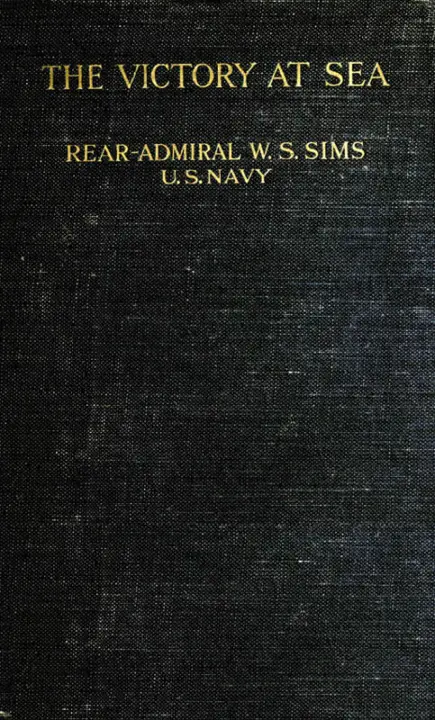
"The Victory At Sea" by William Sowden Sims and Burton Jesse Hendrick is a historical account written in the early 20th century. The book centers around the American naval operations in European waters during World War I and focuses particularly on the submarine warfare that posed a significant threat to the Allies. It captures the strategic and tactical maneuvers employed by the American Navy to counter the German U-boat attacks while providing insights into the international naval collaboration between the United States and its allies. The opening of the book reveals the gravity of the situation in early 1917 as Rear-Admiral Sims receives orders to travel to England amid rising tensions due to impending war with Germany. Upon arrival, he learns the dire state of British naval operations, illustrating that German submarines were inflicting severe losses on Allied shipping, putting the safety of the British Empire at risk. The admiration and concern for British naval leadership’s challenges in combating the U-boat threat set the stage for the urgency of American involvement, which is underscored by the strategies discussed for countering submarine warfare, including the importance of secrecy, immediate action, and international cooperation.
Introduction adapted from the source catalogue; source summaries may be automatically generated.
Free to read · English · 134,252 words · No account needed
MAKE TIME FOR A GOOD BOOK
On by default. Untick to stop anonymous reading totals. Each page counts after 10 seconds in view. How this works.
Anonymous counting is on unless you have switched it off.
We descended to the water at five forty-five, ten miles north-west of Vlieland. During the ten minutes we were on the water I loosened Lt. Galvayne's clothing, made his position somewhat easier, and felt for his heart which at that time I was quite sure was beating feebly.
When we rose from the water and ascended to fifteen hundred feet, we sighted two planes which later proved to be the two Yarmouth boats. We picked them up, swung into formation, and laid our course for Yarmouth.
At ten minutes to seven we sighted land and twenty minutes after we were resting on the water in front of Yarmouth slipway.
We at once summoned medical aid but found that nothing could be done. The shot had gone through his head, striking the mouth and coming out behind his ear, tearing a gash of about two inches in diameter.
The boat had been more or less riddled, a number of shots tearing up the top between the front cockpit and the beginning of the cowl.
The total duration of the flight was seven hours and ten minutes.
American naval aviation had a romantic beginning; indeed, the development of our air service from almost nothing to a force which, in European waters, comprised 2,500 officers and 22,000 men, is one of the great accomplishments of the war. It was very largely the outcome of civilian enterprise and civilian public spirit. In describing our subchasers I have already paid tribute to the splendid qualities of reserve officers; and our indebtedness to this type of citizen was equally great in the aviation service. I can pay no further tribute to American youth than to say that the great aircraft force which was ultimately assembled in Europe had its beginnings in a small group of undergraduates at Yale University. In recommending Mr. Trubee Davison for a Distinguished Service Medal, the commander of our aviation forces wrote: "This officer was responsible for the organization of the first Yale aviation unit of twenty-nine aviators who were later enrolled in the Naval Reserve Flying Corps.... This group of aviators formed the nucleus of the first Naval Reserve Flying Corps, and, in fact, may be considered as the nucleus from which the United States Aviation Forces, Foreign Service, later grew." This group of college boys acted entirely on their own initiative. While the United States was still at peace, encouraged only by their own parents and a few friends, they took up the study of aviation. It was their conviction that the United States would certainly get into the war, and they selected this branch as the one in which they could render greatest service to their country. These young men worked all through the summer of 1916 at Port Washington, Long Island, learning how to fly: at this time they were an entirely unofficial body, paying their own expenses. Ultimately the unit comprised about twenty men; they kept constantly at work, even after college opened in the fall of 1916, and when war broke out they were prepared--for they had actually learned to fly. When the submarine scares disturbed the Atlantic seaboard in the early months of the war these Yale undergraduates were sent by the department scouting over Long Island Sound and other places looking for the imaginary Germans. In February, 1917, Secretary Daniels recognized their work by making Davison a member of the Committee on Aeronautics; in March practically every member of the unit was enrolled in the aviation service; and their names appear among the first one hundred aviators enrolled in the Navy--a list that ultimately included several thousand. So proficient had these undergraduates become that they were used as a nucleus to train our aircraft forces; they were impressed as instructors at Buffalo, Bayshore, Hampton Roads, the Massachusetts Institute of Technology, Key West and Moorhead City. They began to go abroad in the summer of 1917, and they were employed as instructors in schools in France and England. These young men not only rendered great material service, but they manifested an enthusiasm, an earnestness, and a tireless vigilance which exerted a wonderful influence in strengthening the moral of the whole aviation department. "I knew that whenever we had a member of the Yale unit," says Lieutenant-Commander Edwards, who was aide for aviation at the London headquarters in the latter part of the war, "everything was all right. Whenever the French and English asked us to send a couple of our crack men to reinforce a squadron, I would say, 'Let's get some of the Yale gang.' We never made a mistake when we did this."
Your reading position is saved on this browser. Take it to another device with a library code. Reading pages adapt to text, rather than matching a printed edition.
Burton Jesse Hendrick
Burton Jesse Hendrick
BEHIND THE BOOK
This eBook is for the use of anyone anywhere in the United States and most other parts of the world at no cost and with almost no restrictions whatsoever. You may copy it, give it away or re-use it under the terms of the Project Gutenberg License included with this eBook or online at www.gutenberg.org. If you are not located in the United States, you will have to check the laws of the country where you are located before using this eBook. Read the source licence.
The original source file, including credits and licence, is retained by this library. Request an original-format copy at no charge. Please include the book title and Project Gutenberg identifier #38587.
KEEP YOUR CURIOSITY GOING
Cécile Tormay

Moritz Busch
John L. Ransom
Frances Wright
Cécile Tormay

Mabel Potter Daggett