THE CLASSIC COLLECTION✦A dead man’s diaryCLASSIC FREE BOOKS
A dead man’s diary
Coulson Kernahan
THE CLASSIC COLLECTION · 1908
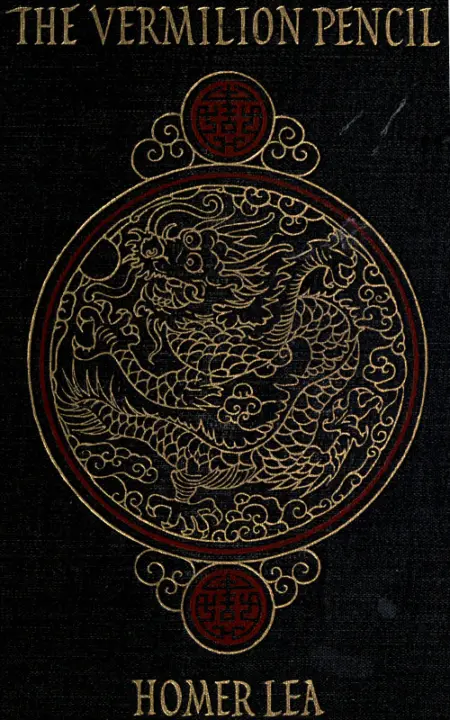
"The Vermilion Pencil: A Romance of China" by Homer Lea is a novel written in the early 20th century. The story explores themes of fate, desire, and the complexities of human relationships against the backdrop of China’s rich landscape and tumultuous history. The narrative introduces intriguing characters such as a passionate tea-farmer's daughter, a determined mandarin, and two priests from the French Mission in Yingching, each entangled in their destinies within a beautifully and vividly described Chinese setting. The opening of the book begins with a prolog that sets the stage dramatically through a typhoon, signaling significant change and upheaval. It quickly shifts to the serene yet captivating Valley of the Fountain, introducing the vibrant and independent daughter of a tea farmer, who captures the attention of a mandarin longing for her talent and presence. The narrative is imbued with rich descriptions of the landscape, cultural elements, and the characters' inner thoughts, establishing an atmosphere of tension and anticipation that will likely draw readers into the unfolding romance and conflict as they navigate personal desires and societal expectations. The complex interplay of fate and individual will is suggested as central to the storyline, promising a thoughtful exploration of these themes.
Introduction adapted from the source catalogue; source summaries may be automatically generated.
Free to read · English · 66,959 words · No account needed
MAKE TIME FOR A GOOD BOOK
On by default. Untick to stop anonymous reading totals. Each page counts after 10 seconds in view. How this works.
Anonymous counting is on unless you have switched it off.
“Look! Again he is there!” and the fortune-teller whirled the cook around and, half crouching, pointed cautiously to the guardhouse.
“So he is! So he is!” cried the cook.
“Did I not foretell it? Master cook, did I not prognosticate?”
“Yes, that is a fact,” answered the cook doubtfully.
“Cook,” continued the fortune-teller in mystic-triumphant tones, “I see everything, hear everything, know everything. Now, master cook, let me do you a good turn; it will only cost——”
“But,” suddenly exclaimed the cook, brightening, “he has been there in that fashion toward night-cooking for nearly two full moons.”
“Certainly, certainly, but would he have been there if it had not been for my prognostications?”
“That may be, that may be,” answered the cook, scratching his head.
“Master cook, let me prognosticate you. It will only cost——”
“No,” interrupted the cook abruptly. “But,” he hesitated, “I don’t like that influence every day just at my night-cooking.”
“It is very bad,” interjected the fortune-teller, shaking his head ruefully. “I would not be you for all the cash of Ho.”
“What is it?” demanded the cook hastily. “Tell me, master, tell me.”
The fortune-teller jumped back dramatically and threw up his hands. “I am overwhelmed,” he cried in lofty injured tones, “dumb, speechless, a dying phœnix.”
The cook scratched his head and looked sheepishly at him.
“Master cook,” the fortune-teller continued in the same severe voice, “you pretend to be a merchant, and yet you are unable to distinguish great profits from a fly’s head. Is it not known among honourable merchants that just scales and full measures injure no man? I am pained! Goodbye, master cook.” The fortune-teller began to wrap up his paraphernalia.
The cook scratched his head.
“Master cook, I leave you with a pitying heart—farewell.”
“What have I done? What have I done?” cried the cook, coming hastily to
his side.
“What have you done!” repeated the fortune-teller scornfully. “What have you done but throw out the refuse, the burnt scraps, the very swill of your inquisitiveness to lure from me the peculiar gems of my knowledge—my pearly prognostications!”
“But what have I done?” exclaimed the cook perplexedly.
“Can you get rice without planting? Chickens without eggs? Heat without fire? Fire without fuel? Prognostications without incentives?” demanded the fortune-teller haughtily.
“But what threatens me? What threatens me?” cried the cook impatiently.
“Master cook,” said the fortune-teller, solemnly though relentingly, “I should be lenient with you; that you do not understand the incomprehensible is not your fault. You are a cook, I alone am the scholar. Cook, I pity you; to me only is apparent the disaster over-pending. I will aid you.”
“Do, master, do.”
Your reading position is saved on this browser. Take it to another device with a library code. Reading pages adapt to text, rather than matching a printed edition.
BEHIND THE BOOK
This eBook is for the use of anyone anywhere in the United States and most other parts of the world at no cost and with almost no restrictions whatsoever. You may copy it, give it away or re-use it under the terms of the Project Gutenberg License included with this eBook or online at www.gutenberg.org. If you are not located in the United States, you will have to check the laws of the country where you are located before using this eBook. Read the source licence.
The original source file, including credits and licence, is retained by this library. Request an original-format copy at no charge. Please include the book title and Project Gutenberg identifier #54950.
KEEP YOUR CURIOSITY GOING
Coulson Kernahan

Maurice Baring
Frances Wright
Cécile Tormay

Frederic Jesup Stimson

W. H. P. (William Henry Pope) Jarvis