THE CLASSIC COLLECTION✦A dead man’s diaryCLASSIC FREE BOOKS
A dead man’s diary
Coulson Kernahan
THE CLASSIC COLLECTION · 1908
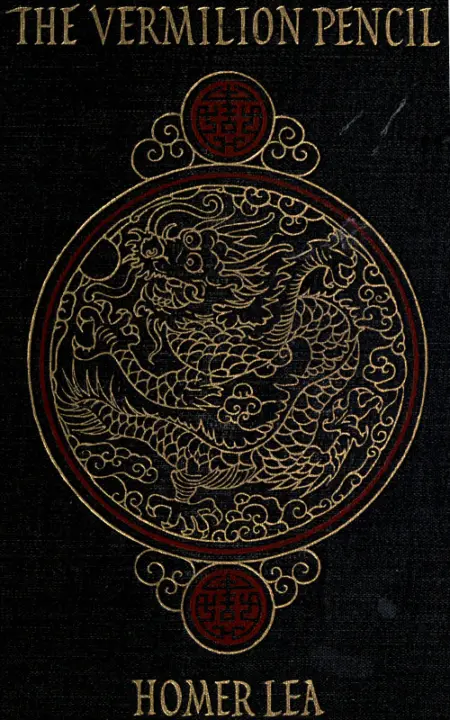
"The Vermilion Pencil: A Romance of China" by Homer Lea is a novel written in the early 20th century. The story explores themes of fate, desire, and the complexities of human relationships against the backdrop of China’s rich landscape and tumultuous history. The narrative introduces intriguing characters such as a passionate tea-farmer's daughter, a determined mandarin, and two priests from the French Mission in Yingching, each entangled in their destinies within a beautifully and vividly described Chinese setting. The opening of the book begins with a prolog that sets the stage dramatically through a typhoon, signaling significant change and upheaval. It quickly shifts to the serene yet captivating Valley of the Fountain, introducing the vibrant and independent daughter of a tea farmer, who captures the attention of a mandarin longing for her talent and presence. The narrative is imbued with rich descriptions of the landscape, cultural elements, and the characters' inner thoughts, establishing an atmosphere of tension and anticipation that will likely draw readers into the unfolding romance and conflict as they navigate personal desires and societal expectations. The complex interplay of fate and individual will is suggested as central to the storyline, promising a thoughtful exploration of these themes.
Introduction adapted from the source catalogue; source summaries may be automatically generated.
Free to read · English · 66,959 words · No account needed
MAKE TIME FOR A GOOD BOOK
On by default. Untick to stop anonymous reading totals. Each page counts after 10 seconds in view. How this works.
Anonymous counting is on unless you have switched it off.
One spring afternoon, when the pink petals lay strewn about, the Viceroy sat in the sun on a marble terrace thoughtfully munching his melon seeds, occasionally throwing one to the goldfish and turtles that crowded toward the terrace bank, snuffling, flopping but impatient to be fed. On a high ebony table beside his pipe and tea bowl lay a package of papers and at intervals the Viceroy re-perused some part of their contents, then placidly resumed his melon seeds, gazing over the lake to the hills bright in their spring foliage, to the slopes pink with blossoms, to the lake’s edge, fringed with the feathery bamboo. The shadow of a wutung tree slowly creeping across the terrace passed over the table and, hiding his bare grey head from the warm rays of the spring sun, aroused him from his meditation; again he looked over the papers then raised his hand.
In a moment Ho Ling, Mandarin of the Fifth Rank, came from an adjoining pavilion and bowed before him.
“I have read these reports,” said the Viceroy gruffly, decisively tapping the package of papers. “They are guilty, and to-morrow shall die.”
The mandarin bowed.
“Justice,” continued the Viceroy, “is an excellent thing—when not delayed; to put off the punishment of the guilty is to destroy the dignity of the state—a procrastinating Justice is the buffoon of the populace. Do you understand?” And squinting his eyes, the Viceroy surveyed inquisitively the mandarin, who bowed repeatedly, uneasily.
“You were one day late.”
The mandarin continued bowing.
“Well!” demanded the Viceroy, impatiently tapping the papers that were spread upon his knees.
“I stopped——”
“Yes?” interrupted the Viceroy.
“I could not get——”
“Eh?”
The mandarin bowed fervidly.
“Where did you stop?”
“In the Heavenly Mountains,” he answered furtively.
“In the mountains?”
The Viceroy uttered these three words weighingly.
“That is—in a little valley—a very little valley.”
“Ah,” and for a moment the Viceroy looked at him in silence. “What
valley?”
The mandarin became sallow. “My poor memory——”
“I will call your escort.”
“When I think of it,” put in the mandarin hastily and with trepidation, “the name comes to me—it is the Valley of a Fountain.”
“Why?”
“Great Sir,” answered the mandarin with an excited burst of confidence, “I am to marry the daughter of this valley.”
“Ah?” A sympathetic inquisitiveness was in the Viceroy’s voice. “I suppose you will now want a leave of absence?”
The mandarin’s face became suffused with joy. Nothing could have prevented him from bowing repeatedly.
“Well,” commanded the Viceroy impatiently, “this only daughter, is she
well dowered?”
“Great Sir, I do not know; I do not care!” he cried excitedly.
Your reading position is saved on this browser. Take it to another device with a library code. Reading pages adapt to text, rather than matching a printed edition.
BEHIND THE BOOK
This eBook is for the use of anyone anywhere in the United States and most other parts of the world at no cost and with almost no restrictions whatsoever. You may copy it, give it away or re-use it under the terms of the Project Gutenberg License included with this eBook or online at www.gutenberg.org. If you are not located in the United States, you will have to check the laws of the country where you are located before using this eBook. Read the source licence.
The original source file, including credits and licence, is retained by this library. Request an original-format copy at no charge. Please include the book title and Project Gutenberg identifier #54950.
KEEP YOUR CURIOSITY GOING
Coulson Kernahan

Maurice Baring
Frances Wright
Cécile Tormay

Frederic Jesup Stimson

W. H. P. (William Henry Pope) Jarvis