THE CLASSIC COLLECTION✦A dead man’s diaryCLASSIC FREE BOOKS
A dead man’s diary
Coulson Kernahan
THE CLASSIC COLLECTION · 1908
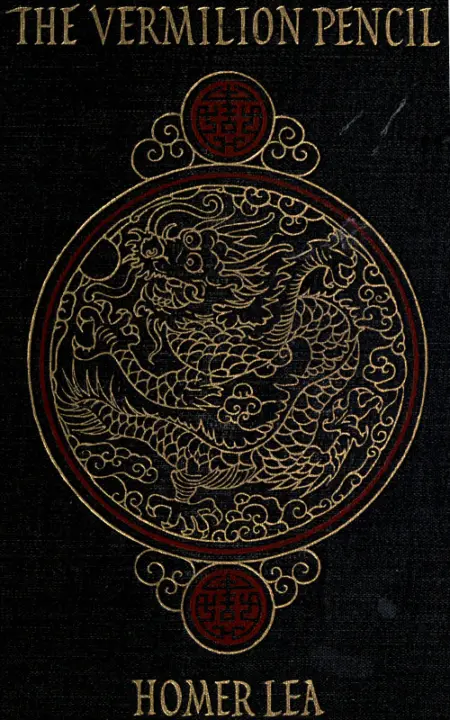
"The Vermilion Pencil: A Romance of China" by Homer Lea is a novel written in the early 20th century. The story explores themes of fate, desire, and the complexities of human relationships against the backdrop of China’s rich landscape and tumultuous history. The narrative introduces intriguing characters such as a passionate tea-farmer's daughter, a determined mandarin, and two priests from the French Mission in Yingching, each entangled in their destinies within a beautifully and vividly described Chinese setting. The opening of the book begins with a prolog that sets the stage dramatically through a typhoon, signaling significant change and upheaval. It quickly shifts to the serene yet captivating Valley of the Fountain, introducing the vibrant and independent daughter of a tea farmer, who captures the attention of a mandarin longing for her talent and presence. The narrative is imbued with rich descriptions of the landscape, cultural elements, and the characters' inner thoughts, establishing an atmosphere of tension and anticipation that will likely draw readers into the unfolding romance and conflict as they navigate personal desires and societal expectations. The complex interplay of fate and individual will is suggested as central to the storyline, promising a thoughtful exploration of these themes.
Introduction adapted from the source catalogue; source summaries may be automatically generated.
Free to read · English · 66,959 words · No account needed
MAKE TIME FOR A GOOD BOOK
On by default. Untick to stop anonymous reading totals. Each page counts after 10 seconds in view. How this works.
Anonymous counting is on unless you have switched it off.
“Yes, Your Excellency, that is true. But to contend against Fate or to make rice grow would be to seek disaster. We cannot hasten what Fate has decreed must go slow, or retard that that by Fate is moved speedily. Fast or slow the River moves on, and whether we row with it or against it this boat of ours makes the same landing.”
“Why don’t you change boats, fateful man?”
“How can we, Your Excellency, when we are but luggage to be tossed hither and thither at the will of the Great Boatmaster? Sometimes he throws us into a junk, sometimes into a flower-boat; again we cling to a bit of wood.”
“How ridiculous!” she interrupted gaily. “Life is no such muddy stream; rather it is the expanse of heaven wherein we are birds of passage, and all that great width from horizon to horizon have we to flit in. All the heavens, Tsang, are ours, and we may mingle as we please with exuberant flights or, solitary, seek the reedy marsh. There is no restraint; eastward, westward, upward, or downward, whither we will so we may go. We may rise, singing like a lark to the very floor of heaven, or crouch in a hollow—an owl, but of the plumage of Fate, Tsang, we have our choice. Haven’t we?” and taking hold of the Breton’s ear she pulled his head toward her, looking fondly up into his eyes.
“But I am a good farmer,” said Tsi, gazing compassionately at her husband, “for I was raised in the paddy-fields of Hungshan.”
“On our farm, Tsi, we will not plant any rice, only tea-shrubs or mulberry trees, and among them azaleas and bushy camelias, where the chickens can hide their nests. How I love to hunt eggs and tend those little fuzzy chickens when they go peek, peek——”
“Listen!” said Tsi, springing to her feet.
They listened, and presently from some distant cave came a murmuring
rumble.
“Tsang!”
“Sit down! What comes, comes, and that is the end of it.”
The Breton, on hearing these sounds, looked at the wife, paled, but did not move. Presently the rumble grew more distinct, and the Breton, without a word, left the chamber by the small hole in the end.
It was some time before he returned, and when he came into the circle of light a cry rang from the lips of the wife and, throwing herself on his breast, she clasped her arms about his neck.
Those few moments had altered the Breton. His face was stony and life seemed to have gone from him. When he spoke his tones were less speech than gloomy reverberations.
Your reading position is saved on this browser. Take it to another device with a library code. Reading pages adapt to text, rather than matching a printed edition.
BEHIND THE BOOK
This eBook is for the use of anyone anywhere in the United States and most other parts of the world at no cost and with almost no restrictions whatsoever. You may copy it, give it away or re-use it under the terms of the Project Gutenberg License included with this eBook or online at www.gutenberg.org. If you are not located in the United States, you will have to check the laws of the country where you are located before using this eBook. Read the source licence.
The original source file, including credits and licence, is retained by this library. Request an original-format copy at no charge. Please include the book title and Project Gutenberg identifier #54950.
KEEP YOUR CURIOSITY GOING
Coulson Kernahan

Maurice Baring
Frances Wright
Cécile Tormay

Frederic Jesup Stimson

W. H. P. (William Henry Pope) Jarvis