THE CLASSIC COLLECTION✦A dead man’s diaryCLASSIC FREE BOOKS
A dead man’s diary
Coulson Kernahan
THE CLASSIC COLLECTION · 1908
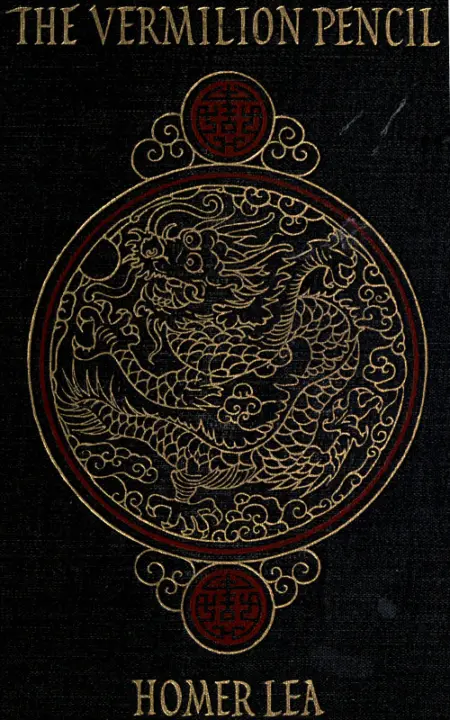
"The Vermilion Pencil: A Romance of China" by Homer Lea is a novel written in the early 20th century. The story explores themes of fate, desire, and the complexities of human relationships against the backdrop of China’s rich landscape and tumultuous history. The narrative introduces intriguing characters such as a passionate tea-farmer's daughter, a determined mandarin, and two priests from the French Mission in Yingching, each entangled in their destinies within a beautifully and vividly described Chinese setting. The opening of the book begins with a prolog that sets the stage dramatically through a typhoon, signaling significant change and upheaval. It quickly shifts to the serene yet captivating Valley of the Fountain, introducing the vibrant and independent daughter of a tea farmer, who captures the attention of a mandarin longing for her talent and presence. The narrative is imbued with rich descriptions of the landscape, cultural elements, and the characters' inner thoughts, establishing an atmosphere of tension and anticipation that will likely draw readers into the unfolding romance and conflict as they navigate personal desires and societal expectations. The complex interplay of fate and individual will is suggested as central to the storyline, promising a thoughtful exploration of these themes.
Introduction adapted from the source catalogue; source summaries may be automatically generated.
Free to read · English · 66,959 words · No account needed
MAKE TIME FOR A GOOD BOOK
On by default. Untick to stop anonymous reading totals. Each page counts after 10 seconds in view. How this works.
Anonymous counting is on unless you have switched it off.
“A man should be known before the world as just; the laws of the Empire should not be deceived; the stigma should be removed from your descendants, for if not, men will ever say there was baseness in your household and your whole progeny will be heralded as bastards. How can the wick of one’s memory be tended by those whom the world repudiates?”
The bishop leaned close to Tai Lin and lowering his voice spoke with
greater intensity.
“Would you have me aid you?”
Tai Lin looked at him dully, incredulously.
The bishop tapped the table with his finger-tips.
“You called her Christian,” mumbled Tai Lin.
“Yes, yes; but you don’t understand. You were going to act against the Church, not with it.”
The bishop caressed his hands.
“Now if you and I could come to some agreement.”
“You?”
“Yes; whereby the Church withdraws its protection——”
“I agree,” cried Tai Lin. “Where is she! Where is she!”
“What will you agree to?”
“Anything,” cried Tai Lin hoarsely, groping feebly the table’s edge.
One by one the bishop pulled his fingers until the knuckles cracked in each, which he did only in moments of great pleasure.
“Will Your Excellency agree to deed your park to the Church if it withdraws its protection and sanctions her punishment?”
“No!” answered Tai Lin decisively.
“But if she is found and given over to you?” interposed the bishop
eagerly.
Tai Lin did not answer for some time.
“No,” he said finally. “You will take my park and then squeal Christian! Christian! Christian! I know you rogues.”
The bishop picked his teeth. Once in a while he clacked his tongue, which was a sign of perplexity. Presently he smiled.
“We will draw up a contingent bond signed and attested to the effect that the park shall not become the property of the Church until the last stroke of the lyngchee.”
A purple pallor overspread the seams and wrinkles of Tai Lin’s face; his glowing eyes became vacuous.
The bishop moved uneasily.
Tai Lin fumbled at the throat of his robe.
Suddenly he bent over the table toward the bishop.
“The priest?”
The bishop rose and whispered for some time in his ear.
“Make the bond!” commanded Tai Lin huskily.
The bishop hastened from the room and when he returned he brought with him the commandant of the marines.
The bonds were drawn and signed.
Tai Lin rose. For a moment he stood looking thoughtfully at the ring on the table, then, without noticing the bows of the bishop, got into his sedan.
Your reading position is saved on this browser. Take it to another device with a library code. Reading pages adapt to text, rather than matching a printed edition.
BEHIND THE BOOK
This eBook is for the use of anyone anywhere in the United States and most other parts of the world at no cost and with almost no restrictions whatsoever. You may copy it, give it away or re-use it under the terms of the Project Gutenberg License included with this eBook or online at www.gutenberg.org. If you are not located in the United States, you will have to check the laws of the country where you are located before using this eBook. Read the source licence.
The original source file, including credits and licence, is retained by this library. Request an original-format copy at no charge. Please include the book title and Project Gutenberg identifier #54950.
KEEP YOUR CURIOSITY GOING
Coulson Kernahan

Maurice Baring
Frances Wright
Cécile Tormay

Frederic Jesup Stimson

W. H. P. (William Henry Pope) Jarvis