THE CLASSIC COLLECTION✦A dead man’s diaryCLASSIC FREE BOOKS
A dead man’s diary
Coulson Kernahan
THE CLASSIC COLLECTION · 1908
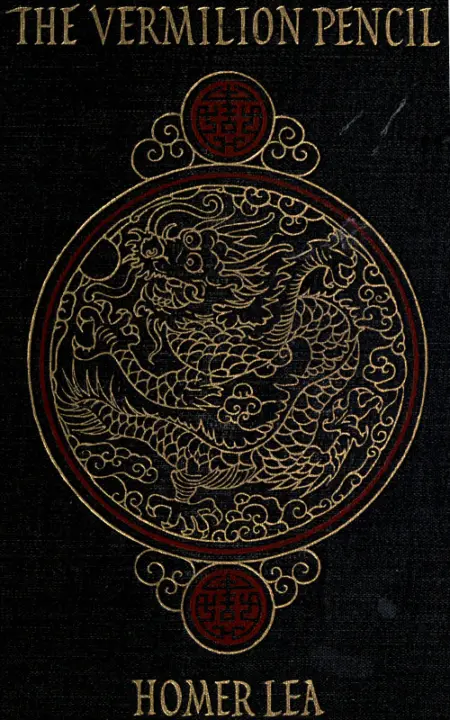
"The Vermilion Pencil: A Romance of China" by Homer Lea is a novel written in the early 20th century. The story explores themes of fate, desire, and the complexities of human relationships against the backdrop of China’s rich landscape and tumultuous history. The narrative introduces intriguing characters such as a passionate tea-farmer's daughter, a determined mandarin, and two priests from the French Mission in Yingching, each entangled in their destinies within a beautifully and vividly described Chinese setting. The opening of the book begins with a prolog that sets the stage dramatically through a typhoon, signaling significant change and upheaval. It quickly shifts to the serene yet captivating Valley of the Fountain, introducing the vibrant and independent daughter of a tea farmer, who captures the attention of a mandarin longing for her talent and presence. The narrative is imbued with rich descriptions of the landscape, cultural elements, and the characters' inner thoughts, establishing an atmosphere of tension and anticipation that will likely draw readers into the unfolding romance and conflict as they navigate personal desires and societal expectations. The complex interplay of fate and individual will is suggested as central to the storyline, promising a thoughtful exploration of these themes.
Introduction adapted from the source catalogue; source summaries may be automatically generated.
Free to read · English · 66,959 words · No account needed
MAKE TIME FOR A GOOD BOOK
On by default. Untick to stop anonymous reading totals. Each page counts after 10 seconds in view. How this works.
Anonymous counting is on unless you have switched it off.
Never was an auditorium more suitable to song than this amphitheatre of flower-packed hills that surrounded the Valley of the Fountain. The sun’s rays were just stealing through a purple haze and turning the dew, which lay heavy upon the flowers into myriads of opals; the murmur of ravine-hidden cascades, the chorus of bird-song in the still-aired morning, all seemed but part of the song that rose from the tea thicket. This tempestuous outburst made the hills ring with its echoes, calling, scorning, pleading, threatening; now bubbling like the wood-warbler with cadences of silvery notes; now rising, exultant as the night-lark, to the ear of heaven; triumphant, declamatory, beseeching, full of defiance, of mockery and laughter until at last it ceased, dying away among the neighbouring gorges, as soft as a kiss.
“What was that?” demanded the mandarin excitedly, putting his head out
of the sedan.
“That is Ma Shue’s daughter,” said several voices at once, “the girl with a tongue of a hundred spirits.”
“On with you and stop your chattering,” cried the mandarin.
Ma Shue, the old farmer of the Valley, stood watching from the door of his rice-thatched cottage the procession winding down the mountain path.
“Where is she?” demanded the mandarin, stepping hastily from his chair.
“How greatly honoured is my poor and miserable abode,” murmured the old farmer, bowing repeatedly.
“Where is she?” demanded the mandarin again, as he peeped about the corners of the cottage and through the open door.
“I am ashamed to set before your honourable self the wretched food we live upon,” apologised the old man as he followed at the heels of the mandarin.
“Go get her,” commanded the mandarin impatiently as he peered into the
cottage.
“Yes, yes,” murmured the farmer hastily, “but for the poor our food is not sufficient; how can it be tasted by——”
“What are you talking about, old coxcomb? Have you not a daughter?”
“Alas, Great Sir, it is true, I have been unfortunate——”
“Go get her at once, at once,” interrupted the mandarin excitedly.
“How can I, how can I?” asked the old man, bowing with trepidation.
“How can you?” mocked the mandarin scornfully. “How can you? Because I ordered it. I, Ho Ling, Mandarin of the Fifth Rank.” And Ho Ling, Mandarin of the Fifth Rank, scowling with dignity, stepped back and folded his hands majestically on his stomach.
When the farmer returned he bowed mutely before the mandarin.
“Well?” he demanded.
“I told her; yes, yes,” cried Ma Shue, “she is coming.”
“When?”
“She said,” and the old farmer looked uneasily at the feet of the mandarin, “she said——”
“Well?”
“When she got ready——”
Your reading position is saved on this browser. Take it to another device with a library code. Reading pages adapt to text, rather than matching a printed edition.
BEHIND THE BOOK
This eBook is for the use of anyone anywhere in the United States and most other parts of the world at no cost and with almost no restrictions whatsoever. You may copy it, give it away or re-use it under the terms of the Project Gutenberg License included with this eBook or online at www.gutenberg.org. If you are not located in the United States, you will have to check the laws of the country where you are located before using this eBook. Read the source licence.
The original source file, including credits and licence, is retained by this library. Request an original-format copy at no charge. Please include the book title and Project Gutenberg identifier #54950.
KEEP YOUR CURIOSITY GOING
Coulson Kernahan

Maurice Baring
Frances Wright
Cécile Tormay

Frederic Jesup Stimson

W. H. P. (William Henry Pope) Jarvis