THE CLASSIC COLLECTION✦A dead man’s diaryCLASSIC FREE BOOKS
A dead man’s diary
Coulson Kernahan
THE CLASSIC COLLECTION · 1908
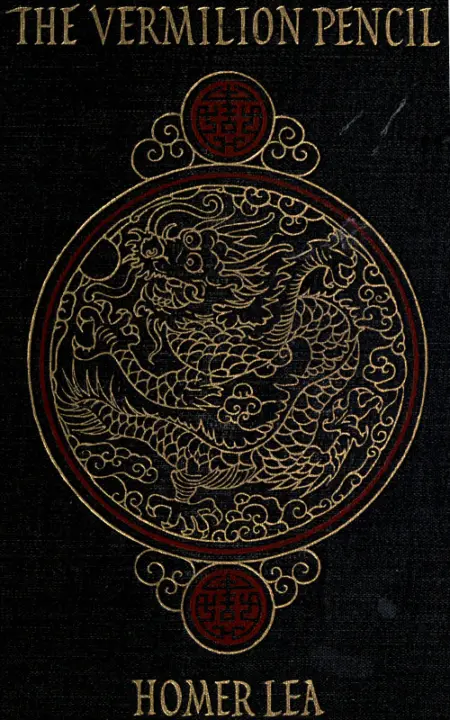
"The Vermilion Pencil: A Romance of China" by Homer Lea is a novel written in the early 20th century. The story explores themes of fate, desire, and the complexities of human relationships against the backdrop of China’s rich landscape and tumultuous history. The narrative introduces intriguing characters such as a passionate tea-farmer's daughter, a determined mandarin, and two priests from the French Mission in Yingching, each entangled in their destinies within a beautifully and vividly described Chinese setting. The opening of the book begins with a prolog that sets the stage dramatically through a typhoon, signaling significant change and upheaval. It quickly shifts to the serene yet captivating Valley of the Fountain, introducing the vibrant and independent daughter of a tea farmer, who captures the attention of a mandarin longing for her talent and presence. The narrative is imbued with rich descriptions of the landscape, cultural elements, and the characters' inner thoughts, establishing an atmosphere of tension and anticipation that will likely draw readers into the unfolding romance and conflict as they navigate personal desires and societal expectations. The complex interplay of fate and individual will is suggested as central to the storyline, promising a thoughtful exploration of these themes.
Introduction adapted from the source catalogue; source summaries may be automatically generated.
Free to read · English · 66,959 words · No account needed
MAKE TIME FOR A GOOD BOOK
On by default. Untick to stop anonymous reading totals. Each page counts after 10 seconds in view. How this works.
Anonymous counting is on unless you have switched it off.
“Sampan!” called Tsang in a matter-of-fact voice.
“Hi! Hi!” shouted several simultaneously.
“Three people to the Gardens.”
“That is a long way,” they commented.
“I could walk there in twenty minutes if it were land.”
“But it isn’t land,” they joyfully responded.
“How much?” he continued unconcernedly.
“I am busy and ought not to stop and waste my time talking,” answered
one.
“I have an all night engagement,” added another.
“I was just going to moor my boat,” interjected a third, “but since you are in difficulty, I will stop and give you some advice.”
“How much?” repeated Tsang.
“This is our Great Feast night,” remarked one.
“That is so,” chimed in the other two.
From the distance came the inarticulate baying of men.
“How much?” reiterated Tsang wearily.
“Do you hear him ask how much?” cried one turning surprisedly to the
others.
“How strange!” they commented.
“It was eight mace, but having a knowledge of benevolence, we have reduced it to seven mace three candareens,” added the first speaker.
“Do you think I am a fool or a hill-man?” demanded Tsang with scorn.
“How will you go to the Gardens?” they chorused derisively.
“We will not go,” he answered, moving back from the bank.
“I will be benevolent,” cried one, suddenly moving his boat past the others, “and take you for six mace, four——”
“Six mace, three candareens.”
“Six mace, two——” bellowed the third, trying to get his boat nearer.
Tsang paid no attention to them and the price was howled lower and
lower.
“Five mace,” yelped the first, and without a word Tsang jumped into his boat. The Breton and the wife sat down in the middle of the sampan and drew over them the curved bamboo roof. As the boat shot out into the canal it was followed by a vituperative volley from the others.
Tsang stood by the boatman urging him on.
“There is a riot,” he whispered, “and all the gates have been closed except the Water-gate. But don’t think we are going to pay just to go there. Only when we——”
From distant streets came cries:
“Down with the Water-gate! Down with the Water-gate!”
The Breton and the wife sat in the darkness under the bamboo canopy. Neither had spoken nor ceased to smile. Never in their lives had they thought of anything so happy as this night journey.
The Water-gate loomed up before Tsang and the boatman; they could see the lanterns swaying on the eaves of its guardhouse. Plainly now came the cries:
“Down with the Water-gate!”
The pursuers were gaining.
Your reading position is saved on this browser. Take it to another device with a library code. Reading pages adapt to text, rather than matching a printed edition.
BEHIND THE BOOK
This eBook is for the use of anyone anywhere in the United States and most other parts of the world at no cost and with almost no restrictions whatsoever. You may copy it, give it away or re-use it under the terms of the Project Gutenberg License included with this eBook or online at www.gutenberg.org. If you are not located in the United States, you will have to check the laws of the country where you are located before using this eBook. Read the source licence.
The original source file, including credits and licence, is retained by this library. Request an original-format copy at no charge. Please include the book title and Project Gutenberg identifier #54950.
KEEP YOUR CURIOSITY GOING
Coulson Kernahan

Maurice Baring
Frances Wright
Cécile Tormay

Frederic Jesup Stimson

W. H. P. (William Henry Pope) Jarvis