Nietzsche and Other Exponents of Individualism
Paul Carus
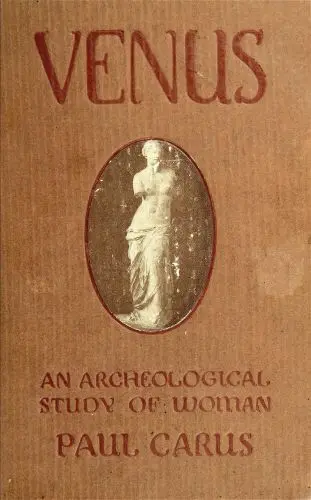
THE CLASSIC COLLECTION · 1916
"The Venus of Milo: An Archeological Study of the Goddess of Womanhood" by Paul Carus is a scholarly work that delves into the history and significance of the famous ancient statue, likely written in the early 20th century. The text provides a detailed account of the statue's discovery on the Greek island of Melos, its subsequent journey to France, and the various interpretations and restorations that have been proposed over the years. The book offers insights into the cultural and artistic aspects of the goddess Aphrodite, represented by the Venus of Milo, exploring themes of beauty, femininity, and the impact of religious changes on its legacy. The opening of the work presents the backstory of the statue's discovery in 1820 by a Greek peasant named Yorgos Bottonis and details the challenges faced by French authorities in securing the statue for the Louvre, including negotiations and claims of ownership amidst competing interests. It introduces significant figures involved in the acquisition process, such as M. Dumont d'Urville and Count Marcellus, while providing context about Melos’s historical significance. Initial descriptions of the statue itself are provided, highlighting its beauty and the debates surrounding its original form and meaning, setting the stage for a broader exploration of the goddess's representation through art and culture in subsequent chapters.
Introduction adapted from the source catalogue; source summaries may be automatically generated.
Free to read · English · 27,139 words · No account needed
MAKE TIME FOR A GOOD BOOK
On by default. Untick to stop anonymous reading totals. Each page counts after 10 seconds in view. How this works.
Anonymous counting is on unless you have switched it off.
The same subjects have been treated in a different spirit during the Christian era and again differently still under the influence of a scientific world-conception. Socrates respected the gods but he no longer believed in them as personalities. He explained them as signifying some facts of experience. To him love found expression in a belief in Aphrodite and in her powerful son, Eros. Further, his disciple Plato explains to us the significance of love and devotes a special dialogue to a discussion of its meaning in every aspect. This dialogue of Plato’s, the Symposium, may truly be characterized as the most poetical and most interesting discussion of Greek philosophy. It tells of a banquet to which Agathon has invited his friends, among whom we find the philosopher Socrates, the poet Aristophanes (the disciple of Socrates), Pausanias, Phaedrus and some others. After dinner Phaedrus proposes to make speeches in honor of love, and Pausanias begins by drawing a distinction between heavenly and earthly love, extolling the former and giving scant praise to the latter. Aristophanes is the next speaker, but, being prevented by a severe hiccup from taking up the discussion, gives precedence to Eryximachus, the physician. This speaker approves the distinction made by Pausanias, but generalizes the conception of love by regarding it as a universal principle, bringing about the harmony that regulates nature in the course of the seasons in its relations of moist and dry, hot and cold, etc., and whose absence is marked by diseases of all sorts. Aristophanes, having recovered from his hiccup, proposes to offer a new explanation setting forth a novel theory of the origin of human nature. We quote extracts from the translation of Jowett:
“Primeval man was round, his back and sides forming a circle; and he had four hands and four feet, one head with two faces, looking opposite ways, set on a round neck and precisely alike; also four ears, two privy members and the remainder to correspond. He could walk upright as men now do, backward and forward as he pleased, and he could also roll over and over at a great pace, turning on his four hands and four feet, eight in all, like tumblers going over and over with their legs in the air; this was when he wanted to run fast.... Terrible was their might and strength, and the thoughts of their hearts were great, and they made an attack upon the gods; of them is told the tale of Otys and Ephialtes who, as Homer says, dared to scale heaven, and would have laid hands upon the gods. Doubt reigned in the celestial councils. Should they kill them and annihilate the race with thunderbolts, as they had done the giants, then there would be an end of the sacrifices and worship which men offered to them; but, on the other hand, the gods could not suffer their insolence to be unrestrained. At last, after a good deal of reflection, Zeus discovered a way. He said: ‘Methinks I have a plan which will humble their pride and improve their manners; men shall continue to exist, but I will cut them in two and then they will be diminished in strength and increased in numbers; this will have the advantage of making them more profitable to us. They shall walk upright on two legs, and if they continue insolent and will not be quiet, I will split them again and they shall hop about on a single leg.’ He spoke and cut men in two, like a sorb-apple which is halved for pickling, or as you might divide an egg with a hair; and as he cut them one after another, he bade Apollo give the face and half of the neck a turn in order that the man might contemplate the section of himself: he would thus learn a lesson of humility. Apollo was also bidden to heal their wounds and compose their forms. So he gave a turn to the face and pulled the skin from the sides all over that which in our language is called the belly, like the purses which draw in, and he made one mouth at the center which he fastened in a knot (the same which is called the navel); he also moulded the breast and took out most of the wrinkles, much as a shoemaker might smooth leather upon a last; he left a few, however, in the region of the belly and navel, as a memorial of the primeval state. After the division the two parts of man, each desiring his other half, came together, and throwing their arms about one another, entwined in mutual embraces, longing to grow into one, they were on the point of dying from hunger and self-neglect, because they did not like to do anything apart; and when one of the halves died and the other survived, the survivor sought another mate, man or woman as we call them--being the sections of entire men or women--and clung to that.”
Your reading position is saved on this browser. Take it to another device with a library code. Reading pages adapt to text, rather than matching a printed edition.
BEHIND THE BOOK
This eBook is for the use of anyone anywhere in the United States and most other parts of the world at no cost and with almost no restrictions whatsoever. You may copy it, give it away or re-use it under the terms of the Project Gutenberg License included with this eBook or online at www.gutenberg.org. If you are not located in the United States, you will have to check the laws of the country where you are located before using this eBook. Read the source licence.
The original source file, including credits and licence, is retained by this library. Request an original-format copy at no charge. Please include the book title and Project Gutenberg identifier #56934.
KEEP YOUR CURIOSITY GOING
Cécile Tormay

Moritz Busch
John L. Ransom
Frances Wright
Cécile Tormay

Mabel Potter Daggett