Fortune
J. C. (John Collis) Snaith
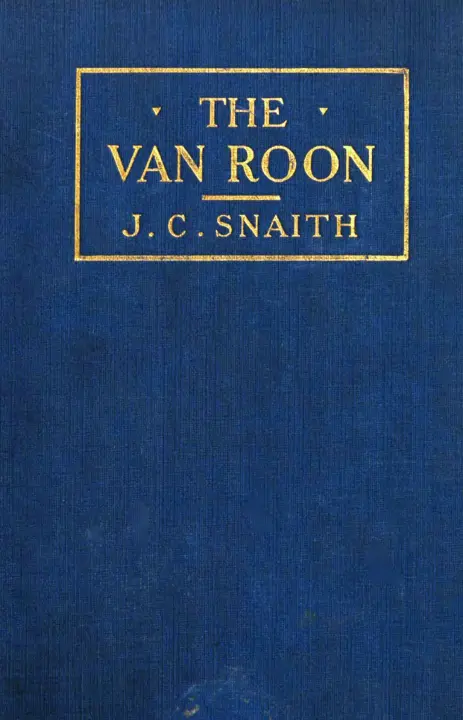
THE CLASSIC COLLECTION · 1922
"The Van Roon" by J. C. Snaith is a novel written in the early 20th century. This story revolves around S. Gedge, the proprietor of an antique shop, and his newfound niece, June, who arrives to live with him after the death of her parents. The narrative seems to explore themes of family dynamics, the value of art, and the interplay between commerce and genuine appreciation in the antique business. The opening of the novel introduces S. Gedge as a grumpy, elderly bachelor preoccupied with his antiques shop in London. His life is turned upside down with the arrival of June, a spirited young woman seeking purpose and stability after personal losses. The initial tension between the characters is palpable, as Gedge is not particularly fond of women, especially young ones. Their interactions reveal a clash of generations and values; June's youthful ambition contrasts sharply with her uncle's cynical views on women and societal changes. As the plot unfolds, the antique shop setting serves as a backdrop for their evolving relationship, potentially leading to discoveries of both artistic and personal value.
Introduction adapted from the source catalogue; source summaries may be automatically generated.
Free to read · English · 88,571 words · No account needed
MAKE TIME FOR A GOOD BOOK
On by default. Untick to stop anonymous reading totals. Each page counts after 10 seconds in view. How this works.
Anonymous counting is on unless you have switched it off.
“He’s one of the richest men in England,” said William, dipping his spoon into his tapioca with an impersonality which approached the sublime.
June knew that. There was the daughter of Sir Arthur Babraham to prove
it.
“One of Uncle Si’s best customers, I suppose?”
“Doesn’t often come here. But he has wonderful taste.”
“In daughters?” said June sardonically.
“In everything. Only last night I read in the paper that there isn’t a better judge of pictures living.”
June merely said “Oh!”
“He’s one of the trustees of the National Gallery, you know.”
“Oh!” said June.
“And owns a very fine private collection of the Dutch School.”
“Does he?” It was June’s turn now to be impersonal; in fact, it was up to her to let him see that it would take more than Sir Arthur Babraham and a private collection of the Dutch School to impress her.
“I suppose his daughter is what you’d call rather fetching?” She had once heard the word on the lips of the admired Miss Banks at a charity bazaar.
But in William’s opinion it was not adequate to the occasion.
“To my mind,” he said, and his voice fell, “she’s a non-such.”
June stepped midway in the act of bestowing upon him a second helping
of tapioca.
“She’s a what?” she demanded fiercely.
“A museum piece, Miss June.” His enthusiasm was restrained but none the less absurd. “She’s hallmarked. She walks in beauty.” A blush, faint yet becoming, slowly overspread William’s delicately tinted complexion.
June snorted. Had it been within the province of eyes to slay, this Gaby would have had no use for a second helping of tapioca.
“Glad to know that!” said June, homicidally. “As you are so set on beauty, you must have had an interesting morning.”
A disgracefully impersonal silence was William’s only answer. The deadliness of the observation seemed completely lost upon him. But was it?--that was the question for gods and Woman. Such a silence might mean anything.
“I suppose you’d say she had wonderful taste?”
“Miss Babraham?”
“No, Joan of Arc,” said Woman, venomously.
“Her taste is very good indeed--that is, in some things.”
“In hats, I suppose.”
“I meant in old china,” said the impersonal one. “I’ve never known her to make a mistake in old china.”
“That’s interesting.” It was a weak remark, but June had seldom felt less conversationally brilliant.
Silence again. A third helping of tapioca was politely declined. June then pushed across the cheese. William removed its cover, and disclosed an extremely meagre piece of Leicestershire.
Your reading position is saved on this browser. Take it to another device with a library code. Reading pages adapt to text, rather than matching a printed edition.
J. C. (John Collis) Snaith
J. C. (John Collis) Snaith
J. C. (John Collis) Snaith
J. C. (John Collis) Snaith
BEHIND THE BOOK
This eBook is for the use of anyone anywhere in the United States and most other parts of the world at no cost and with almost no restrictions whatsoever. You may copy it, give it away or re-use it under the terms of the Project Gutenberg License included with this eBook or online at www.gutenberg.org. If you are not located in the United States, you will have to check the laws of the country where you are located before using this eBook. Read the source licence.
The original source file, including credits and licence, is retained by this library. Request an original-format copy at no charge. Please include the book title and Project Gutenberg identifier #68520.
KEEP YOUR CURIOSITY GOING
Coulson Kernahan

Maurice Baring
Frances Wright
Cécile Tormay

Frederic Jesup Stimson

W. H. P. (William Henry Pope) Jarvis