THE CLASSIC COLLECTION✦An outlaw’s diary: the CommuneCLASSIC FREE BOOKS
An outlaw’s diary: the Commune
Cécile Tormay
THE CLASSIC COLLECTION · 1916
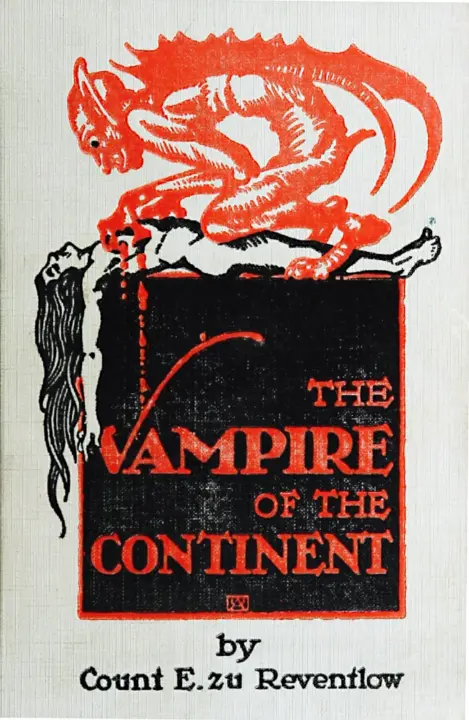
"The Vampire of the Continent" by Count Ernst zu Reventlow is a historical treatise written in the early 20th century. The work systematically critiques and analyzes the role of England in shaping modern European history since the late 16th century, portraying it as a nation driven by greed and imperial ambitions. The author emphasizes England's influence on conflicts and power dynamics, presenting it as a "vampire" that feeds off the resources and prosperity of other nations, particularly during periods of war and upheaval. At the start of the work, the translator’s preface sets the stage for Reventlow’s provocative examination of England’s historical actions. It alludes to the myths surrounding England’s role as a liberator, emphasizing instead the destructive impact its imperial pursuits had on Europe and the world. The opening chapters delve into the narratives surrounding key historical events, such as the defeat of the Spanish Armada, notably reinterpreting them through a lens critical of English statecraft. The author's overarching argument is that England, often viewed as a benefactor in historical accounts, has acted primarily out of self-interest and avarice, undermining the stability and prosperity of its continental neighbors in the process.
Introduction adapted from the source catalogue; source summaries may be automatically generated.
Free to read · English · 54,831 words · No account needed
MAKE TIME FOR A GOOD BOOK
On by default. Untick to stop anonymous reading totals. Each page counts after 10 seconds in view. How this works.
Anonymous counting is on unless you have switched it off.
In 1793, when the last great struggle between France and England began, Spain and the Netherlands were both considered, in London, to be British “fortifications”; Hanover being in British hands, it was also possible to consider Germany in the same light, whilst, in the North, Russia formed the background to the Scandinavian States. When we consider the various political and military combinations between 1793 and 1816 and when we abandon the historical legends invented concerning them, we shall see that France was the champion of the true interests of the Continent. England, and her following of European States, represented solely British insular interests, whereas Russia changed sides like a weathercock. This judgment in nowise diminishes the value of the German War of Liberation, but it certainly does call in question the traditional opinion to the effect that it was England who liberated Europe. The question as to whether England, as a matter of fact, contributed anything to that “liberation,” remains an open one, even if it be admitted that she played an important part in causing the downfall of Napoleon.
With joyful and untiring energy did the English statesmen of that epoch labor to prevent the flames of war being extinguished on the continent. As far as England’s interests were concerned, Europe could never be laid waste sufficiently. England’s participation in the military operations was the traditional one. From the beginning, she considered the war as a maritime one (as far as she herself was concerned), poured oil on the flames in Europe, and paid subsidies—which were, indeed, more often promised than actually paid. Of course it is the Germans who have always spoken with the greatest admiration and gratitude of the “free nation’s” superb struggle for the liberty of Europe against the Corsican oppressor!
Admiral Mahan, whom we have often quoted, who is a passionate admirer of Great Britain, and who only finds fault with his pets when they have not been unscrupulous enough to suit him—Admiral Mahan writes as follows about the part played by England in the Napoleonic wars: “For these reasons great operations on land, or a conspicuous share in the continental campaigns became, if not absolutely impossible to Great Britain, at least clearly unadvisable. It was economically wiser, for the purposes of the coalitions, that she should be controlling the sea, supporting the commerce of the world, making money and managing the finances, while other states, whose industries were exposed to the blast of war and who had not the same commercial aptitudes, did the fighting on land.” The same author says in another place: “The thriving condition of the manufactures and commerce of England, protected from the storm of war ravaging the Continent and of such vital importance to the general welfare of Europe, made it inexpedient to withdraw her people from the ranks of labor, at a time when the working classes of other nations were being drained for the armies.” Mahan, the admirer of England, has here unconsciously defined the part which British statesmen so artfully ascribed to the Continent: no English workman should be allowed to fight, for this would damage British industry. The Continental peoples were there to do the fighting! Mahan tells us that, on the Continent, industry had been rendered impossible by the war; and he forgets that the latter was systematically encouraged by England. From an economic point of view, an experience repeatedly made by England in former wars was confirmed: namely, that the money invested in the shape of subsidies was recouped with interest, and that the constantly increasing capital in the country paved the way for the flooding of the foreign markets with the cheap products of British industry. The last-mentioned phenomenon, again, permitted in later years of the humble attempts made elsewhere to develop a national industry being nipped in the bud. The Continent grew ever poorer, and England ever richer. With characteristic English hypocrisy could Pitt say, on the occasion of the reception of some expelled French priests: “The country that has welcomed those priests, is a country which Heaven has blessed. In the midst of the universal distress which has befallen other nations, Providence has permitted Great Britain to cover herself with glory and honor. Peace reigns in her palaces, her barns are full. All parts of the globe pay tribute to her industry, all the seas are marked with the sign of her victories.” The same statesman said in 1801: “If we compare this year of war with former years of peace, we shall, in the produce of our revenue, and in the extent of our commerce, behold a spectacle at once paradoxical, inexplicable and astonishing; we shall see, that, in spite of the alarm and agitation which has often prevailed in the course of this arduous contest ... we have increased our external and internal commerce to a higher pitch than ever it was before; and we may look to the present as the proudest year that has ever yet occurred for this country.”
Your reading position is saved on this browser. Take it to another device with a library code. Reading pages adapt to text, rather than matching a printed edition.
BEHIND THE BOOK
This eBook is for the use of anyone anywhere in the United States and most other parts of the world at no cost and with almost no restrictions whatsoever. You may copy it, give it away or re-use it under the terms of the Project Gutenberg License included with this eBook or online at www.gutenberg.org. If you are not located in the United States, you will have to check the laws of the country where you are located before using this eBook. Read the source licence.
The original source file, including credits and licence, is retained by this library. Request an original-format copy at no charge. Please include the book title and Project Gutenberg identifier #66468.
KEEP YOUR CURIOSITY GOING
Cécile Tormay

Moritz Busch
John L. Ransom
Frances Wright
Cécile Tormay

Mabel Potter Daggett