THE CLASSIC COLLECTION✦An outlaw’s diary: the CommuneCLASSIC FREE BOOKS
An outlaw’s diary: the Commune
Cécile Tormay
THE CLASSIC COLLECTION · 1916
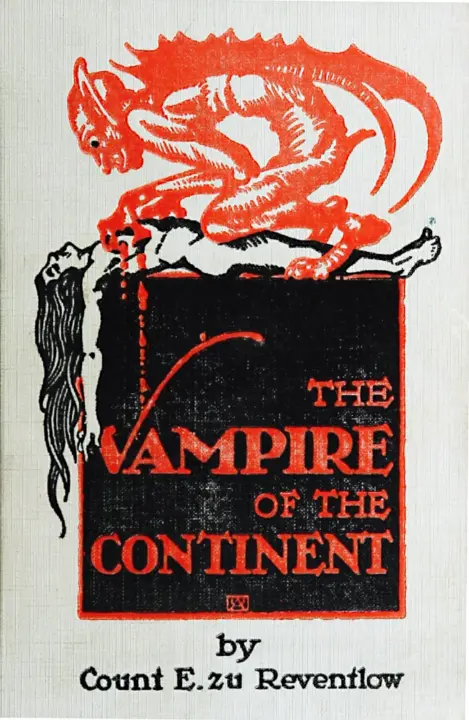
"The Vampire of the Continent" by Count Ernst zu Reventlow is a historical treatise written in the early 20th century. The work systematically critiques and analyzes the role of England in shaping modern European history since the late 16th century, portraying it as a nation driven by greed and imperial ambitions. The author emphasizes England's influence on conflicts and power dynamics, presenting it as a "vampire" that feeds off the resources and prosperity of other nations, particularly during periods of war and upheaval. At the start of the work, the translator’s preface sets the stage for Reventlow’s provocative examination of England’s historical actions. It alludes to the myths surrounding England’s role as a liberator, emphasizing instead the destructive impact its imperial pursuits had on Europe and the world. The opening chapters delve into the narratives surrounding key historical events, such as the defeat of the Spanish Armada, notably reinterpreting them through a lens critical of English statecraft. The author's overarching argument is that England, often viewed as a benefactor in historical accounts, has acted primarily out of self-interest and avarice, undermining the stability and prosperity of its continental neighbors in the process.
Introduction adapted from the source catalogue; source summaries may be automatically generated.
Free to read · English · 54,831 words · No account needed
MAKE TIME FOR A GOOD BOOK
On by default. Untick to stop anonymous reading totals. Each page counts after 10 seconds in view. How this works.
Anonymous counting is on unless you have switched it off.
At first, and as long as the American War of Independence lasted, England showed herself disposed to agree to the proposals of the League of Armed Neutrality. But she refused to allow the Baltic Powers to participate in the peace negotiations, and subsequently declared: the demands of the League, that is to say in substance the conditions of the Peace of Utrecht, hold good for the contracting parties exclusively! In this way were the very Powers excluded, who had been the first to protest against the unjust treatment of neutral nations. It was also proclaimed in the House of Commons that the doctrine concerning the “effective blockade” the limitation of the term “contraband” to war supplies, and the right of the enemy’s cargoes to sail under neutral flag, were not considered by the British Government as in any way binding the latter for the future. Thus had the League of Armed Neutrality contributed to the development of a propaganda in favor of the recognition of certain principles of international maritime law; but it had achieved no practical result whatever. Ten years later the League itself was dissolved. England then succeeded in stirring up the Czaritza against revolutionary France. An agreement was drawn up, according to the terms of which a Russian fleet was assigned the task of preventing all communication between France and the neutral Scandinavian countries.
All these are events, the importance of which may appear to the reader, by comparison with the epoch-making occurrences of that period, to be insufficient to warrant their recounting in detail here. But none the less are they important. It was certainly of more than passing importance that the attempt made by all the neutral Continental Powers to ally themselves against the English pirate, and to obtain in this way recognition of the right of neutrals—that this attempt should have been vain. To-day the neutral countries are astonished and indignant at the matter-of-course manner in which Great Britain tramples all international law and custom under foot. They cannot understand that the only excuse alleged by her should be: it is unfortunately necessary that the neutrals be compelled to suffer, seeing that Germany, the chief enemy of Great Britain, must be crushed. About 130 years separate us from the period of the Armed Neutrality of 1780. Many international conferences have been held during these thirteen decades; many agreements have been made concerning the laws of maritime warfare, and especially concerning the right of neutral shipping in time of war. An immense quantity of books have been written on the subject; and in no other connection have we heard so much about the growing solidarity of civilised people being promoted by the increased means of communication. The nineteenth century, and the beginning of the twentieth, were periods in which international phrases were held in high honor. The European States—and not only the weaker ones—believed that a lot of printed paper was sufficient to suppress the Englishman’s thieving instincts. They thought that it was enough to talk about rights, and duties, and solidarity; and that the civilised British nation had accepted the principle of the existence of a supreme international law, equally operative in times of peace and war. The disappointment was hence all the greater—but those who shared it got what they deserved. How could any reasonable person believe that methods systematically and successfully adopted during centuries—that the fundamental instincts of the English nation and the underlying principles of English policy: that all this would suddenly be abandoned, annihilated, simply because the Continental States hoped that it would be so, and talked about the possibility of it happening? In England people spoke a lot, and eloquently, about humanity and civilisation. But for every English statesman and admiral it was self-evident that, in war, everything would remain exactly as it always had been. It would be worth while to follow attentively the attitude adopted by England, throughout the centuries, not only towards the above-mentioned questions of maritime law, but towards a great many others, and to present the results of that inquiry to the astonished eyes of our readers. The latter would then perceive that, under altered forms, English aims and methods have remained invariably the same since the sixteenth century up till the present day. Maritime war is destined by Providence to serve the ends of the Chosen People; such wars are for them times of abundant harvest; and it is the duty of the English people, of its statesmen and admirals, to see that the Will of Providence is duly carried out.
Your reading position is saved on this browser. Take it to another device with a library code. Reading pages adapt to text, rather than matching a printed edition.
BEHIND THE BOOK
This eBook is for the use of anyone anywhere in the United States and most other parts of the world at no cost and with almost no restrictions whatsoever. You may copy it, give it away or re-use it under the terms of the Project Gutenberg License included with this eBook or online at www.gutenberg.org. If you are not located in the United States, you will have to check the laws of the country where you are located before using this eBook. Read the source licence.
The original source file, including credits and licence, is retained by this library. Request an original-format copy at no charge. Please include the book title and Project Gutenberg identifier #66468.
KEEP YOUR CURIOSITY GOING
Cécile Tormay

Moritz Busch
John L. Ransom
Frances Wright
Cécile Tormay

Mabel Potter Daggett