THE CLASSIC COLLECTION✦Miss Esperance and Mr WycherlyCLASSIC FREE BOOKS
Miss Esperance and Mr Wycherly
L. Allen (Lizzie Allen) Harker
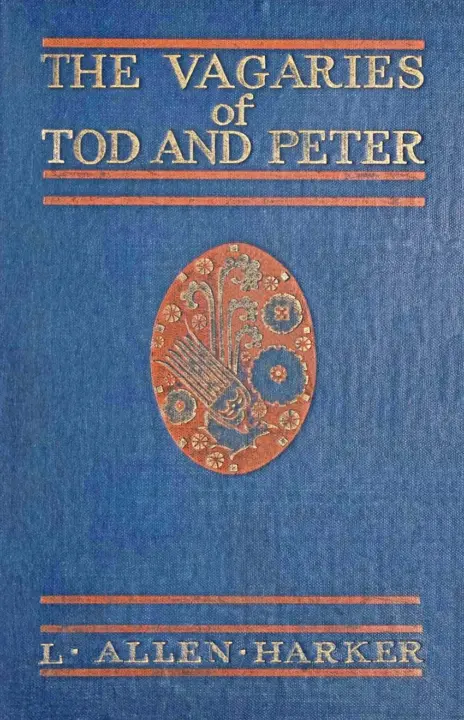
THE CLASSIC COLLECTION · 1923
"The Vagaries of Tod and Peter" by L. Allen Harker is a fictional narrative written in the early 20th century. The book focuses on the mischievous escapades of twin brothers Tod and Peter, whose adventures often lead to comedic chaos, drawing from their vivid imaginations and youthful exuberance. Their antics at home and school showcase a blend of innocence and naughtiness, exploring themes of childhood and the dynamics of family life. The opening portion of the book introduces us to Tod and Peter, described as "those dreadful twins" by their neighbors and school staff. The narrative paints a vibrant picture of their personalities and behaviors, revealing their shared mischievous nature and the trouble they bring to their impoverished household and school environment. Their mother largely views their mischief with amusement, while the boys transform everyday situations into elaborate games, often mimicking characters from their favorite stories. The blend of humor and earnestness in their actions sets the tone for the adventures that are likely to unfold throughout the book.
Introduction adapted from the source catalogue; source summaries may be automatically generated.
Free to read · English · 74,965 words · No account needed
MAKE TIME FOR A GOOD BOOK
On by default. Untick to stop anonymous reading totals. Each page counts after 10 seconds in view. How this works.
Anonymous counting is on unless you have switched it off.
Colin and Andrew possessed a “mashie” each, and a game of “putting golf.” It was reserved for Sunday afternoons as being of a quiet and decorous nature.
But one Sunday afternoon Andrew forgot to “putt,” and gave his ball a drive that lifted it high over the wall into the next garden. Now, the wall was too high to climb; besides, the fear of Mr. Knagg was upon them, and the housekeeper was out--they had seen her go. They had only two balls, and it was yet a long two hours off teatime. Father and mother were both out. They retired to consult Jean under the trees.
“If he wasn’t such an old beast, I’d go and ask for it myself,” growled
Andrew.
“You wouldn’t get it if you did,” said Colin the practical.
“Why shouldn’t Jean go? He’d give it to her,” suggested Andrew, who had noted the weakness of his sex where Jean was concerned.
“Of course he would. You must go, Jean. Hurry up!”
“What, all on my lonely?” exclaimed Jean in pained astonishment.
“Oh, we’ll come with you to the door and ring the bell for you, and then cut away before he can open it. Then you ask him nicely. Come on, Jean!”
She seldom long opposed her brothers. She had what Elspeth called a “tender head,” and strongly objected to having her hair pulled. Between them they marched her up the flagged path to Mr. Knagg’s front door, rang loudly, and departed precipitately.
Maighda, the great deerhound who shared with Elspeth the guardianship of Jean, rose from amidst the company of dolls, where she had been reposing, and walking gravely into the front garden, jumped the iron fence, and joined Jean at the top of the steps.
Jean clasped Tammy firmly with one arm and coiled the other round Maighda’s neck as the door opened rather noisily to disclose an irate-looking little gentleman in gold-rimmed pince-nez.
“If you please,” began Jean, in a still, small voice, “there iss a wee ball-y wass putted into your garden--will I get it?”
Mr. Knagg stood staring at his strange visitors, while Jean rubbed one pink foot over the other and Maighda sniffed at him dubiously. Tammy, with his customary reserve, betrayed no emotion whatever.
“Come!” said Mr. Knagg shortly, holding out his hand. As Jean disappeared Colin and Andrew flew into the back garden and swarmed up an apple tree, whence they surveyed their sister’s proceedings with interest.
“Wonder why men are so much decenter to girls than to us?” mused Andrew.
“Oh, well; his housekeeper likes us best, anyway. Everyone’s got their
cranks.”
Your reading position is saved on this browser. Take it to another device with a library code. Reading pages adapt to text, rather than matching a printed edition.
L. Allen (Lizzie Allen) Harker
L. Allen (Lizzie Allen) Harker
L. Allen (Lizzie Allen) Harker
L. Allen (Lizzie Allen) Harker
BEHIND THE BOOK
This eBook is for the use of anyone anywhere in the United States and most other parts of the world at no cost and with almost no restrictions whatsoever. You may copy it, give it away or re-use it under the terms of the Project Gutenberg License included with this eBook or online at www.gutenberg.org. If you are not located in the United States, you will have to check the laws of the country where you are located before using this eBook. Read the source licence.
The original source file, including credits and licence, is retained by this library. Request an original-format copy at no charge. Please include the book title and Project Gutenberg identifier #65162.
KEEP YOUR CURIOSITY GOING
Coulson Kernahan

Maurice Baring
Frances Wright
Cécile Tormay

Frederic Jesup Stimson

W. H. P. (William Henry Pope) Jarvis