THE CLASSIC COLLECTION✦Miss Esperance and Mr WycherlyCLASSIC FREE BOOKS
Miss Esperance and Mr Wycherly
L. Allen (Lizzie Allen) Harker
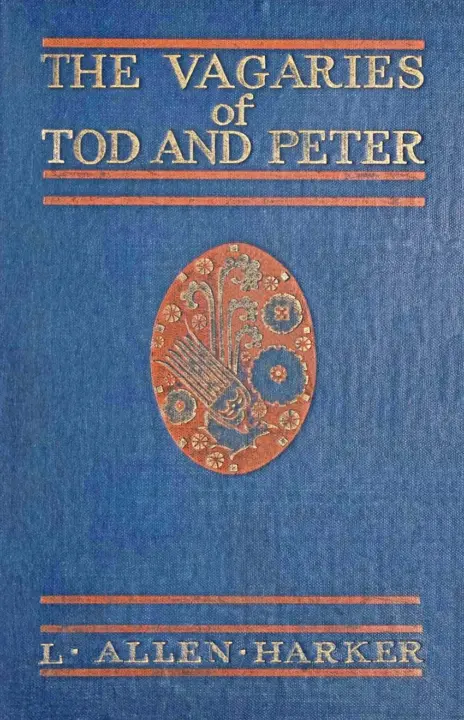
THE CLASSIC COLLECTION · 1923
"The Vagaries of Tod and Peter" by L. Allen Harker is a fictional narrative written in the early 20th century. The book focuses on the mischievous escapades of twin brothers Tod and Peter, whose adventures often lead to comedic chaos, drawing from their vivid imaginations and youthful exuberance. Their antics at home and school showcase a blend of innocence and naughtiness, exploring themes of childhood and the dynamics of family life. The opening portion of the book introduces us to Tod and Peter, described as "those dreadful twins" by their neighbors and school staff. The narrative paints a vibrant picture of their personalities and behaviors, revealing their shared mischievous nature and the trouble they bring to their impoverished household and school environment. Their mother largely views their mischief with amusement, while the boys transform everyday situations into elaborate games, often mimicking characters from their favorite stories. The blend of humor and earnestness in their actions sets the tone for the adventures that are likely to unfold throughout the book.
Introduction adapted from the source catalogue; source summaries may be automatically generated.
Free to read · English · 74,965 words · No account needed
MAKE TIME FOR A GOOD BOOK
On by default. Untick to stop anonymous reading totals. Each page counts after 10 seconds in view. How this works.
Anonymous counting is on unless you have switched it off.
But, bless you! ordinary work and games, at which both were good, never found sufficient scope for the energies of Tod and Peter, and by the time the first month was up they began their tricks.
One Mr. Neatby, M.A., taught the twins chemistry. Not that they went to him together. They were in different, though, as far as work went, parallel forms, and finding that their systematic “changing” was never so much as suspected, and therefore carried with it no spice of danger or adventure, they gave it up, devoting their energies to the tormenting of Mr. Neatby, who had by his severity incurred their august displeasure.
Mr. Neatby was tall, severe, and dignified. He really liked his subject, but felt, as a rule, little affection for his pupils. Nevertheless, he was conscientious to the last degree in the discharge of his duties. His way of expressing himself was what Peter called “essayish”; he gave lines lavishly, and had but little mercy on the reckless breaker of test-tubes. He did not rant, or stamp, or call people by opprobrious names, as did many better loved masters. He was always cold, cutting, and superior. But the thing about him that most excited Peter’s animosity was his necktie.
“He wears revolting, jerry-built, Judas-like ties,” the indignant Peter proclaimed to an admiring audience of lower boys; “ties that slip down and show a beastly, brassy stud. His socks, too, leave much to be desired; in fact, his extremities altogether are such as betoken a bad, hard heart.”
“Let me see,” said Tod softly, looking up from a book he was reading; “do you think that a sending might soften the man’s hard heart?”
At this particular stage of the twins’ career, Mr. Kipling was the God of their idolatry, and both of them had “gloated,” even in the manner of the immortal “Stalky” himself, over the vengeance of Ram Das.
“It might be managed,” Peter answered, thoughtfully scratching his smooth chin; “but then again, it may be close-time for kittens just at present; don’t they generally bloom in the spring?”
“There’s always plenty of kittens, you juggins,” ejaculated a prosaic friend. “Why, when I was down at the riding school this morning, there was a cat with six in an empty loose-box; they’ll have to drown five of ’em, they told me. D’your people want one or what?”
“I want one,” Peter rejoined excitedly; “not one, but five, to give
to a dear friend.”
“Shouldn’t think he’d be your dear friend long.”
“Oh, yes, he will. He’s an S.P.C.K., or whatever it is. He’s awfully profane--humane, I mean.”
Your reading position is saved on this browser. Take it to another device with a library code. Reading pages adapt to text, rather than matching a printed edition.
L. Allen (Lizzie Allen) Harker
L. Allen (Lizzie Allen) Harker
L. Allen (Lizzie Allen) Harker
L. Allen (Lizzie Allen) Harker
BEHIND THE BOOK
This eBook is for the use of anyone anywhere in the United States and most other parts of the world at no cost and with almost no restrictions whatsoever. You may copy it, give it away or re-use it under the terms of the Project Gutenberg License included with this eBook or online at www.gutenberg.org. If you are not located in the United States, you will have to check the laws of the country where you are located before using this eBook. Read the source licence.
The original source file, including credits and licence, is retained by this library. Request an original-format copy at no charge. Please include the book title and Project Gutenberg identifier #65162.
KEEP YOUR CURIOSITY GOING
Coulson Kernahan

Maurice Baring
Frances Wright
Cécile Tormay

Frederic Jesup Stimson

W. H. P. (William Henry Pope) Jarvis