THE CLASSIC COLLECTION✦A dead man’s diaryCLASSIC FREE BOOKS
A dead man’s diary
Coulson Kernahan
THE CLASSIC COLLECTION · 1894
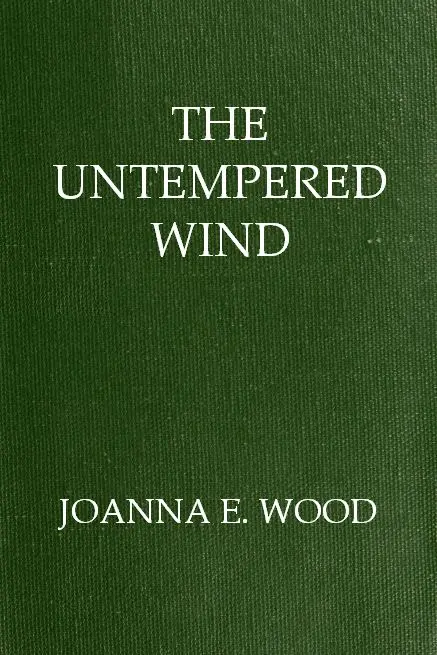
"The Untempered Wind" by Joanna E. Wood is a novel written in the late 19th century. This work explores the complex emotional landscape of Myron Holder, a woman in a rural village grappling with societal shame and personal despair after becoming a mother outside of marriage. The narrative begins to delve into her life and the harsh judgments she faces from those around her, painting a portrait of struggle against the backdrop of a judgmental community. The opening of the novel introduces us to the setting of Jamestown, filled with ordinary life and the season's freshness as spring arrives. Amongst familiar scenes, we first meet Myron Holder, whose determination and sorrow are palpable as she navigates her duties and the scorn surrounding her. Despite the ongoing bustle of village life, Myron is enveloped in a profound loneliness, haunted by her status as a mother bearing societal judgment. The initial chapters provide insight into her character, illustrating the burden of shame she carries and hinting at the deeper struggles she must confront as she faces both her grandmother's disdain and the gossipy community that defines her existence.
Introduction adapted from the source catalogue; source summaries may be automatically generated.
Free to read · English · 94,436 words · No account needed
MAKE TIME FOR A GOOD BOOK
On by default. Untick to stop anonymous reading totals. Each page counts after 10 seconds in view. How this works.
Anonymous counting is on unless you have switched it off.
"God knows," he said to himself, as he strode along that night to the village, "a woman needs to be pretty bad before she's not good enough for the average man!" He had reached the fence round the Holder cottage--that fence in which the gaps grew greater and greater as old Mrs. Holder used the pickets for kindling-wood--and was just about to enter quietly, when Gamaliel Deans drove up. He recognized Homer and called out:
"Hi, there! Ho! What are you lookin' for?"
"A lift out to old Carroll's," said Homer promptly, cursing Gamaliel in
his heart.
"Well, I'm yer man, then," said Gamaliel. "I'm just goin' for the vet. The sorrel mare's bad--sunstroke."
"Too bad," said Homer, springing into the light wagon. "Who was
driving her?"
"I was--worse luck," said Gamaliel, sulkily. "I seen her stagger, but I thought she could make it to the end of the swathe; but she dropped in her tracks, and there she's laid since, with us pouring water on her head. It don't seem to do her much good, though, and she was beginning to kick out when I hitched up and started."
"Well," said Homer, and he had a grim satisfaction in saying it, "if
she was beginning to strike out, you may as well go home, for she'll
die!"
"I guess she will," said Gamaliel, philosophically; "but things was gettin' pretty hot round there, and I thought it safe to make tracks. Marm's in a regular ramp over it!"
"No wonder," said Homer severely; "she's a fine mare."
The twinkling lights of Mr. Carroll's window were in view. They neared them swiftly. Gamaliel half-pulled up and Homer sprang out.
"So 'long!" said Gamaliel. "This is a matter of life and death, ye know," he added, chuckling at his own wit. He drove on quickly, speculating as to whether the mare was dead. She was.
Homer meanwhile stood a moment irresolute, as the wagon disappeared. He had spoken upon impulse when, in answer to Gamaliel's inquiry, he said he was going to Mr. Carroll's. It was the first name that entered his head, and chosen for that reason.
Homer had once gone a great deal to old Mr. Carroll's, but never had resumed the visits since his return to the farm. He shrank morbidly from observation then, and old Mr. Carroll's eyes were sharp. This night, however, he decided to go in; he feared no man's eyes now. He rapped at the door and waited. He could hear the tapping of the old man's cane, then saw a light beneath the door, as Mr. Carroll called out in well-rounded tones for so old a man:
"Who goes there?"
"Homer Wilson!" shouted Homer.
Your reading position is saved on this browser. Take it to another device with a library code. Reading pages adapt to text, rather than matching a printed edition.
BEHIND THE BOOK
This eBook is for the use of anyone anywhere in the United States and most other parts of the world at no cost and with almost no restrictions whatsoever. You may copy it, give it away or re-use it under the terms of the Project Gutenberg License included with this eBook or online at www.gutenberg.org. If you are not located in the United States, you will have to check the laws of the country where you are located before using this eBook. Read the source licence.
The original source file, including credits and licence, is retained by this library. Request an original-format copy at no charge. Please include the book title and Project Gutenberg identifier #58987.
KEEP YOUR CURIOSITY GOING
Coulson Kernahan

Maurice Baring
Frances Wright
Cécile Tormay

Frederic Jesup Stimson

W. H. P. (William Henry Pope) Jarvis