The well of loneliness
Radclyffe Hall
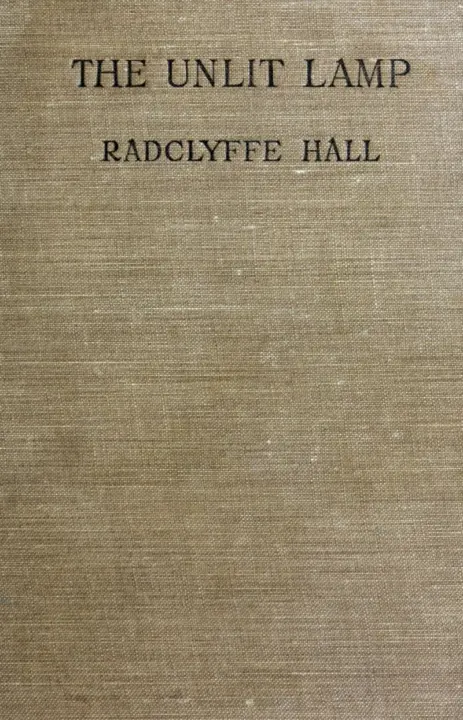
THE CLASSIC COLLECTION · 1924
"The Unlit Lamp" by Radclyffe Hall is a novel written in the early 20th century. The story revolves around the lives of the Ogden family, particularly focusing on the relationship between the parents, Colonel and Mrs. Ogden, and their daughters, Joan and Milly. It depicts the challenges and dynamics within the family, exploring themes of authority, aspirations, and societal expectations. The opening of "The Unlit Lamp" introduces Colonel Ogden, who is characterized by his strictness and overbearing nature, as he scrutinizes household expenses while reflecting on his life in a military context. His wife, Mrs. Ogden, appears weary and is portrayed as a dutiful yet anxious figure, struggling to balance her husband's demands and her sensitivity to her daughters' needs. The two daughters offer contrasting personalities: Milly is depicted as charming and carefree, while Joan stands out as an introspective and strong-minded child, often confronting issues of fairness and justice within their home life. This initial section sets the tone for the conflicts and emotional currents that will define the family's narrative.
Introduction adapted from the source catalogue; source summaries may be automatically generated.
Free to read · English · 112,002 words · No account needed
MAKE TIME FOR A GOOD BOOK
On by default. Untick to stop anonymous reading totals. Each page counts after 10 seconds in view. How this works.
Anonymous counting is on unless you have switched it off.
They stopped and faced each other in the path; her eyes glowered, but his were twinkling though his mouth was grave. "If you're talking at me, Joan," he said solemnly, "then you may spare your breath, because you see I know I'm right; I know that even if Elizabeth is splendid and self-sacrificing and all the rest of it, she's dead wrong to waste it on that little dried up brother of hers. She ought to get out and do something for the world at large, or if she can't rise to that then she ought to do something for herself. I think it's a sin to let yourself get drained dry by anyone, I don't care who it is; that wasn't the sort of thing God gave us our brains for; it wasn't why He made us individuals."
Joan interrupted him: "But Elizabeth isn't drained dry; she's the
cleverest woman I know."
"Yes, now, perhaps."
"She always will be," said Joan coldly.
He felt that he had gone too far; he didn't want to quarrel with her.
"I'm sorry," he said humbly. "It's my fault, I suppose. I mean I daresay I'm selfish and self-opinionated, and perhaps I'm not such great shakes, after all. Anyhow, you know I'm awfully fond of Elizabeth."
Joan was pacified. "One does get fond of her," she told him. "She's so calm and neat and masterful, so certain of herself and yet so awfully kind."
He changed the subject. "I'm swatting at Cambridge," he announced.
"Are you?"
He heard the interest in her voice and wondered why his casual remark
had aroused it.
"Yes; when I've taken my science degree I shall go up to London for hospital work--and then "--he gave a sigh of contentment--"I shall get my Medical--and then Germany. You ought to go to Cambridge, Joan."
"Is it expensive? Does it cost much?" she asked him.
"Well, that depends. Why, are you really going?"
She hesitated. "Elizabeth would like me to."
"Oh, yes, she was there, wasn't she? Well, you won't be there when I am, I'm afraid; we'll just miss it by a year."
"I don't suppose I shall go at all."
"Why not?"
"Oh, lots of reasons. We're poor, you know."
"Then try for a scholarship."
"I'd probably fail if I did."
"Why on earth should you fail; you're very clever, aren't you?"
She began to laugh. "I don't know if I'm what you would call clever; you see you think yourself clever, and I'm not a bit like you. I like working, though, so perhaps I'd get through."
Elizabeth, coming towards them across the lawn, heard the laugh and
blessed Richard.
Your reading position is saved on this browser. Take it to another device with a library code. Reading pages adapt to text, rather than matching a printed edition.
BEHIND THE BOOK
This eBook is for the use of anyone anywhere in the United States and most other parts of the world at no cost and with almost no restrictions whatsoever. You may copy it, give it away or re-use it under the terms of the Project Gutenberg License included with this eBook or online at www.gutenberg.org. If you are not located in the United States, you will have to check the laws of the country where you are located before using this eBook. Read the source licence.
The original source file, including credits and licence, is retained by this library. Request an original-format copy at no charge. Please include the book title and Project Gutenberg identifier #69137.
KEEP YOUR CURIOSITY GOING
Coulson Kernahan

Maurice Baring
Frances Wright
Cécile Tormay

Frederic Jesup Stimson

W. H. P. (William Henry Pope) Jarvis