The well of loneliness
Radclyffe Hall
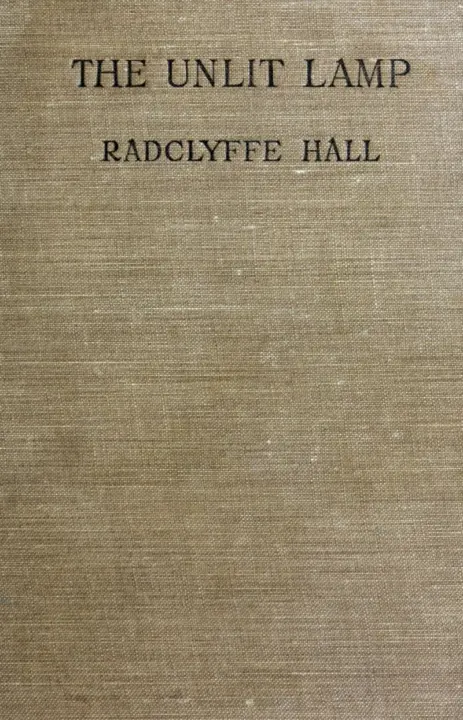
THE CLASSIC COLLECTION · 1924
"The Unlit Lamp" by Radclyffe Hall is a novel written in the early 20th century. The story revolves around the lives of the Ogden family, particularly focusing on the relationship between the parents, Colonel and Mrs. Ogden, and their daughters, Joan and Milly. It depicts the challenges and dynamics within the family, exploring themes of authority, aspirations, and societal expectations. The opening of "The Unlit Lamp" introduces Colonel Ogden, who is characterized by his strictness and overbearing nature, as he scrutinizes household expenses while reflecting on his life in a military context. His wife, Mrs. Ogden, appears weary and is portrayed as a dutiful yet anxious figure, struggling to balance her husband's demands and her sensitivity to her daughters' needs. The two daughters offer contrasting personalities: Milly is depicted as charming and carefree, while Joan stands out as an introspective and strong-minded child, often confronting issues of fairness and justice within their home life. This initial section sets the tone for the conflicts and emotional currents that will define the family's narrative.
Introduction adapted from the source catalogue; source summaries may be automatically generated.
Free to read · English · 112,002 words · No account needed
MAKE TIME FOR A GOOD BOOK
On by default. Untick to stop anonymous reading totals. Each page counts after 10 seconds in view. How this works.
Anonymous counting is on unless you have switched it off.
"No, thank you; I prefer to stand up," he said stubbornly. His wife shrugged her shoulders and turned to Joan.
"It's time we had a serious talk," she said. "The first thing, my dear, is how much have you got to live on?"
"Rather less than fifty pounds a year. You see we had to sell out some capital and mother's pension died with her."
Aunt Ann sniffed disapprovingly. "It's never wise to tamper with capital, but I suppose it was inevitable; in any case what's done is done. You can't live on fifty pounds a year, I hope you realize."
"No, of course not," Joan agreed. "I shall have to find work of some kind, but there seem to be more applicants than posts, as far as I can see; and then I'm not up to the modern standard, people want a lot for their money these days."
"I cannot imagine," piped the bishop in his thin, old voice, "I cannot imagine, Ann, why Joan should not live with us; she could make herself useful to you about the house, and besides, I should like to have her."
His wife frowned at him. "Good gracious, Oswald, what an unpractical suggestion! I'm sure Joan wouldn't like it at all; she'd feel that she was living on charity. I should, in her place; the Routledges have always been very independent, high-spirited people."
Joan flushed. "Thank you awfully, Uncle Oswald, for wanting me, but I don't think it would do," she said hastily.
"Of course not," Aunt Ann agreed. "Now, the point is, Joan, have you got
anything in view?"
During the pause that ensued Joan racked her brain for some dignified and convincing reply. It seemed incredible to her that she had not got anything in view, that out of all the innumerable advertisements she had been unable to find one that seemed really suitable. Her aunt's eyes were scanning her face with curiosity.
"I thought you were always considered the clever one," she remarked.
Joan laughed rather bitterly. "That was centuries ago, Aunt Ann. The world has progressed since then."
"Do you mean to say that you feel unfitted for any of the careers now open to women?" inquired her aunt incredulously.
"That's precisely what I do feel. You see one needs experience or a business education for most things, and if you're going to teach, of course you must have a degree. I've neither the time nor the money to begin all over again at forty-five."
Mrs. Blane settled herself more comfortably in her chair. "This requires
thought," she murmured.
Your reading position is saved on this browser. Take it to another device with a library code. Reading pages adapt to text, rather than matching a printed edition.
BEHIND THE BOOK
This eBook is for the use of anyone anywhere in the United States and most other parts of the world at no cost and with almost no restrictions whatsoever. You may copy it, give it away or re-use it under the terms of the Project Gutenberg License included with this eBook or online at www.gutenberg.org. If you are not located in the United States, you will have to check the laws of the country where you are located before using this eBook. Read the source licence.
The original source file, including credits and licence, is retained by this library. Request an original-format copy at no charge. Please include the book title and Project Gutenberg identifier #69137.
KEEP YOUR CURIOSITY GOING
Coulson Kernahan

Maurice Baring
Frances Wright
Cécile Tormay

Frederic Jesup Stimson

W. H. P. (William Henry Pope) Jarvis