The well of loneliness
Radclyffe Hall
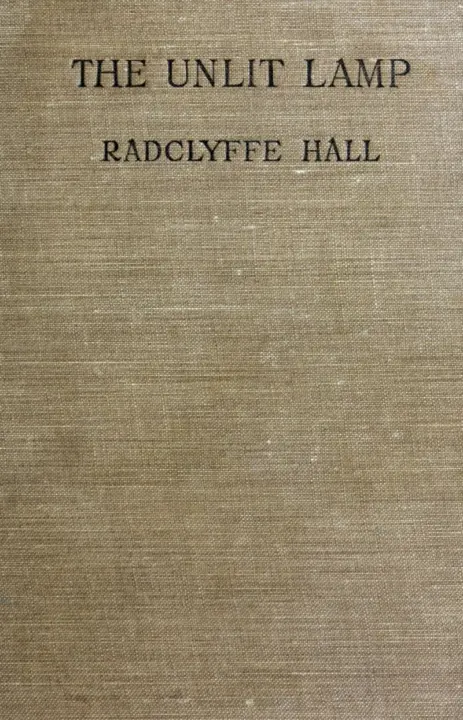
THE CLASSIC COLLECTION · 1924
"The Unlit Lamp" by Radclyffe Hall is a novel written in the early 20th century. The story revolves around the lives of the Ogden family, particularly focusing on the relationship between the parents, Colonel and Mrs. Ogden, and their daughters, Joan and Milly. It depicts the challenges and dynamics within the family, exploring themes of authority, aspirations, and societal expectations. The opening of "The Unlit Lamp" introduces Colonel Ogden, who is characterized by his strictness and overbearing nature, as he scrutinizes household expenses while reflecting on his life in a military context. His wife, Mrs. Ogden, appears weary and is portrayed as a dutiful yet anxious figure, struggling to balance her husband's demands and her sensitivity to her daughters' needs. The two daughters offer contrasting personalities: Milly is depicted as charming and carefree, while Joan stands out as an introspective and strong-minded child, often confronting issues of fairness and justice within their home life. This initial section sets the tone for the conflicts and emotional currents that will define the family's narrative.
Introduction adapted from the source catalogue; source summaries may be automatically generated.
Free to read · English · 112,002 words · No account needed
MAKE TIME FOR A GOOD BOOK
On by default. Untick to stop anonymous reading totals. Each page counts after 10 seconds in view. How this works.
Anonymous counting is on unless you have switched it off.
She got up. "I'm going to the Rodneys'," she said.
"Oh! don't leave me, don't leave me now, Joan," wailed Mrs. Ogden.
"I must for a little while; try to stop crying, dearest, and go up to Milly. But bathe your eyes first, though; she oughtn't to see them looking red."
Mrs. Ogden walked feebly to the door; she looked old and pinched, she
looked more than her age.
"Don't be long," she implored.
In the street, Joan saw one or two people she knew, and crossed over, in order to avoid them. It was hot and the sea glared fearfully; she could feel the sun beating down on her head, and putting up her hand found that she was hatless. She quickened her steps.
Elizabeth was upstairs sorting clothes, they lay in little heaps on the bed and chairs; she looked up as Joan came in.
"I'm thinking of having a jumble sale," she said, and then stopped.
Joan sat down on a pile of nightgowns. "It's Milly--they say she's
dying."
Elizabeth caught her breath. "What do you mean, Joan?"
Joan told her all there was to tell, from the blood on the handkerchief that morning to the consultation in the afternoon. Elizabeth listened in shocked silence.
At last she said: "It's awful, simply awful--and you were right all
along."
"Yes, I knew it; I don't know how."
"Joan, make your mother let me help to do the nursing; I'm not a bad nurse, at least I don't think I am, and after all I'd be better than a stranger, for the child knows me."
"They say she may live for some little time yet, but they can't be sure, she may die very soon. Are you quite certain you want to help, Elizabeth?"
Elizabeth stared at her. So it had come to this: Joan was not sure that she would want to help in this extremity, was capable of supposing that she could stand aside while Joan took the whole burden on her own shoulders. Good God! how far apart they had drifted.
"I shall come to Leaside and begin to-morrow," was all she said.
Seabourne was genuinely shocked at the news. Of course they had all been saying for months past that Milly was consumptive, but somehow this was different, entirely different. People vied with each other in kindness to the Ogdens, touched by Milly's youth and Mrs. Ogden's new grief. Friends, and even mere acquaintances, inquired daily, at first; their perpetual bell-ringing jangled through the house, tearing at the nerves of the overstrained inmates. Still, all these people meant so well, one had to remember that.
Your reading position is saved on this browser. Take it to another device with a library code. Reading pages adapt to text, rather than matching a printed edition.
BEHIND THE BOOK
This eBook is for the use of anyone anywhere in the United States and most other parts of the world at no cost and with almost no restrictions whatsoever. You may copy it, give it away or re-use it under the terms of the Project Gutenberg License included with this eBook or online at www.gutenberg.org. If you are not located in the United States, you will have to check the laws of the country where you are located before using this eBook. Read the source licence.
The original source file, including credits and licence, is retained by this library. Request an original-format copy at no charge. Please include the book title and Project Gutenberg identifier #69137.
KEEP YOUR CURIOSITY GOING
Coulson Kernahan

Maurice Baring
Frances Wright
Cécile Tormay

Frederic Jesup Stimson

W. H. P. (William Henry Pope) Jarvis