The well of loneliness
Radclyffe Hall
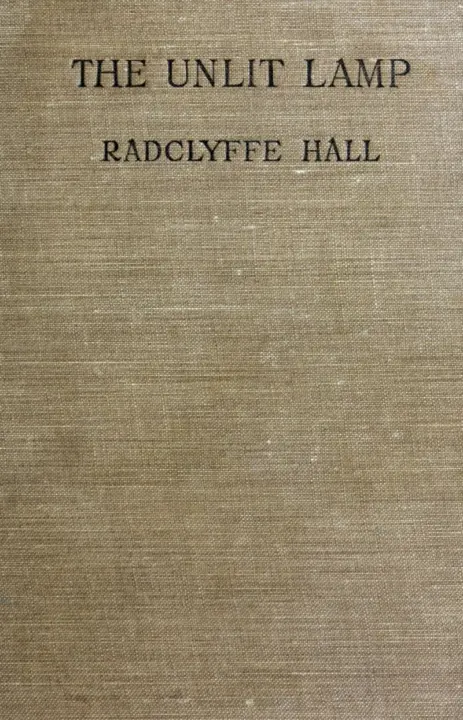
THE CLASSIC COLLECTION · 1924
"The Unlit Lamp" by Radclyffe Hall is a novel written in the early 20th century. The story revolves around the lives of the Ogden family, particularly focusing on the relationship between the parents, Colonel and Mrs. Ogden, and their daughters, Joan and Milly. It depicts the challenges and dynamics within the family, exploring themes of authority, aspirations, and societal expectations. The opening of "The Unlit Lamp" introduces Colonel Ogden, who is characterized by his strictness and overbearing nature, as he scrutinizes household expenses while reflecting on his life in a military context. His wife, Mrs. Ogden, appears weary and is portrayed as a dutiful yet anxious figure, struggling to balance her husband's demands and her sensitivity to her daughters' needs. The two daughters offer contrasting personalities: Milly is depicted as charming and carefree, while Joan stands out as an introspective and strong-minded child, often confronting issues of fairness and justice within their home life. This initial section sets the tone for the conflicts and emotional currents that will define the family's narrative.
Introduction adapted from the source catalogue; source summaries may be automatically generated.
Free to read · English · 112,002 words · No account needed
MAKE TIME FOR A GOOD BOOK
On by default. Untick to stop anonymous reading totals. Each page counts after 10 seconds in view. How this works.
Anonymous counting is on unless you have switched it off.
Colonel Ogden began again: "Well, upon my----"
"Don't, don't!" shrieked Mrs. Ogden hysterically. "Don't say it again,
James. I can't bear it!"
"Well, upon my word----"
"There! You've said it! Oh, Oh, Oh!" She suddenly covered her face with her table napkin and burst into loud sobs.
Colonel Ogden was speechless. Then he turned a little pale, his heart
thumped.
"Mary, for heaven's sake!"
"I can't help it, James! I can't, I can't!"
"But, Mary, my dear!"
"Don't touch me, leave me alone!"
"Oh, all right; but I say, Mary, don't do this!"
"I wish I were dead!"
"Mary!"
"Yes I do, I wish I were dead and out of it all!"
"Nonsense--rubbish!"
"You'll be sorry when I am dead!"
He stretched out a plump hand and laid it on her shoulder.
"Go away, James!"
"Oh, all right! Joan, look after your mother, she don't seem well." He left the room, and they heard the front door bang after him.
Mrs. Ogden looked over the table napkin. "Has he gone, Joan?"
"Yes, Mother. Oh, you poor darling!" They clung together.
Mrs. Ogden dried her eyes; then she poured out some coffee and drank it.
"I'm better now, dear." She smiled cheerfully.
And she was better. As she rose from the table the dark cloud lifted, she saw clearly once more; saw the Routledge banner streaming in the breeze.
"And now for those tiresome books," she said almost gaily. She went away to the drawing-room and Joan collapsed; she felt sick, scenes always upset her.
She thought: "I wish I could hide my head in a table napkin and cry like Mother did." Then she thought: "I wonder how Mother manages it. I wouldn't have cried, I'd have hit him!"
She could not eat. In the drawing-room she heard her mother humming, yes, actually humming over the books!
"That's all right," thought Joan, "they must be nice and cheap this week, that's a comfort anyhow."
Presently Mrs. Ogden looked into the dining-room.
"Joan!"
"Yes, Mother?"
"No lessons to-day, dear."
"No, Mother."
"Come and help me to place the wreath."
They fetched it, carrying it between them; a laurel wreath large enough to cover the frame of the admiral's picture.
"Tell Alice to bring the steps, Joan. Now, dear, you hold them while I get up. How does it look?"
"Lovely, Mother."
"Joan, never forget that half of you is Routledge. Never forget, my dear, that the best blood in your veins comes from my side of the family. Never forget who you are, Joan; it helps one a great deal in life to have something like that to cling to, something to hold on to when the dark days come."
Your reading position is saved on this browser. Take it to another device with a library code. Reading pages adapt to text, rather than matching a printed edition.
BEHIND THE BOOK
This eBook is for the use of anyone anywhere in the United States and most other parts of the world at no cost and with almost no restrictions whatsoever. You may copy it, give it away or re-use it under the terms of the Project Gutenberg License included with this eBook or online at www.gutenberg.org. If you are not located in the United States, you will have to check the laws of the country where you are located before using this eBook. Read the source licence.
The original source file, including credits and licence, is retained by this library. Request an original-format copy at no charge. Please include the book title and Project Gutenberg identifier #69137.
KEEP YOUR CURIOSITY GOING
Coulson Kernahan

Maurice Baring
Frances Wright
Cécile Tormay

Frederic Jesup Stimson

W. H. P. (William Henry Pope) Jarvis