The well of loneliness
Radclyffe Hall
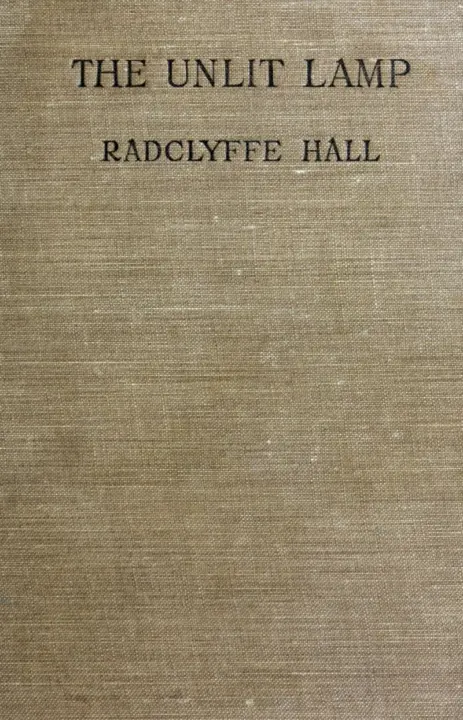
THE CLASSIC COLLECTION · 1924
"The Unlit Lamp" by Radclyffe Hall is a novel written in the early 20th century. The story revolves around the lives of the Ogden family, particularly focusing on the relationship between the parents, Colonel and Mrs. Ogden, and their daughters, Joan and Milly. It depicts the challenges and dynamics within the family, exploring themes of authority, aspirations, and societal expectations. The opening of "The Unlit Lamp" introduces Colonel Ogden, who is characterized by his strictness and overbearing nature, as he scrutinizes household expenses while reflecting on his life in a military context. His wife, Mrs. Ogden, appears weary and is portrayed as a dutiful yet anxious figure, struggling to balance her husband's demands and her sensitivity to her daughters' needs. The two daughters offer contrasting personalities: Milly is depicted as charming and carefree, while Joan stands out as an introspective and strong-minded child, often confronting issues of fairness and justice within their home life. This initial section sets the tone for the conflicts and emotional currents that will define the family's narrative.
Introduction adapted from the source catalogue; source summaries may be automatically generated.
Free to read · English · 112,002 words · No account needed
MAKE TIME FOR A GOOD BOOK
On by default. Untick to stop anonymous reading totals. Each page counts after 10 seconds in view. How this works.
Anonymous counting is on unless you have switched it off.
Joan laughed quietly. "No," she said, "I'm not a bit afraid. Because, you see, I think I've known the real Elizabeth for a long time now."
THE tiny study at Alexandra House was bright with flowers, although it was November. The flowers had been the gift of one of Harriet Nelson's youthful admirers, Rosie Wilmot, an art student. The room was littered with a mass of futilities, including torn music and innumerable signed photographs. The guilty smell of cigarette smoke hung on the air, although the window had been opened.
Harriet, plump and pretty, with her red hair and blue eyes, lolled ungracefully in the wicker arm-chair; her thick ankles stretched out in front of her. On a low stool, sufficiently near these same ankles to express humbleness of spirit, crouched Rosie Wilmot.
"Chérie," Harriet was saying with an exaggerated Parisian accent, "you are a naughty child to spend your money on flowers for me!"
"But, darling, you know how I loved buying them!"
Rosie's sallow cheeks flushed at her own daring. Her long brown neck rose up from a band of Liberty embroidery, like the stem of a carefully coloured meerschaum. She rubbed her forehead nervously with a paint-stained hand, fixing her irritatingly intense eyes the while on Harriet's placid face.
Harriet stretched out an indolent hand. "There, there," she said
soothingly, "I'm very pleased indeed with the flowers; come and be
kissed."
Milly raised scoffing eyes to the ceiling. She made her mouth into a round O, and proceeded to blow smoke rings.
"Let me know when it's all over," she said derisively, "and then we'll
boil the kettle."
"You can boil it now," said Harriet, waving Rosie back to her
foot-stool.
They proceeded to make tea and toast bread in front of the fire. Milly fetched some rather weary butter and a pot of "Gentleman's Relish" from the bedroom, and Rosie produced her contribution in the shape of a bag of Harriet's favourite cream puffs. She had gone without lunch for two days in order to afford this offering, but as Harriet's strong teeth bit into the billowy cream which oozed out over her chin, Rosie's heart swelled with pleasure; she had her reward.
"Méchante enfant!" exclaimed Harriet, shaking her finger, "you mustn't spend your money like this!"
At that moment the door opened and Joan and Elizabeth walked into the
room.
"Good Lord, you!" exclaimed Milly in amazement.
They laughed and came forward, waiting to be introduced.
"Oh, yes; Harriet, this is my sister Joan, and this is Miss Rodney."
Harriet nodded casually.
"This is Rosie Wilmot, Joan; Rosie, Miss Rodney."
Your reading position is saved on this browser. Take it to another device with a library code. Reading pages adapt to text, rather than matching a printed edition.
BEHIND THE BOOK
This eBook is for the use of anyone anywhere in the United States and most other parts of the world at no cost and with almost no restrictions whatsoever. You may copy it, give it away or re-use it under the terms of the Project Gutenberg License included with this eBook or online at www.gutenberg.org. If you are not located in the United States, you will have to check the laws of the country where you are located before using this eBook. Read the source licence.
The original source file, including credits and licence, is retained by this library. Request an original-format copy at no charge. Please include the book title and Project Gutenberg identifier #69137.
KEEP YOUR CURIOSITY GOING
Coulson Kernahan

Maurice Baring
Frances Wright
Cécile Tormay

Frederic Jesup Stimson

W. H. P. (William Henry Pope) Jarvis