THE CLASSIC COLLECTION✦The trail of the Golden HornCLASSIC FREE BOOKS
The trail of the Golden Horn
H. A. (Hiram Alfred) Cody
THE CLASSIC COLLECTION · 1918
"The Unknown Wrestler" by H. A. Cody is a novel written in the early 20th century. The story revolves around themes of kindness, social justice, and the struggles of the disadvantaged, exemplified through the interactions of its main characters, such as the blind violinist, his daughter, and a mysterious protector who helps them in a time of need. This narrative appears to offer a blend of drama and adventure, likely exploring the dynamics between different social classes. The opening of the book introduces a poignant scene on the streets where a blind, elderly violinist and his daughter, Nan, strive to earn a meager living through music. Their struggles are compounded by the insensitivity of passersby, but a compassionate stranger steps in to confront their oppressors and skillfully plays the violin, gathering money and attention for the beleaguered duo. Following this incident, the girl expresses gratitude to the stranger for his kindness, setting the stage for an exploration of human compassion amidst societal challenges. This portion of the story establishes a foundation for themes of empathy, protection, and the often harsh realities of urban life, suggesting that the journey ahead will delve deeper into these social dynamics.
Introduction adapted from the source catalogue; source summaries may be automatically generated.
Free to read · English · 80,512 words · No account needed
MAKE TIME FOR A GOOD BOOK
On by default. Untick to stop anonymous reading totals. Each page counts after 10 seconds in view. How this works.
Anonymous counting is on unless you have switched it off.
"Not exactly. He was a hard worker, but he found it almost impossible to understand the ways, ah, how shall I put it? of refined society. That is, he could not mingle freely with the social element which is so prominent at St. Margaret's. He preferred the lower life, such as is found along the water-front, and in the poorer sections of the city. He was more at home there."
"I am afraid, sir, that the new parson will not suit here," the chairman announced. "According to your words, he is not a gentleman, and does not understand the ways of polite society. Now, we want a man all can respect, who understands his people, and yet who has the true ring of a natural born gentleman."
"Who is he, anyway?" a man asked. "Where did he come from?"
"He was brought up on a farm, and worked his way through college," Dr. Rannage explained. "He understands country ways and should suit very nicely here."
"Why don't ye say 'the bush'?" Bill Simmonds shouted. "Anything will
suit us here."
The laugh which followed this remark annoyed Dr. Rannage.
"I am almost inclined to believe you are right," he angrily retorted.
"Ye believe it already, an' we know it."
"Order!" the chairman sternly demanded. "Bill Simmonds, you had better leave the hall, if you can't behave yourself."
"All right, sir," Bill acquiesced, as he threw a wink to a man across the aisle and settled back in his seat. "I've got nuthin' more to say."
Dr. Rannage was evidently embarrassed. He mopped his face with his handkerchief, and took another drink of water.
"I think I have explained matters quite fully," he at last continued, "and perhaps my companions here would like to say something. I trust, however, that you will give your new clergyman a fair trial, and do everything in your power to help him."
"What's his name?" Tom Stephens asked. "You have never mentioned that."
"It is Douglas Stanton. He comes from a good old family, so I understand, and his grandfather held an important government position in this province."
Dr. Rannage's companions had very little to say. They were business men, so they said, and unaccustomed to public speaking. Each made an appeal to the people to support the new clergyman, to repair the rectory, and to give more liberally toward the support of the Church in their parish. They were given an attentive hearing, and when they were through, the chairman brought the meeting to a sudden close. Just why he did so Douglas could not understand. Stubbles' manner had greatly changed since his opening remarks and he seemed to be annoyed and irritable.
Your reading position is saved on this browser. Take it to another device with a library code. Reading pages adapt to text, rather than matching a printed edition.
H. A. (Hiram Alfred) Cody
H. A. (Hiram Alfred) Cody
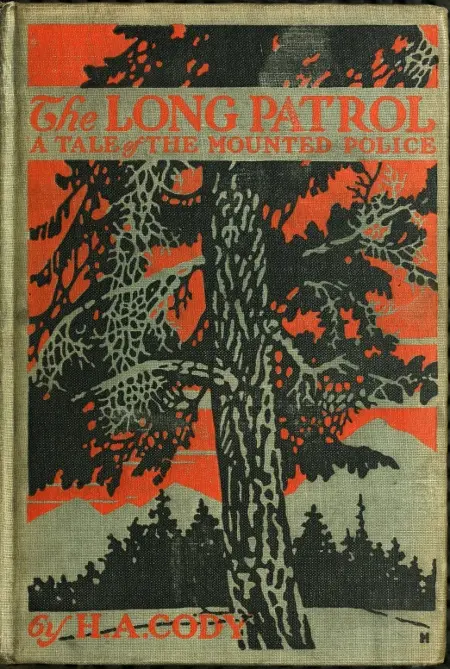
H. A. (Hiram Alfred) Cody
H. A. (Hiram Alfred) Cody
BEHIND THE BOOK
This eBook is for the use of anyone anywhere in the United States and most other parts of the world at no cost and with almost no restrictions whatsoever. You may copy it, give it away or re-use it under the terms of the Project Gutenberg License included with this eBook or online at www.gutenberg.org. If you are not located in the United States, you will have to check the laws of the country where you are located before using this eBook. Read the source licence.
The original source file, including credits and licence, is retained by this library. Request an original-format copy at no charge. Please include the book title and Project Gutenberg identifier #26391.
KEEP YOUR CURIOSITY GOING
Coulson Kernahan

Maurice Baring
Frances Wright
Cécile Tormay

Frederic Jesup Stimson

W. H. P. (William Henry Pope) Jarvis