THE CLASSIC COLLECTION✦The trail of the Golden HornCLASSIC FREE BOOKS
The trail of the Golden Horn
H. A. (Hiram Alfred) Cody
THE CLASSIC COLLECTION · 1918
"The Unknown Wrestler" by H. A. Cody is a novel written in the early 20th century. The story revolves around themes of kindness, social justice, and the struggles of the disadvantaged, exemplified through the interactions of its main characters, such as the blind violinist, his daughter, and a mysterious protector who helps them in a time of need. This narrative appears to offer a blend of drama and adventure, likely exploring the dynamics between different social classes. The opening of the book introduces a poignant scene on the streets where a blind, elderly violinist and his daughter, Nan, strive to earn a meager living through music. Their struggles are compounded by the insensitivity of passersby, but a compassionate stranger steps in to confront their oppressors and skillfully plays the violin, gathering money and attention for the beleaguered duo. Following this incident, the girl expresses gratitude to the stranger for his kindness, setting the stage for an exploration of human compassion amidst societal challenges. This portion of the story establishes a foundation for themes of empathy, protection, and the often harsh realities of urban life, suggesting that the journey ahead will delve deeper into these social dynamics.
Introduction adapted from the source catalogue; source summaries may be automatically generated.
Free to read · English · 80,512 words · No account needed
MAKE TIME FOR A GOOD BOOK
On by default. Untick to stop anonymous reading totals. Each page counts after 10 seconds in view. How this works.
Anonymous counting is on unless you have switched it off.
"You have heard the charges made against you, have you not?" he asked.
"We have," was the reply.
"Are you guilty or not guilty?"
"Guilty, sir."
This candid admission was a surprise to the Squire, as he had expected that the men would emphatically deny the charges. He was not prepared for this, and hardly knew how to proceed. He frowned, twisted in his chair, and felt most uncomfortable. The staring and gaping audience greatly embarrassed him.
"S-so you confess your guilt, eh?" he at length stammered.
"Yes, sir; we do."
"Are you not afraid of the consequences!"
"What are they?"
"W-well, I h-have to see about that. I'm not just sure yet. But why did you make the attack upon Mr. Handyman?"
"We were ordered to do so, sir," Tom replied.
"H'm, I see," and the Squire rubbed his chin thoughtfully with his right hand. He was thinking clearly now, and realised how necessary it was for him to be most discreet with his questions. "Were there just two of you?" he presently asked.
"No, sir."
"Who were the others?"
"They can speak for themselves, sir."
No sooner had the words left Tom's mouth than four men stepped forward.
"And were you in the trouble, too?" the Squire questioned.
"Yes, sir," the spokesman replied. "We was with Tom an' Pete. We're
guilty, too."
"Well, I must say you are a fine bunch of nighthawks," and the Squire gave a slight, sarcastic laugh. "You should be thoroughly ashamed of yourselves."
"We're more'n ashamed, sir," Tom replied; "we're disgusted."
"Disgusted at what?"
"At makin' sich fools of ourselves, an' bein' the tools of another."
"But you are responsible men, and why do you try to shift the blame to other shoulders?" the Squire sternly demanded.
"Because we'd been drinkin', sir. We really didn't know what we was doin' that night. The whiskey was given us an' we was ready for any divilment. That's the long and short of it."
Squire Hawkins now rose slowly to his feet and looked upon the audience
before him.
"Gentlemen," he began, "I do not see any reason why I should prolong this enquiry. These men have confessed everything, and there is nothing more for me to do except to impose the penalties. I shall be very lenient as this is the first time they have been brought before me. But I wish to warn you all that if I am called upon to deal with such a case again, I shall be very severe."
Your reading position is saved on this browser. Take it to another device with a library code. Reading pages adapt to text, rather than matching a printed edition.
H. A. (Hiram Alfred) Cody
H. A. (Hiram Alfred) Cody
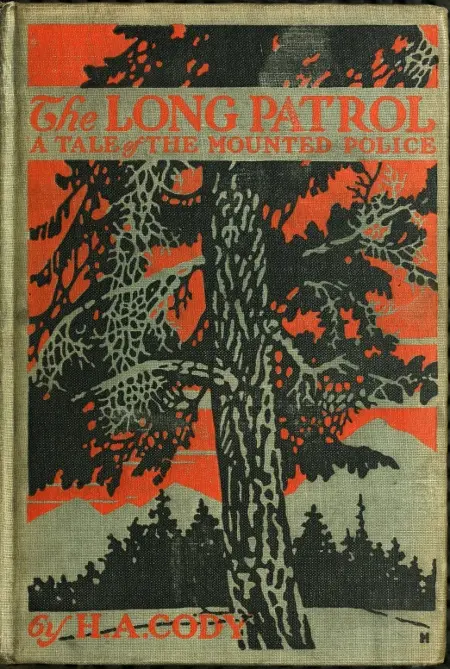
H. A. (Hiram Alfred) Cody
H. A. (Hiram Alfred) Cody
BEHIND THE BOOK
This eBook is for the use of anyone anywhere in the United States and most other parts of the world at no cost and with almost no restrictions whatsoever. You may copy it, give it away or re-use it under the terms of the Project Gutenberg License included with this eBook or online at www.gutenberg.org. If you are not located in the United States, you will have to check the laws of the country where you are located before using this eBook. Read the source licence.
The original source file, including credits and licence, is retained by this library. Request an original-format copy at no charge. Please include the book title and Project Gutenberg identifier #26391.
KEEP YOUR CURIOSITY GOING
Coulson Kernahan

Maurice Baring
Frances Wright
Cécile Tormay

Frederic Jesup Stimson

W. H. P. (William Henry Pope) Jarvis