
Coal and the coal mines
Homer Greene

THE CLASSIC COLLECTION · 1917
"The Unhallowed Harvest" by Homer Greene is a social commentary novel written in the early 20th century. The story centers around the Reverend Robert Bruce Farrar, who finds himself embroiled in a court case involving a working-class family, the Bradleys, after the husband suffers a life-altering injury at work. Through the lens of this legal struggle, the narrative explores themes of social justice, inequality, and the human condition. At the start of the novel, the Reverend Farrar attends a courtroom trial where a negligence case is being decided against the Malleson Manufacturing Company. He is particularly interested in the case due to the human elements involved, namely the struggles of the injured worker, John Bradley, and the emotional turmoil faced by his wife, Mary. As the court proceedings unfold, it becomes clear that while the law is being upheld, a greater moral injustice may be at play, as the ruling favors the corporation despite its negligence. Mary Bradley’s fierce determination to fight for her husband’s dignity and their family's rights highlights the stark divide between the wealthy and the working class, setting the stage for further developments in their lives and in the socio-economic landscape of the time.
Introduction adapted from the source catalogue; source summaries may be automatically generated.
Free to read · English · 121,322 words · No account needed
MAKE TIME FOR A GOOD BOOK
On by default. Untick to stop anonymous reading totals. Each page counts after 10 seconds in view. How this works.
Anonymous counting is on unless you have switched it off.
After considering the matter, the bishop felt that, after all, it might be better for him to decide the case unaided. But how to decide it; that was the question. If he should comply with the demand of the vestry, and dissolve the pastoral relation, he would not only be putting upon the Church the stigma of catering to the rich, and disregarding and driving out the poor, but he would also be humiliating and disgracing a man who, however mistaken he might be in his methods, had violated no ecclesiastical law, and who was conscientiously and earnestly striving to bring the religion of Jesus Christ home to the common people. On the other hand, were he to sustain the rector, it would mean giving serious offense to those important and wealthy parishioners who in the past had made Christ Church the strongest and most influential body in the diocese. And what then would happen? Undoubtedly the church would be left to its fate; and its fate could easily be foretold. For the bishop did not delude himself with the belief or hope that the class of people who had recently become attracted and attached to the rector, together with his old friends who still stood by him, would either be able or willing to support and maintain the customary activities of the church. Indeed, his wide experience and his worldly wisdom led him to a far different conclusion. So what was he to do? He decided that for the present he would do nothing. He would delay his decision in the hope――a forlorn hope, indeed――that the parties themselves would settle their controversy, or that, before the day of necessary action should come, a kind Providence would in some way relieve him of his embarrassment.
The agreement between the Malleson Manufacturing Company and its employees was to expire on the first day of January. The men demanded a new agreement, and, under the leadership of Bricky Hoover, set about to obtain it. The new agreement, they declared, must provide for a schedule of wages which would show a ten per cent. advance. There must also be better pay for overtime, the discharge of all non-union employees, and full recognition of the union in all matters pertaining to the employment of labor. The men were sustained in their demand by the local unions to which they belonged, and their action was fully and formally approved by the central body. Of course the Malleson Company protested, and declined to accede to the demands. There were counter-propositions and conferences; but neither side would yield. The first day of January came and went. By tacit agreement work was continued, awaiting a settlement. But no settlement came. Day by day the situation grew more critical. Finally, at a mass-meeting of employees, peremptory instructions were given to the strike committee, in pursuance of which an ultimatum was issued to the company to the effect that unless within three days the demands of the men were complied with the strike order would go into effect. On the afternoon of the last day Richard Malleson called together his board of directors, and, after careful and serious consideration of the situation, they decided to yield. It was really the only thing to do. Of course there was a choice between two evils; on the one hand the practical wiping out of profits through increased wages and shorter hours, on the other the disaster that would come with and follow a long and costly strike. The president of the company advised his associates to choose the first horn of the dilemma, and they did so. But they chose it despairingly and resentfully, with bitterness in their hearts. The men, of course, were jubilant. They had obtained practically everything for which they had asked. On one point only had they yielded. The seven non-union employees were permitted to remain. But, as an offset, a clause was inserted in the new agreement to the effect that no discrimination of any kind, at any time, should be made against any one on account of his affiliation with a union, nor on account of his participation in the controversy, nor on account――and this was emphasized――of his leadership in the successful fight for better conditions. So work did not cease, wages were advanced, hours were shortened, the rights of labor had been sustained, a long step had been taken toward the goal which the workingman has always in view. Steve Lamar and Bricky Hoover were the heroes of the hour. The first because he had so skilfully planned and directed the contest, the second because, as leader and spokesman, he had come out of every conference with flying colors, and by sheer persistence had brought Richard Malleson and his capitalistic partners to their knees.
Your reading position is saved on this browser. Take it to another device with a library code. Reading pages adapt to text, rather than matching a printed edition.
Homer Greene

Homer Greene
Homer Greene
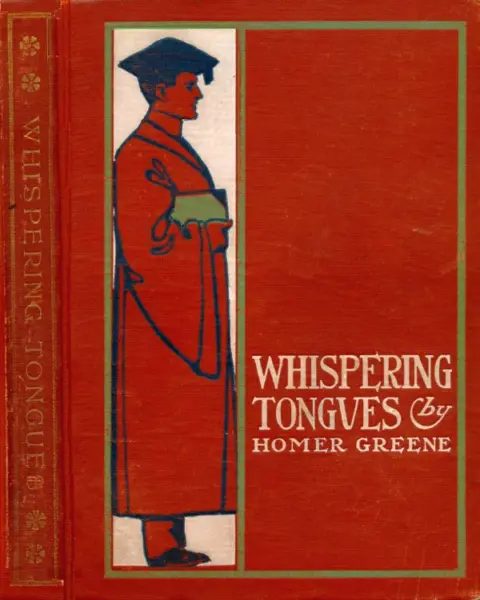
Homer Greene
BEHIND THE BOOK
This eBook is for the use of anyone anywhere in the United States and most other parts of the world at no cost and with almost no restrictions whatsoever. You may copy it, give it away or re-use it under the terms of the Project Gutenberg License included with this eBook or online at www.gutenberg.org. If you are not located in the United States, you will have to check the laws of the country where you are located before using this eBook. Read the source licence.
The original source file, including credits and licence, is retained by this library. Request an original-format copy at no charge. Please include the book title and Project Gutenberg identifier #70967.
KEEP YOUR CURIOSITY GOING
Coulson Kernahan

Maurice Baring
Frances Wright
Cécile Tormay

Frederic Jesup Stimson

W. H. P. (William Henry Pope) Jarvis