
Coal and the coal mines
Homer Greene

THE CLASSIC COLLECTION · 1917
"The Unhallowed Harvest" by Homer Greene is a social commentary novel written in the early 20th century. The story centers around the Reverend Robert Bruce Farrar, who finds himself embroiled in a court case involving a working-class family, the Bradleys, after the husband suffers a life-altering injury at work. Through the lens of this legal struggle, the narrative explores themes of social justice, inequality, and the human condition. At the start of the novel, the Reverend Farrar attends a courtroom trial where a negligence case is being decided against the Malleson Manufacturing Company. He is particularly interested in the case due to the human elements involved, namely the struggles of the injured worker, John Bradley, and the emotional turmoil faced by his wife, Mary. As the court proceedings unfold, it becomes clear that while the law is being upheld, a greater moral injustice may be at play, as the ruling favors the corporation despite its negligence. Mary Bradley’s fierce determination to fight for her husband’s dignity and their family's rights highlights the stark divide between the wealthy and the working class, setting the stage for further developments in their lives and in the socio-economic landscape of the time.
Introduction adapted from the source catalogue; source summaries may be automatically generated.
Free to read · English · 121,322 words · No account needed
MAKE TIME FOR A GOOD BOOK
On by default. Untick to stop anonymous reading totals. Each page counts after 10 seconds in view. How this works.
Anonymous counting is on unless you have switched it off.
“Exactly! It was scandalous, Phil. And they weren’t satisfied with doing it once; they repeated it, and then she actually walked the rest of the way across the bridge with his arm around her waist. Barry Malleson, what do you think of that?”
“I don’t know,” replied Barry, uncertainly, “that it has anything to do
with me.”
It was apparent, nevertheless, that the news had impressed him
profoundly. And to that extent at least Miss Chichester had made her
point.
“But you do know,” she persisted, “that a woman who conducts herself so scandalously is not a proper person for you to associate with. Phil will tell you so, won’t you, Phil? He’ll tell you that it’s dangerous. That you’re likely to get caught in the trap of an adventuress.”
Westgate turned soberly to Barry.
“If what Jane tells us is true,” he said, “and I have no particular reason to doubt her word, you’ve been skating on very thin ice, young man, very thin ice.”
“Thank you, Phil!” exclaimed Miss Chichester. “But you must do more than warn him; you must stop him. You’re a lawyer. You can get out an injunction, or a writ of habeas corpus or something, and compel her to keep away from him.”
“Why,” responded Westgate, “I think it’s a question of his keeping away from her. And Barry’s own good sense, and sober judgment, and quick wit, will control him to that extent at least. Won’t it, Barry?”
But Barry was still reluctant to renounce the charming widow offhand at the behest of her rival, or at the suggestion of the gentleman learned in the law.
“I won’t jump before I’m ready,” replied Barry. “I’ll find out more about this thing first. I’ll ask Mrs. Bradley about it.”
“Barry! Can’t you believe what I tell you? When I saw it with my own
eyes?”
Miss Chichester was growing more appealingly impatient. But Barry still shook his head incredulously.
“I’ll believe it when she tells me it’s so,” he replied. “You might have been deceived in some way. And maybe if it is so it wasn’t her fault. I’ll ask her.”
Then Westgate again intervened.
“If you take my advice,” he said, “you’ll do nothing of the kind. If she can’t make up a plausible excuse, she’s not the woman I take her to be. Now, my suggestion would be―――― Have you told anybody else about this, Jane?”
“Not a soul,” replied Miss Chichester, promptly.
Your reading position is saved on this browser. Take it to another device with a library code. Reading pages adapt to text, rather than matching a printed edition.
Homer Greene

Homer Greene
Homer Greene
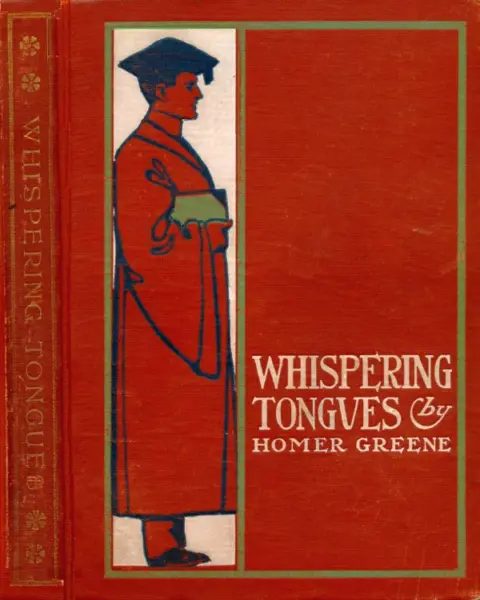
Homer Greene
BEHIND THE BOOK
This eBook is for the use of anyone anywhere in the United States and most other parts of the world at no cost and with almost no restrictions whatsoever. You may copy it, give it away or re-use it under the terms of the Project Gutenberg License included with this eBook or online at www.gutenberg.org. If you are not located in the United States, you will have to check the laws of the country where you are located before using this eBook. Read the source licence.
The original source file, including credits and licence, is retained by this library. Request an original-format copy at no charge. Please include the book title and Project Gutenberg identifier #70967.
KEEP YOUR CURIOSITY GOING
Coulson Kernahan

Maurice Baring
Frances Wright
Cécile Tormay

Frederic Jesup Stimson

W. H. P. (William Henry Pope) Jarvis