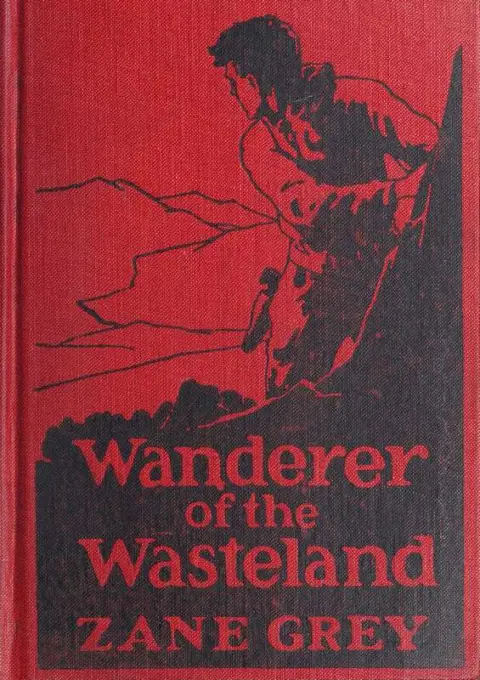
Wanderer of the Wasteland
Zane Grey
THE CLASSIC COLLECTION · 1918
"The U. P. Trail" by Zane Grey is a novel set in the mid-19th century that intertwines themes of adventure, survival, and the struggles of human spirit against the backdrop of the American frontier. The story revolves around Bill Horn, a rugged caravan leader carrying a substantial fortune back East, and young Allie, the daughter of a woman fleeing from a dark past. Alongside these central figures, the book presents a diverse cast of characters grappling with the harsh realities of their time, including threats from hostile Sioux Indians and the challenges of traversing uncharted wilderness. At the start of the narrative, a breathtaking description of the trail from Missouri to the rugged lands of Wyoming sets the tone for this epic journey. As the characters embark on their treacherous trek, they encounter unexpected danger, notably in the form of Sioux warriors who pose a considerable threat to their caravan. The tension escalates when the caravan members, including the strong yet weary leader Horn and the frightened yet resilient young girl Allie, realize they are being tracked. In a burst of action, Slingerland, a trapper, warns them of the impending danger. The opening hints at intense conflict while exploring deeper themes of identity and survival, particularly as Allie learns shocking truths about her heritage. Overall, the beginning of "The U. P. Trail" captivates readers with its compelling characters and vivid landscapes, inviting them into a world rife with challenges and heart-wrenching dilemmas.
Introduction adapted from the source catalogue; source summaries may be automatically generated.
Free to read · English · 126,221 words · No account needed
MAKE TIME FOR A GOOD BOOK
On by default. Untick to stop anonymous reading totals. Each page counts after 10 seconds in view. How this works.
Anonymous counting is on unless you have switched it off.
“The boss ‘ll talk to you. Get in there!” Baxter replied, and pushed Neale inside. It was a big room, full of smoke, noise, men, tables, papers. There were guns stacked under port-holes. Some one spoke to Neale, but he did not see who it was. All the faces he saw so swiftly appeared vague, yet curious and interested. Then Baxter halted him at a table. Once again Neale faced his chief. Baxter announced something. Neale did not hear the words plainly.
General Lodge looked older, sterner, more worn. He stood up.
“Hello, Neale!” he said, offering his hand, and the flash of a smile went over his grim face.
“Come in here,” continued the chief, and he led Neale into another room, of different aspect. It was small; the walls were of logs; new boards had been recently put in the floor; new windows had been cut; and it contained Indian blankets, chairs, a couch.
Here General Lodge bent a stern and piercing gaze upon his former
lieutenant.
“Neale, you failed me when you quit your job,” he said. “You were my right-hand man. You quit me in my hour of need.”
“General, I--I was furious at that rotten commissioner deal,” replied Neale, choking. What he had done now seemed an offense to his chief. “My work was ordered done over!”
“Neale, that was nothing to what I’ve endured. You should have grit your teeth--and gone on. That five miles of reconstruction was nothing--nothing.”
In his chief’s inflexible voice, in the worn, shadowed face, Neale saw the great burden, and somehow he was reminded of Lincoln, and a passion of remorse seized him. Why had he not been faithful to this steadfast man who had needed him!
“It seemed--so much to me,” faltered Neale.
“Why did you not look at that as you have looked at so many physical difficulties--the running of a survey, for instance?”
“I--I guess I have a yellow streak.”
“Why didn’t you come to me?” went on the chief. Evidently he had been disappointed in Neale.
“I might have come--only Larry, my friend--he got into it, and I was afraid he’d kill somebody,” replied Neale.
“That cowboy--he was a great fellow, but gone wrong. He shot one of the
bosses--Smith.”
“Yes, I know. Did--did Smith die?”
“No, but he’ll never be any more good for the U. P. R., that’s certain.... Where is your friend now?”
“I left him in Benton.”
“Benton!” exclaimed the chief, bitterly. “I am responsible for Benton. This great work of my life is a hell on wheels, moving on and on.... Your cowboy friend has no doubt found his place--and his match--in Benton.”
Your reading position is saved on this browser. Take it to another device with a library code. Reading pages adapt to text, rather than matching a printed edition.
Zane Grey
Zane Grey
Zane Grey
Zane Grey
BEHIND THE BOOK
This eBook is for the use of anyone anywhere in the United States and most other parts of the world at no cost and with almost no restrictions whatsoever. You may copy it, give it away or re-use it under the terms of the Project Gutenberg License included with this eBook or online at www.gutenberg.org. If you are not located in the United States, you will have to check the laws of the country where you are located before using this eBook. Read the source licence.
The original source file, including credits and licence, is retained by this library. Request an original-format copy at no charge. Please include the book title and Project Gutenberg identifier #4684.
KEEP YOUR CURIOSITY GOING
Coulson Kernahan

Maurice Baring
Frances Wright
Cécile Tormay

Frederic Jesup Stimson

W. H. P. (William Henry Pope) Jarvis